Even today, despite mechanisation, these horses still play a key role, in sustainable farming as much as in driving, forestry and living heritage. To understand the draft horse is to take an interest in a tradition of responsible breeding, focused on durability and on the bond of trust between people and animal.
- What is it? A horse bred for draft, with a massive build, a calm temperament and exceptional strength.
- Weight and height: between 600 and 1,200 kg (1,320 to 2,650 lb), from 155 to 185 cm (15.1 to 18.1 hands) at the withers depending on breed.
- Main French breeds: Comtois (No. 1 by population), Percheron, Ardennais, Breton, Boulonnais, Trait du Nord.
- Current uses: organic farming, forest logging, leisure driving, tourism, shows.
What is a draft horse?
Definition and etymology
A draft horse is a horse selected for its ability to pull: vehicles, materials, farm implements. In French the word "trait" comes from the Latin trahere, meaning "to pull" (the same root as the English "traction").
It differs from the saddle horse (built for speed and sport) and the warhorse (lightness, handiness) through its compact, stocky build, its muscular power and its especially calm temperament.
The idea of a draft horse first appears in written sources in the 16th century, set apart from the pack horse. Most of the breeds as we know them today did not exist before the 18th century. The Trait du Nord is one of the emblematic French draft breeds, alongside the Percheron, the Comtois and the Ardennais.
Physical characteristics: weight, height and build
| Criterion | Typical values |
|---|---|
| Weight | 600 to 1,200 kg (1,320 to 2,650 lb) depending on breed |
| Height at the withers | 155 to 185 cm (15.1 to 18.1 hands) |
| Bone | Broad, dense, short and strong limbs |
| Chest | Deep and wide |
| Back | Short and muscular |
| Feathering | Present in the heavy breeds (Shire, Clydesdale, Belgian) |
| Temperament | Calm, docile, easy to handle |
A draft horse can pull up to 1.5 times its own body weight: a 1,000 kg (2,200 lb) animal can therefore haul up to 1,500 kg (3,300 lb).
The 10 main draft horse breeds
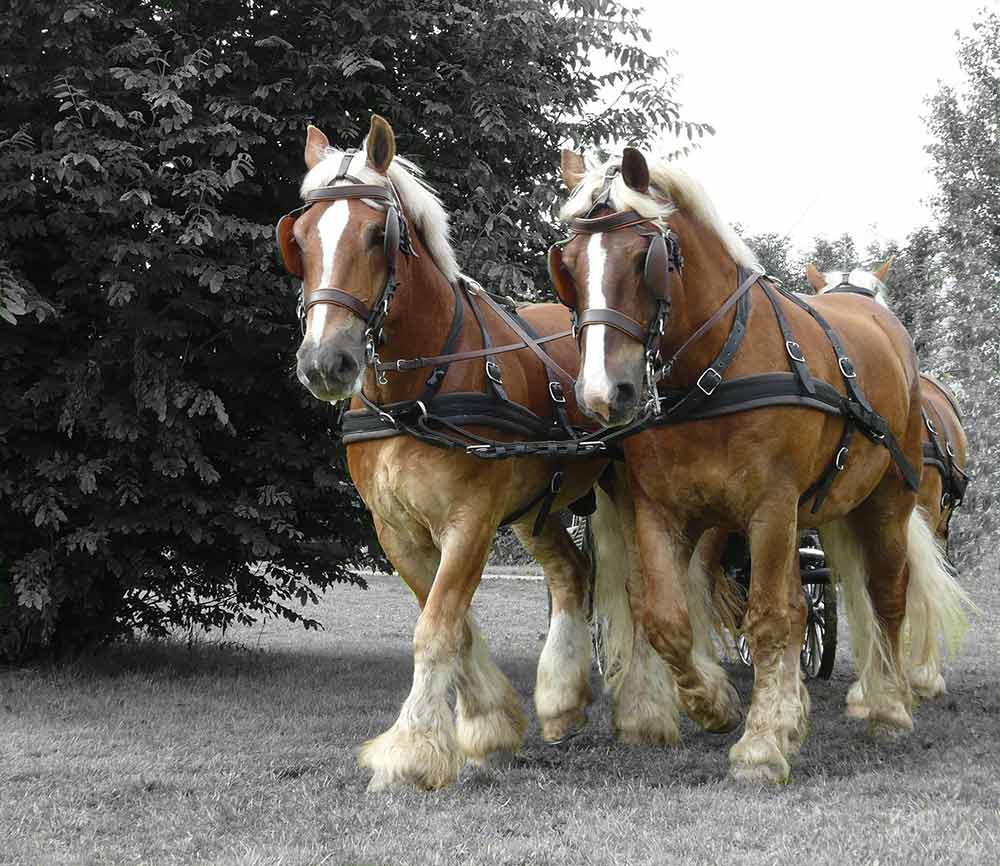
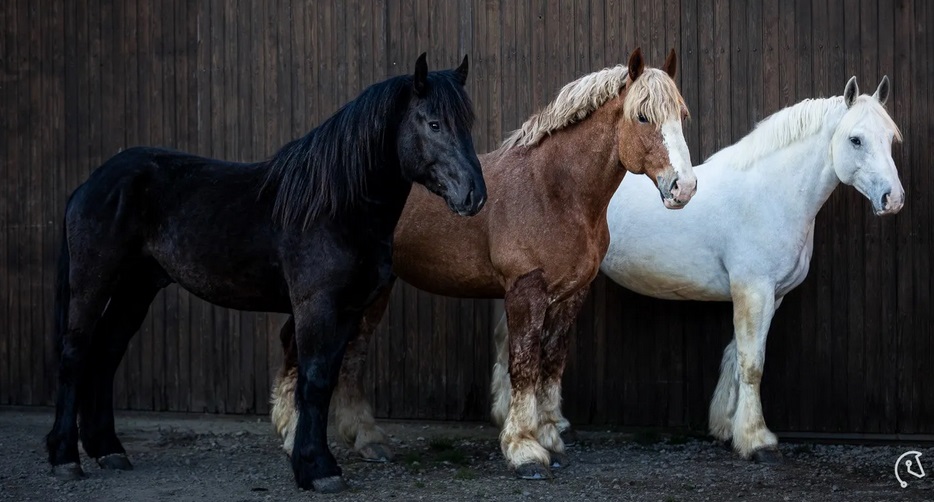
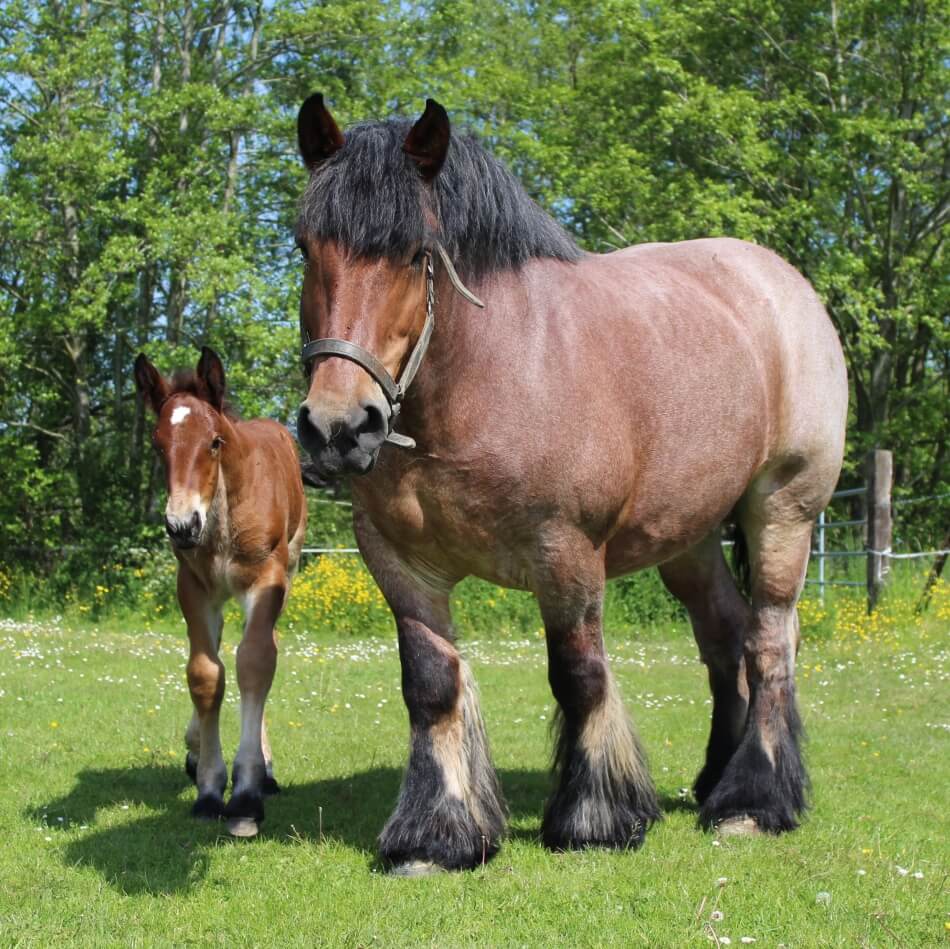
Each European région developed its own breed, adapted to its terrain, climate and needs. Draft horses are naturally inclined to work as a team and to coordinate with other horses, an essential quality for collective farm work. The Percheron is one of the best-known draft horse breeds in the world, while the Postier Breton illustrates the diversity of French draft breeds, from the heavy type to the lighter one.
 France
 France / BE
 France
 France
 France
 France
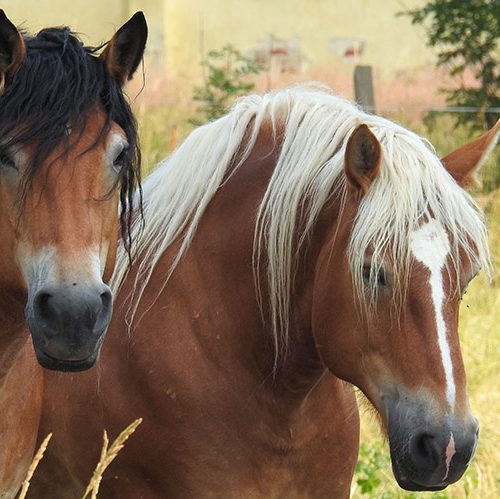 France
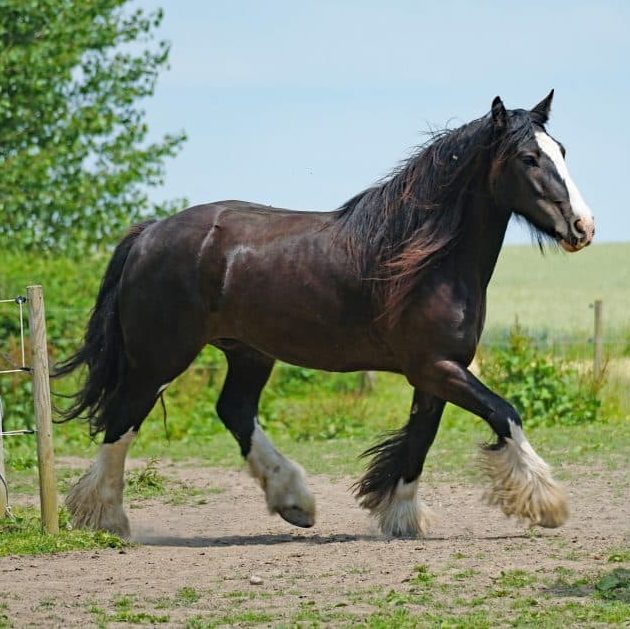 England
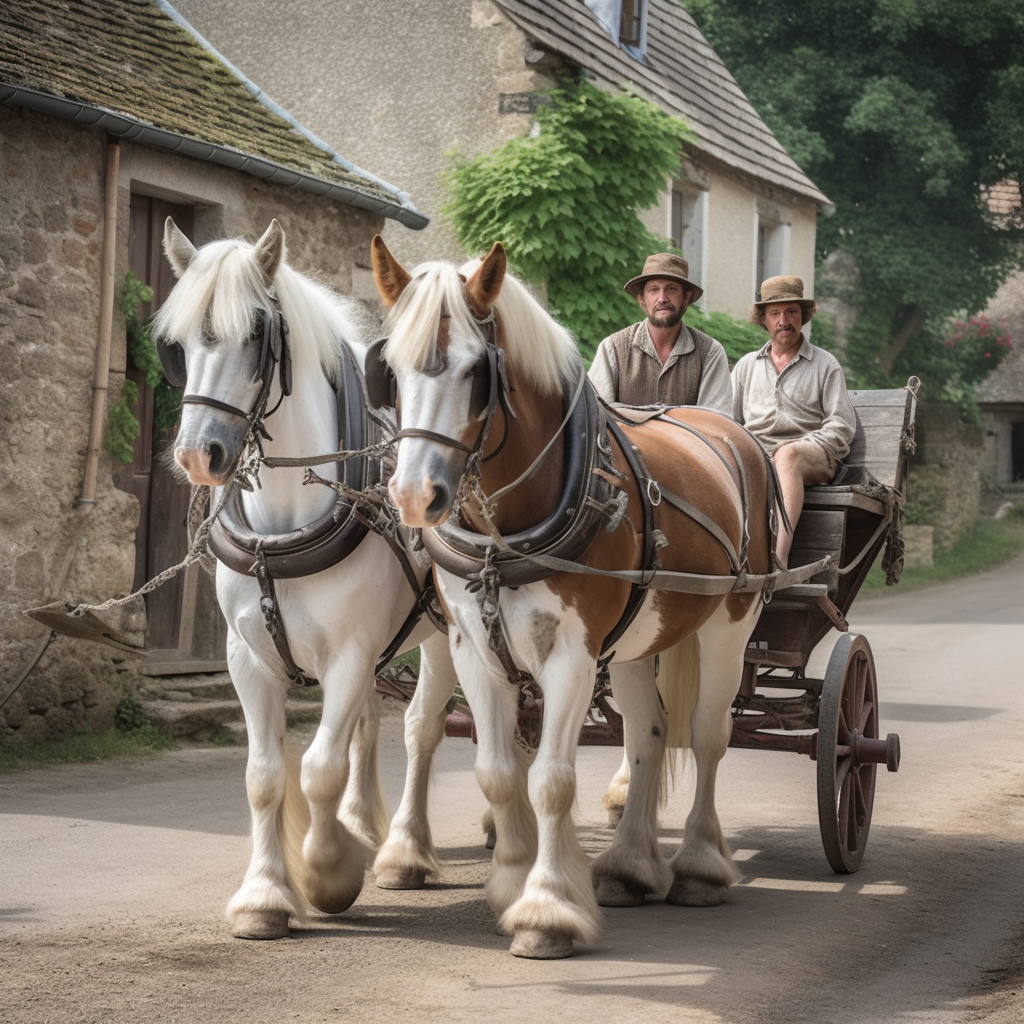 Scotland
 Belgium
The main foreign breeds
Beyond the French breeds, several foreign draft breeds are recognised worldwide for their size, history or elegance.
Shire
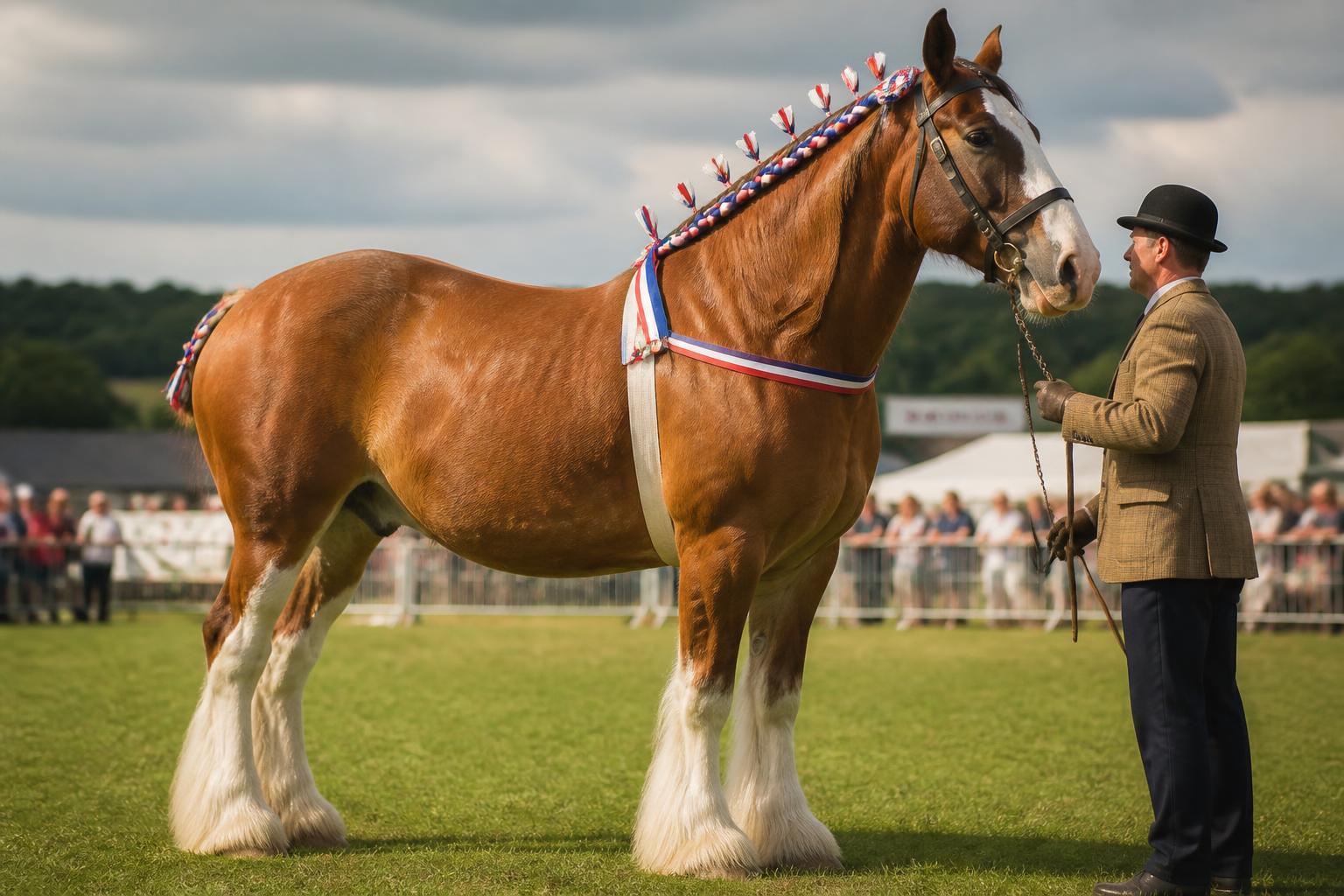
- Weight: 900 to 1,100 kg (1,985 to 2,425 lb), sometimes over 1,200 kg (2,650 lb)
- Height: 180 to 200 cm (17.3 to 19.3 hands) at the withers
- Coat: black, bay, grey, very heavy feathering
- The largest draft breed in the world
- Uses: heavy draft, shows, British breweries
Clydesdale
- Weight: 800 to 1,000 kg (1,765 to 2,200 lb)
- Coat: bay, roan, black, abundant feathering
- Made famous by the Budweiser commercials in the United States
- Uses: farming, parades, shows
Belgian / Brabant
- Weight: 900 to 1,100 kg (1,985 to 2,425 lb)
- Coat: bay, roan
- The most heavily muscled draft breed in the world
- Uses: heavy draft, logging
Suffolk Punch
- Weight: 800 to 1,000 kg (1,765 to 2,200 lb)
- Coat: chestnut only (a unique feature)
- An ancient breed, now rare
- Uses: heavy farm work
Friesian
- Weight: 500 to 700 kg (1,100 to 1,545 lb), the lightest
- Coat: black only, very full mane and tail
- Historically a warhorse, then a carriage horse
- Uses: elegant driving, dressage, film
Haflinger
- Weight: 400 to 600 kg (880 to 1,320 lb), light draft
- Coat: chestnut with flaxen mane and tail
- Uses: driving, trail riding, leisure riding
Heavy draft horse vs light draft horse
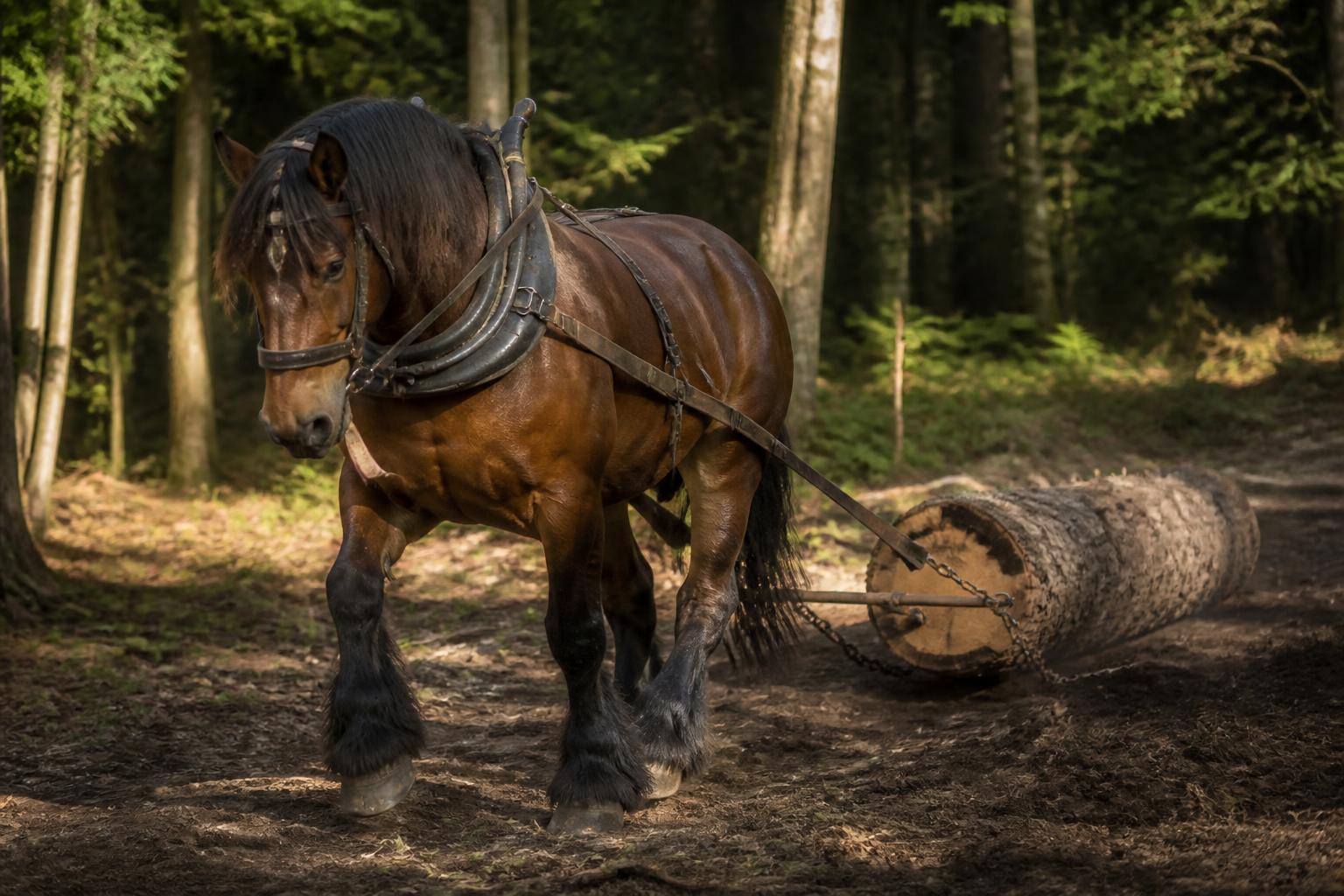
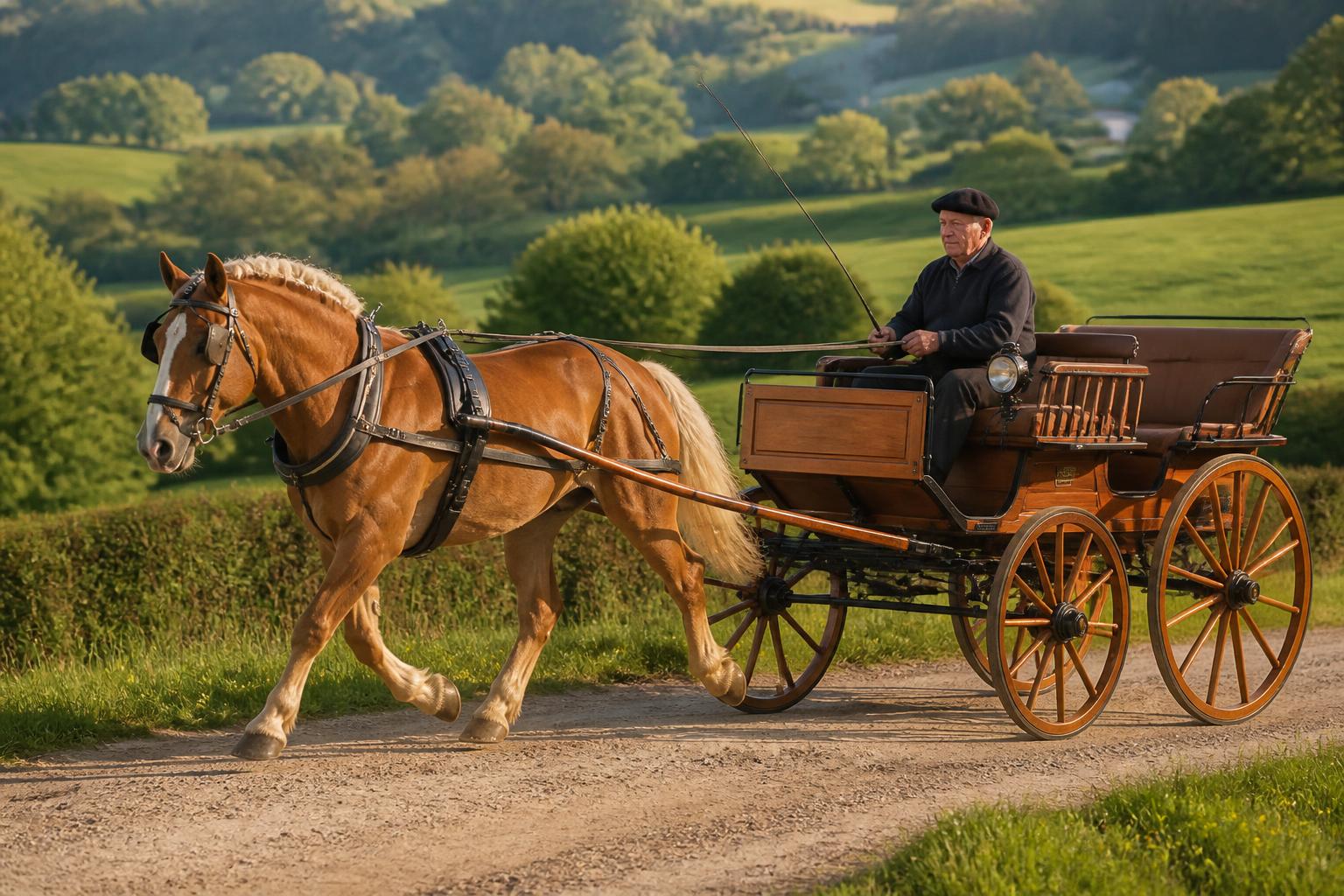
Uses of the draft horse today
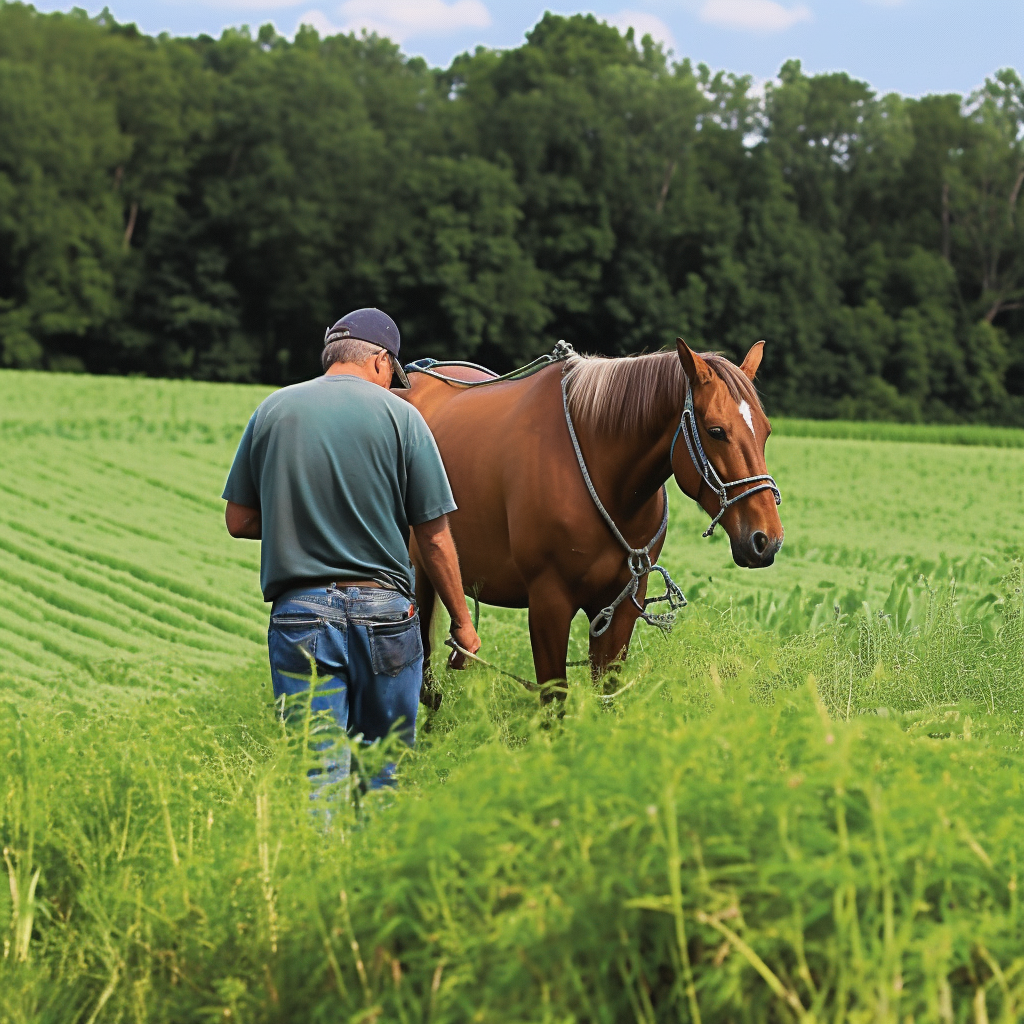
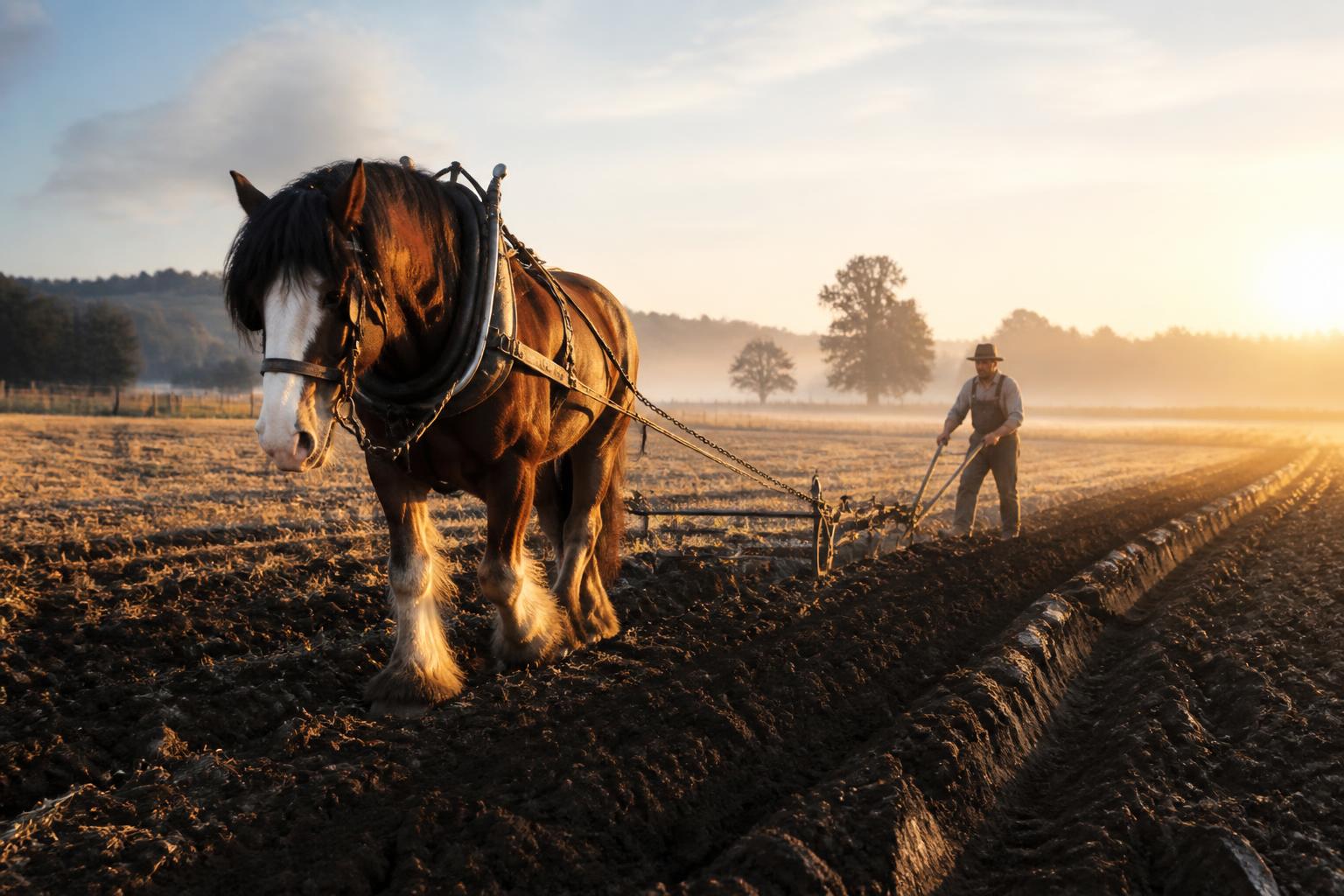
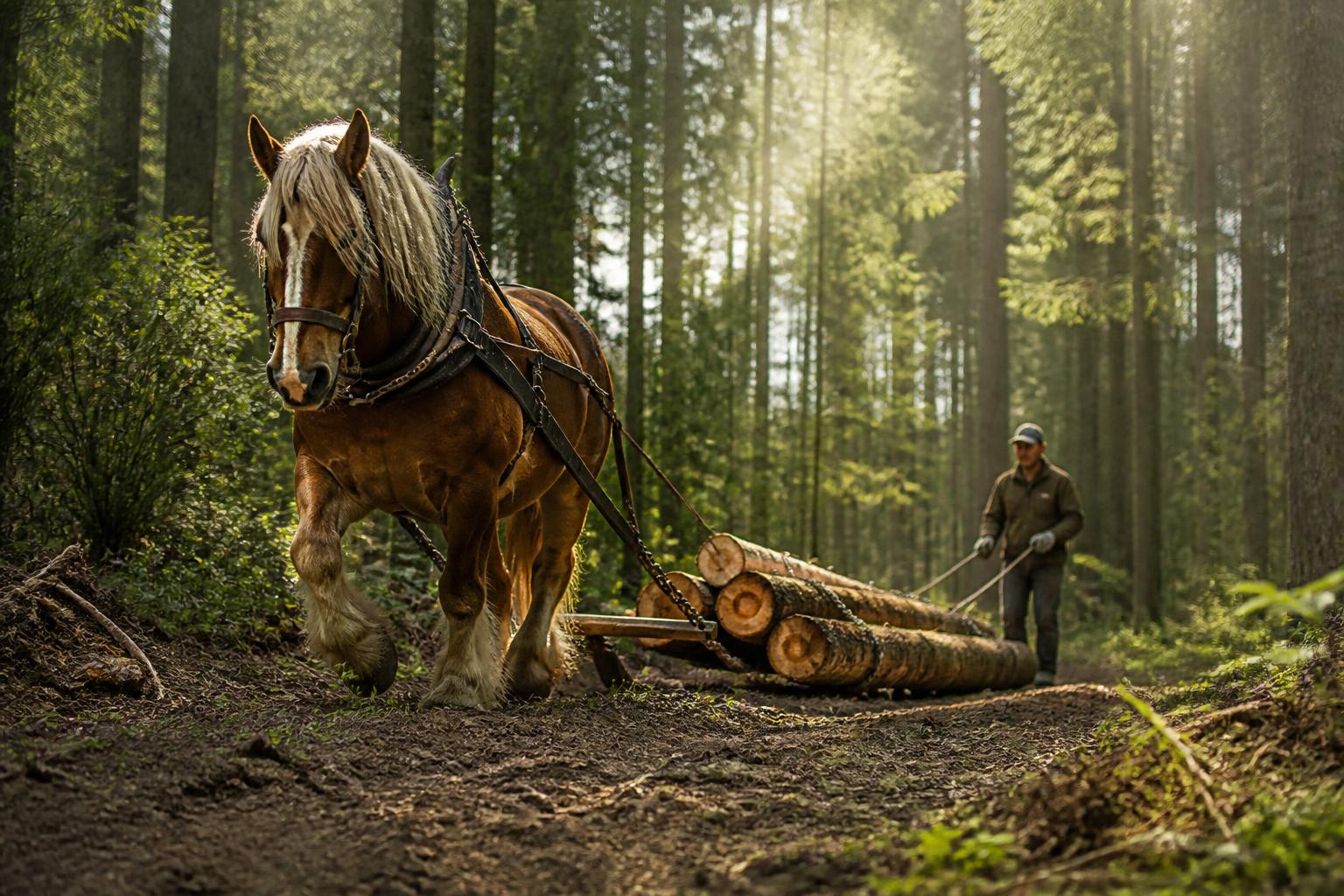
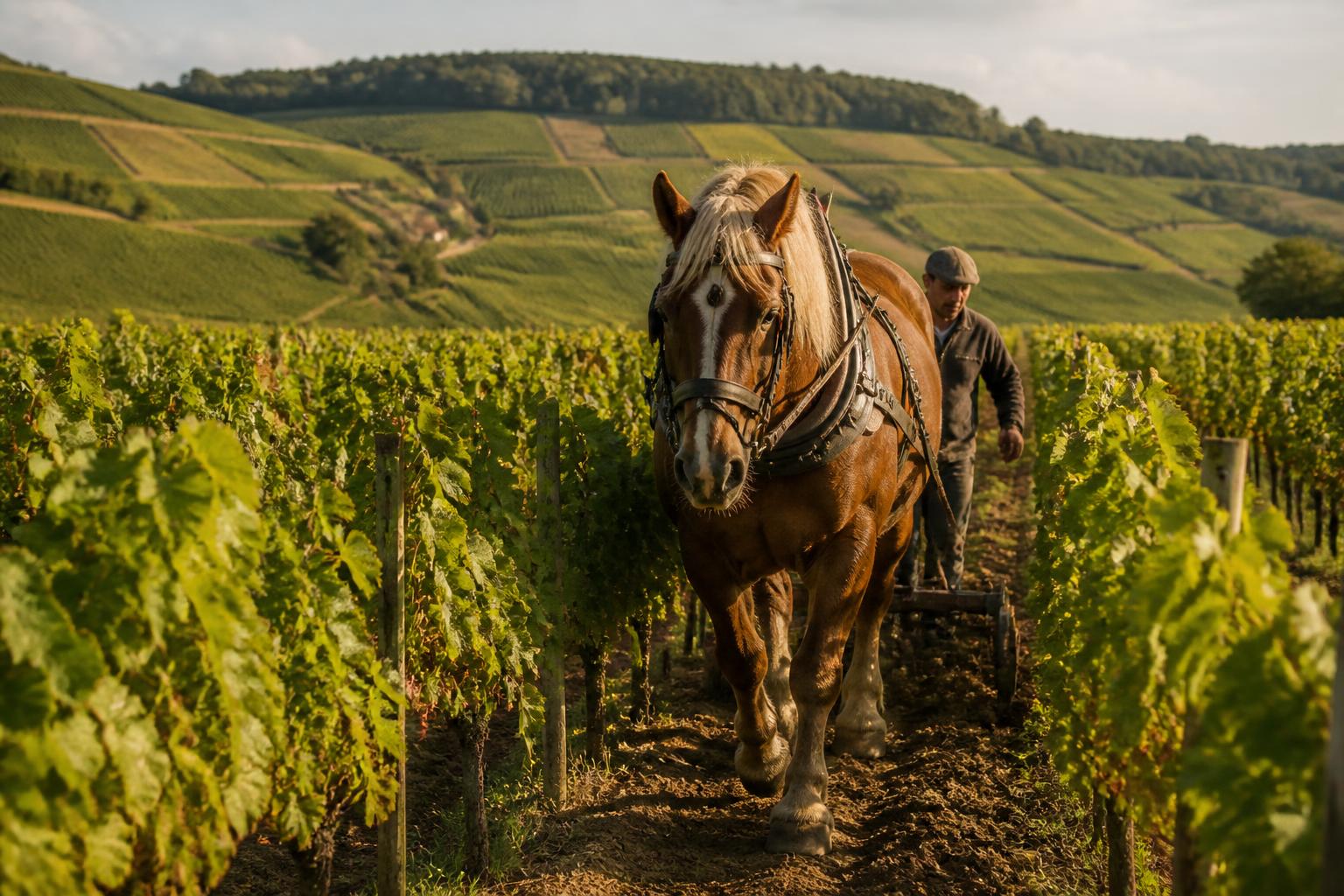
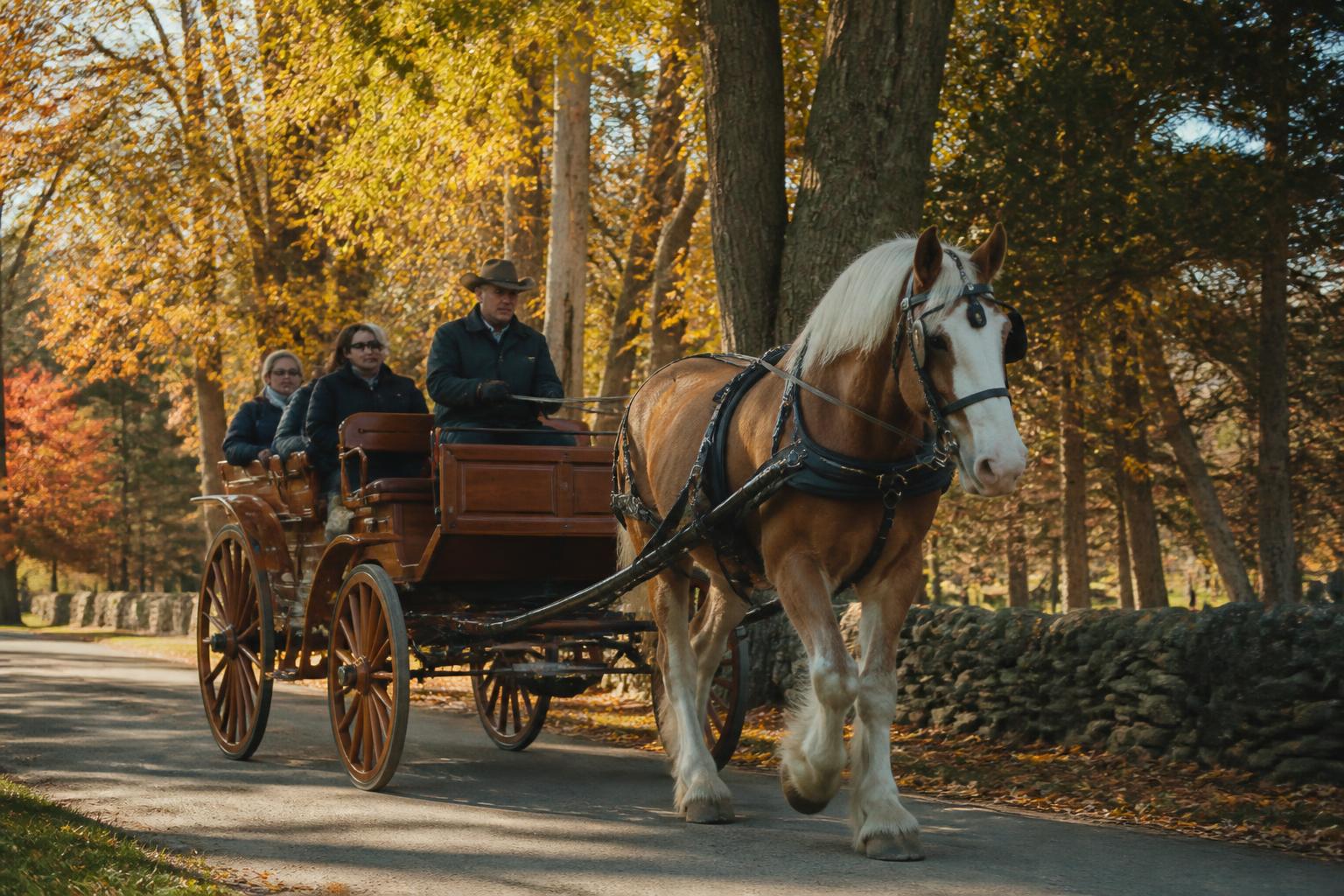
The draft horse has never been more modern. Far from being left in the past, it has found its full place today in versatile use across farming, forestry and leisure. Its advantages are undeniable: low environmental impact, versatility and great sociability.
Where to find a draft horse for sale?
Buying or selling a draft horse calls for care, especially if the goal is farm or driving use. There are several effective channels.
History of the draft horse
The draft horse was long a central pillar of human activity. Recognisable by their massive frame, powerful muscles and characteristic feathering, these horses were selected for strength and stamina, as opposed to the light horses bred for speed.
Health, feeding and breeding
A specific diet
A draft horse eats 12 to 18 kg of hay a day (against 8 to 12 kg for a saddle horse), because of its body mass and metabolism. For a working horse, plan on:
- 15 to 25 kg of forage (hay plus straw) per day
- Energy concentrates (oats, barley, pellets) in proportion to the workload
- Permanent access to water and a mineral salt lick
Diseases and points to watch
Chronic progressive lymphoedema (CPL)
Also called "scratches" in its mild forms, this is the disease specific to feathered breeds (Shire, Clydesdale, Belgian, Poitevin). Caused by a dysfunction of the lymphatic vessels under the skin: progressive swelling of the limbs, skin folds, scabs, itching. The first signs can appear as early as one year of age, often hidden by the feathering.
Polysaccharide storage myopathy (EPSM/PSSM)
A metabolic muscle disorder common in heavy drafts: stiffness, difficulty moving, episodes of muscle damage. A diet low in starch and high in fat helps to control it.
Other points to watch:
- Laminitis: increased risk from weight and an over-rich diet
- Osteoarthritis: premature wear of the weight-bearing joints due to body mass
- Feather dermatitis: encouraged by damp and mud
- Farrier care: the large hooves need regular shoeing (every 6 to 8 weeks). Shoeing a draft horse costs more than a sport horse because of the size of its feet.
The annual veterinary budget runs between 400 and 800 euros depending on age and use.
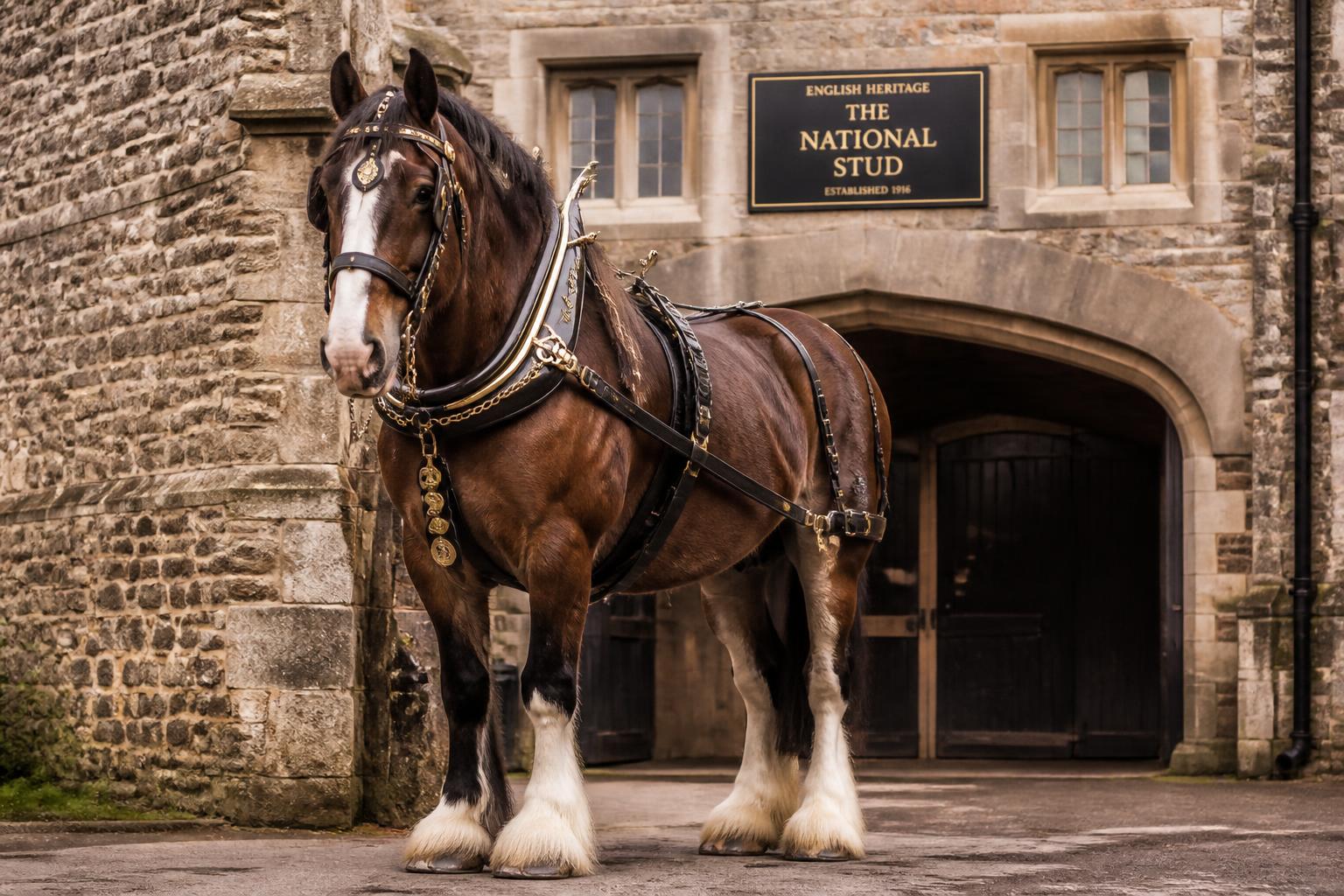
Responsible breeding is fundamental to maintaining genetic diversity. The National Studs and the breed associations preserve and select the best specimens. Numbers of the main French breeds:
FAQ - Draft horses
| Criterion | Draft horse | Saddle horse |
|---|---|---|
| Weight | 600 to 1,200 kg | 400 to 600 kg |
| Build | Massive, stocky | Rangy, athletic |
| Main use | Draft, farming | Riding, sport |
| Temperament | Very calm, docile | Varies by breed |
| Examples | Percheron, Comtois, Shire | Selle Français, KWPN, Lusitano |
Useful sources
- IFCE, French Institute for the Horse and Riding: studbooks, SIRE identification, regulations
- IFCE Equipedia, draft horse breeds: official breed profiles
- French Ministry of Agriculture, the working horse: current uses of animal traction
- France Traits: national fédération of French draft breeds