
Since Monday 24 June, an intense and early heatwave has settled over Europe, and it is doing more than bothering riders: it is cancelling shows. In the United Kingdom, British Showjumping and British Dressage halted compétitions placed under a red alert. The cause is the most underestimated danger of summer for our horses: heat stroke. Silent, sudden and sometimes fatal. Here is how to recognise it and, above all, how to prevent it.
Why heat stroke kills, and so fast
A horse is a genuine furnace. Under effort it produces a huge amount of heat, and its large body mass dissipates that heat poorly. Its one effective weapon is sweating. As long as it sweats and that sweat evaporates, it cools down. The trouble begins when the air is already hot and humid: the sweat no longer evaporates, cooling collapses, and the core temperature climbs fast.
A horse’s normal temperature sits between 37.5 and 38.5 degrees C (99.5 to 101.3 F). Above 40 C (104 F) we speak of hyperthermia. From 41 C (106 F) it is a life-threatening emergency: the organs begin to suffer, and every minute counts. A sévère heat stroke can take a horse in a matter of hours, sometimes less after intense effort in full heat.
Warning signs to know by heart
Heat stroke sets in quickly. These signals must trigger an immediate response:
- Rapid, shallow breathing, even panting (a horse panting like a dog is in serious trouble).
- Heavy sweating, then a sudden stop in sweating: this is a sign of major severity, not improvement.
- Dullness, a staggering gait, disorientation (neurological involvement).
- Dark red mucous membranes, and a heart rate that stays high at rest.
- A temperature above 40 C (104 F) and a refusal to drink.
Life-saving steps to take right away
Faced with heat stroke, you do not wait. You act, then you call the vet.
- Stop all effort and move the horse into the shade, in a ventilated spot.
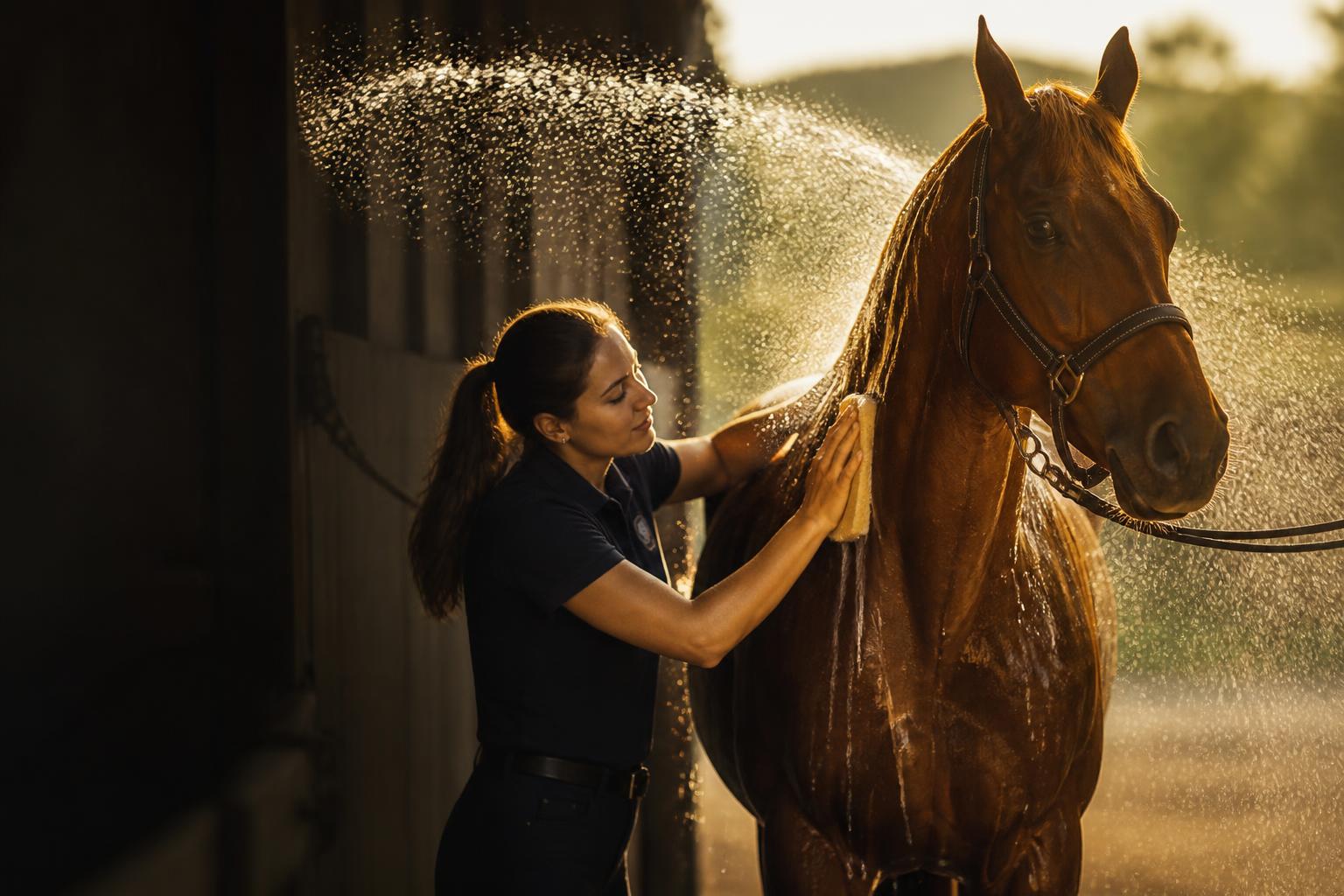
- Hose with cold water, continuously. The myth that cold water causes a shock is false: cooling fast is precisely what saves the horse. Spray, scrape off the warmed water with a sweat scraper, and start again without let-up.
- Misting and sponges on the large-vessel areas (neck, inner thighs, under the belly).
- Water at will, cool but not iced, with electrolytes if the horse will take them.
- Call the vet without delay if the temperature does not drop or if nervous signs appear.
Why shows are being cancelled
This is not excessive caution. Federations know that gathering horses for effort in full heat multiplies the risks. Bodies such as the FEI impose recovery protocols at their events, and across the Channel the authorities purely cancelled the classes under the red alert of 24 and 25 June. The message is the same everywhere: in very high heat, you move to the cool hours, you lighten the work, or you give it up.
The simple rule before you ride today
A benchmark used by sports vets: add the temperature in F and the relative humidity in %. This is the well-known horse heat index.
- Under 130: the horse cools normally, work is possible.
- Between 130 and 150: caution, reduced effort, close supervision.
- Above 150 (and especially if humidity tops 50%): thermoregulation is overwhelmed, you do not work.
In plain terms: at 91 F (33 C) and 60% humidity you are already at 91 plus 60, that is 151. You leave the horse at rest, in the shade, with water.
This week’s heatwave is not a simple discomfort. Heat stroke is fast, sometimes invisible until the tipping point, and it kills. Knowing the signs, keeping a sweat scraper and a bucket within reach, and being willing to skip the ride: that is all that separates a quiet summer from an avoidable tragedy.
Keep a record. Log your horse’s temperature, hydration and heat episodes in the Equirider health logbook: in the event of heat stroke, the history helps your vet act fast.
This article is informational and does not replace a veterinarian’s advice. If you suspect heat stroke, contact your vet immediately. Sources: FEI heat protocols, British Showjumping, British Dressage.