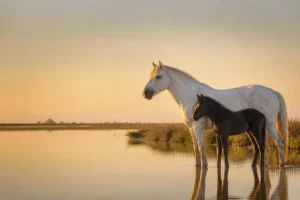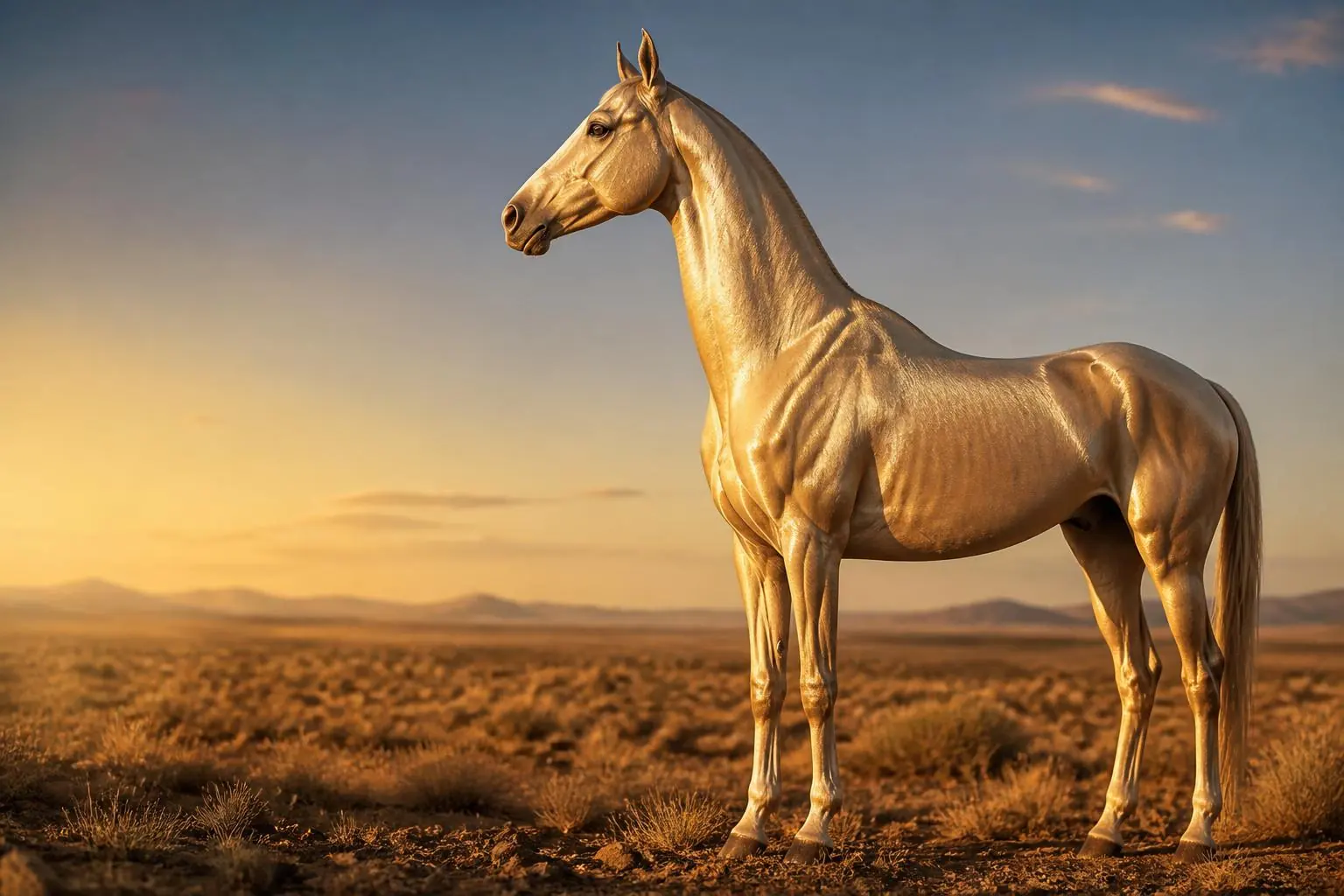

Imagine a horse whose coat does far more than simply gleam gold or cream: it shines. In direct sunlight, its coat catches the light like fine jewellery, so brilliantly that you might mistake it for polished metal rather than a living animal. This horse exists. It comes from the deserts of Turkmenistan, and it bears a name that few people know: the Akhal-Teke. If you want to explore the breed in depth, we have a complète Akhal-Teke breed profile for you. But first, let yourself be captivated.
Why does its coat really shine like gold?
This is neither a filter, nor a product, nor a trick of the light. The Akhal-Teke’s luminescence stems from the very structure of its hair. In most horses, the hair shaft is opaque. In the Akhal-Teke, the outer layer of each hair is translucent, and the core of the hair is dramatically reduced, sometimes almost entirely absent. The result: light passes through the hair, refracts like through a prism, and emerges with that characteristic metallic gleam.
This effect is most spectacular in what are called dilute coat colours. An Akhal-Teke with a palomino or buckskin coat, carrying the cream gene, develops truly golden highlights. Hence its nicknames, the “golden horse” or the “gold-plated horse”. The breed also exists in bay, black, chestnut and grey, but it is the golden version that has cemented its legend.
The build of a greyhound, not a draught horse
Forget the stout, muscular horse. The Akhal-Teke has a singular silhouette, often compared to that of a greyhound. Everything speaks of length and refinement: a high, fine neck, a dry head with almond-shaped eyes, long, clean legs with no feathering, a light frame. Even its mane is distinctive: sparse and fine, sometimes so delicate it appears almost absent, a legacy of adaptation to desert heat.
In terms of size, it remains a medium-framed horse. According to breeding standards, it typically stands between 14.2hh and 15.3hh (147 and 160 cm) at the withers, weighing around 950 to 1,100 pounds (430 to 500 kg). Neither pony nor heavyweight: a spare, athletic build designed for endurance. If you enjoy discovering the varied silhouettes of the equestrian world, compare it to the full range of horse breeds worldwide, and the Akhal-Teke stands out as something entirely apart.
One of the world’s oldest horse breeds
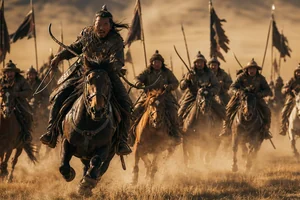
The Akhal-Teke is no recent fashion. It is instead one of the oldest pure breeds still living, with a history traced back approximately 3,000 years to the région now known as Turkmenistan. Its very name tells its origins: “Akhal” denotes a région, and “Teke” names a Turkmen tribe who selectively bred these horses across the centuries.
For generations, these breeders maintained the memory of bloodlines through oral tradition, horse after horse. Today, the breed standard and genealogical tracking are governed by the International Association of Akhal-Teke Breeding, which maintains the stud book. In France, équine breed références are established by the Haras nationaux and the IFCE.
Speed and endurance: a distance horse above all
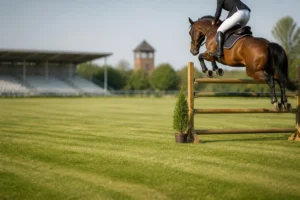
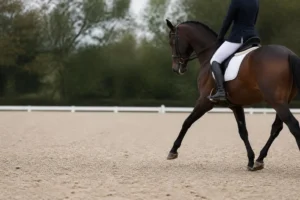
Beneath its jewel-like appearance, the Akhal-Teke is a genuine endurance machine. Bred in a harsh climate, capable of covering vast distances on minimal water and forage, it built a reputation for stamina and resilience. Logically, it performs well in modern endurance racing, yet also excels in dressage and jumping.
Here it shares some of its hot-blooded desert heritage with the Arabian horse, another endurance legend. And for its refinement and speed, it is sometimes compared to racing bloodlines like the Thoroughbred, though the Akhal-Teke favours distance over outright sprint.
A temperament as refined as its coat is brilliant
This is no golden stuffed toy. The Akhal-Teke is described as spirited, intelligent, loyal and acutely sensitive. It often bonds closely with a single person and tolerates harshness poorly. It is a hot-blooded horse, reactive, demanding subtle handling.
The consequence is clear: this is generally not a horse recommended for novice riders. It shows its best self with an experienced rider, capable of conversation through finesse rather than force. Its sensitivity is both its greatest asset and its greatest demand.
- The coat and its lustre. This is its signature: the more the hair catches light with that golden metallic gleam, the more it embodies the desired type. Palomino and buckskin coats are the most spectacular.
- Conformation. Long, lean, greyhound-like silhouette, fine and high neck, dry head, clean legs without feathering, sparse mane.
- Movement. A supple, fluid horse with good extension and ease, built for distance.
- Rarity and value. Limited global population, stud book registration and established bloodlines naturally drive prices upward.
- Temperament. Spirited, loyal, sensitive: a partner horse, not a machine.
What does a golden horse cost?
Rare, ancient, spectacular: the Akhal-Teke ticks every box of the coveted horse. Its global population is estimated, by cautious figures from conservation bodies, at a relatively limited level, and the breed is even considered endangered. This scarcity, combined with the quality of bloodlines registered in the stud book, naturally pushes prices upward for the finest specimens.
Enough to make it the most expensive horse on the planet? Not quite, though it sits comfortably in that rarefied circle. For context on market ranges, take a look at our feature on the world’s most expensive horse: you will see where this Turkmen treasure ranks.
A national symbol that became a global icon
In Turkmenistan, the Akhal-Teke is far more than simply a breed: it is a national symbol, even appearing on the country’s official emblems. A horse gentle to the eye, hardened by the desert, and carrying the identity of an entire people. This is why the golden horse, long known only to insiders in the West, captivates so completely the moment one discovers it.
- The Akhal-Teke is a Turkmen horse with a golden metallic coat, created by the translucent structure of its hair.
- Fine, elongated, greyhound-like silhouette, sparse mane, no feathering.
- One of the world’s oldest breeds, with approximately 3,000 years of documented history.
- An endurance horse, spirited and sensitive, best suited to experienced riders.
- A rare and highly sought breed, with top specimens commanding premium prices.
Sources: breed stud book and standard (International Association of Akhal-Teke Breeding), équine breed références from the Haras nationaux and IFCE, population data from breed conservation organisations.