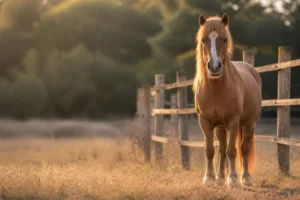
A black stallion so volatile that not a single equerry in the kingdom could ride him. A king ready to have him sent away. And a boy barely twelve years old who, in mere minutes, accomplished what the kingdom’s most seasoned horsemen had failed to do. The story of Bucephalus and the young Alexander is far more than legend: it is one of the finest lessons in horsemanship ever told.
The Answer in One Sentence
The young Alexander succeeded where every adult had failed, not through force or magic, but by doing something deceptively simple: he observed the horse instead of fighting him. He grasped that Bucephalus was not vicious but terrified, frightened above all by his own shadow. By turning the stallion to face the sun, hiding that shadow from view, speaking to him with measured calm and respecting his flight instinct, he transformed panic into trust. All of modern horsemanship still rests on this principle.
A Horse No One Wanted
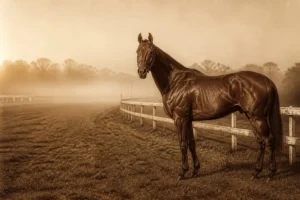
The year is roughly 344 BC, in Macedonia. A Thessalian merchant named Philonicos offers King Philip II an exceptional horse at a staggering price of thirteen talents, a colossal sum for the era. The animal is magnificent: tall, black, powerful, with a white blaze on his forehead. But when the king’s equeries attempt to approach him, disaster strikes. The horse rears, refuses every rider, obeys no one. Philip, exasperated, orders the beast taken away.
Paying a fortune for a horse that no one can ride seems absurd. It seems slightly less so when one considers that even today, an exceptional horse can be worth millions. The extravagance of Bucephalus’s price foreshadows that of the world’s most expensive horses, those exceptional animals coveted by breeders and wealthy owners alike.
What the Child Saw That the Adults Had Missed
Among the onlookers stood a boy, watching in silence. It was Alexander, the king’s son, barely a dozen years old. According to the account of the Greek historian Plutarch, our primary source for this episode, the child let slip a remark: what a shame to lose such a magnificent horse for want of proper understanding. Philip, stung, challenged him to do better.
Alexander stepped forward. He had noticed something no one else had seen: Bucephalus was panicked by the sight of his own shadow moving on the ground. Every flicker of shadow reignited his terror. The boy gently took the lead rope and turned the horse to face the sun, so the shadow fell behind him, out of sight. He allowed the stallion to burn off some energy, spoke to him with quiet confidence, stroked him gently, moved with him, then mounted calmly into the saddle. Bucephalus, at last at peace, finally carried him.
What Truly Makes This a Lesson
The real takeaway
- Read emotion before correcting. Alexander saw not a “bad” horse but a frightened one. Distinguishing fear from disobedience is the foundation of modern respectful horsemanship.
- Identify the trigger. The problem was not the horse, but the shadow. Finding the true cause of a reaction rather than punishing it changes everything.
- Work with instinct, not against it. The horse is prey, hardwired to flee what frightens him. Removing the stimulus (the shadow) instead of forcing compliance honours his nature.
- Calm is contagious. A steady voice, slow movements, controlled breathing: a centred rider reassures the horse. Panic, conversely, spreads both ways.
- Trust before constraint. Alexander did not “break” Bucephalus; he earned his trust. This is why their bond would endure a lifetime.
The Horse of One Man
Moved to tears, according to tradition, Philip reportedly said to his son a line that would become famous: seek a kingdom to match your measure, for Macedonia is too small for you. History would prove him right. Alexander became Alexander the Great, and Bucephalus would be his companion in conquest for nearly twenty years, from Greece to the gates of India.
A remarkable detail preserved by the ancients: the horse accepted, it seems, scarcely anyone but his master. When saddled for battle, he would even kneel to let Alexander mount. This kind of exclusive bond between horse and rider is far from supernatural: it is built through consistency, respect and daily care, precisely what remains essential to the modern relationship with horses and their welfare.
What Breed Was Bucephalus?
Ancient texts do not give us a “breed” in the modern sense. Bucephalus was a Thessalian horse, Thessaly having been renowned in classical Greece for its robust and swift horses. His black coat, his size and his spirit suggest the war horses most prized of his time. The concept of breed as we understand it today, with its standards and bloodlines, is far more recent: our encyclopaedia of horse breeds catalogues hundreds of modern breeds born from centuries of selective breeding. Among them, exceptional lines such as the Thoroughbred perpetuate, in their own way, that very quest for the extraordinary horse that captivated kings in antiquity.
A City for a Horse
Bucephalus died around 326 BC, after the Battle of the Hydaspes in what is now Pakistan, aged perhaps thirty by some accounts, exhausted or wounded. Alexander’s grief was such that he founded a city in his honour, Bucephala, on the banks of the river. How many horses can claim to have a city named after them? It is the measure of the bond between these two.
Questions You May Have
Is the story of Bucephalus and Alexander true?
It rests on ancient sources, primarily Plutarch’s “Life of Alexander,” written centuries after the events. The broad strokes (the untameable horse, the shadow trick, the exorbitant price, the founding of Bucephala) are well attested in the tradition, though some details may have been embellished over time.
Why was the horse afraid of his own shadow?
The horse is prey, its vision and instinct calibrated to detect the slightest suspicious movement. A moving shadow on the ground can be perceived as a threat. Many horses today still startle at their own shadow, a puddle or a fluttering bag: nothing unusual, it is their nature.
What can we take from this for riding horses today?
That pure force works poorly with a frightened horse. Observe, identify what troubles him, remove or domesticate the stimulus, remain calm and earn his trust: these principles, more than two thousand years old, are precisely those of modern respectful horsemanship.
What to Remember
Bucephalus was not a vicious horse but a terrified one whom no one had bothered to understand. The genius of young Alexander lay not in strength but in observation: seeing fear where others saw rebellion, and answering with calm rather than force. Twenty centuries on, this lesson remains at the heart of all good riding. Source: Plutarch, “Life of Alexander.”