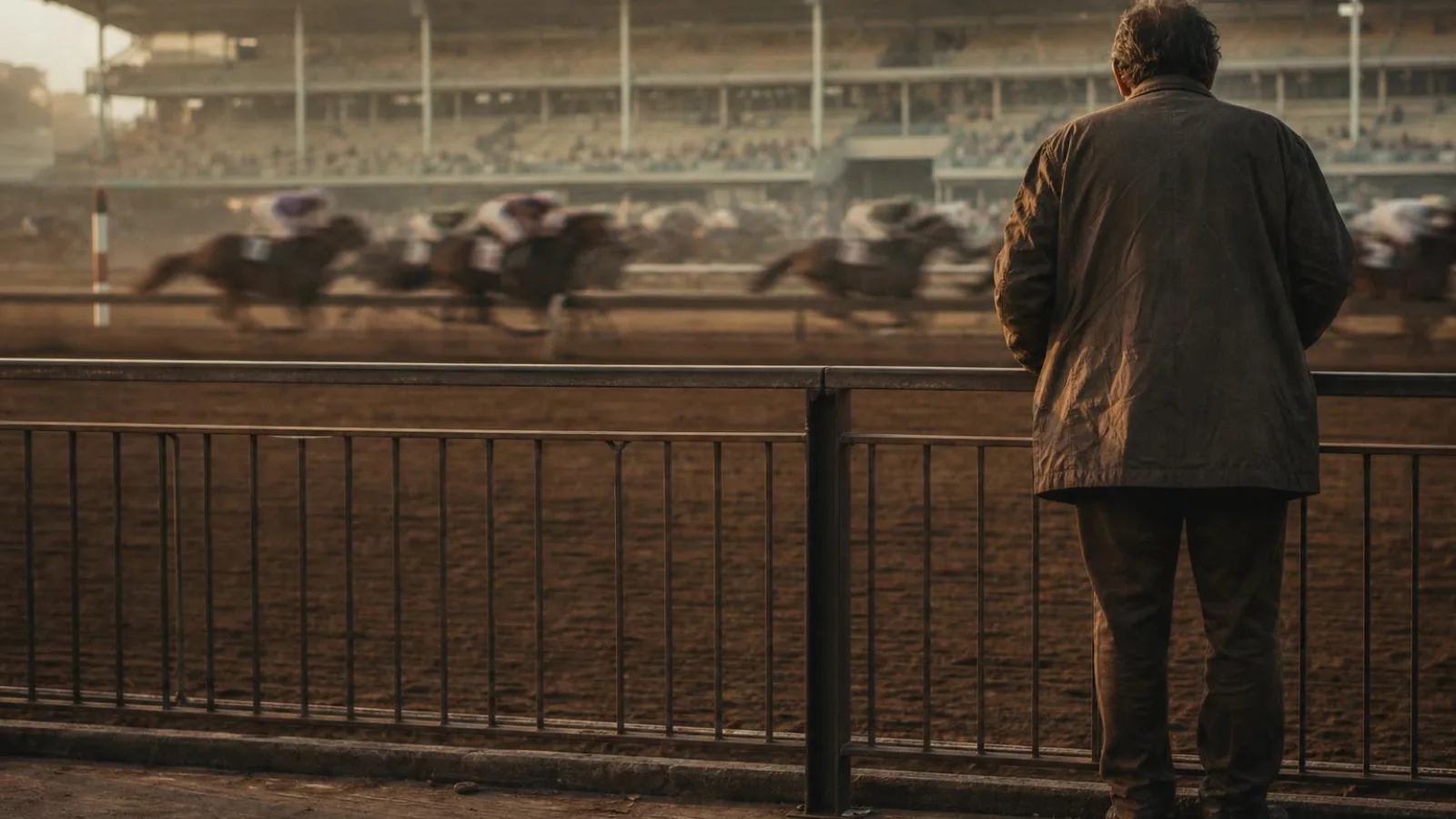

We know Charles Bukowski for his battered novels, his hangovers and his poems born in Los Angeles bars. We forget his other ritual, almost sacred: the racetrack. For decades, America’s most rebellious writer spent nearly every day betting on horses. A simple vice? Far from it. Here’s why.
How an Alcoholic Poet Found Himself at the Races
The story is almost too perfect to be true, and yet it is documented. Following a hospital stay, a doctor forbids Bukowski from drinking. A companion then suggests an alternative: horse racing. He finds the idea ridiculous at first, then develops a taste for it, then cannot shake it loose. His playground: Hollywood Park, in Los Angeles. Once famous, he would miss almost no day at the racetrack.
The Racing Grounds as Laboratory of the Human Soul
Bukowski is to the races what Hemingway is to the bullfight: a writer who made it an obsession and a subject. In many of his books, his fictional alter ego Henry Chinaski lives to the rhythm of racing days and bets almost exclusively on horses. What he sought there was not merely money: it was the naked spectacle of people who hope, win, lose, lie and betray themselves in seconds. The grandstand as mirror of the human condition.
To Win, to Lose, to Begin Again: What He Really Saw
Bukowski told himself no tall tales: he lost often, observed the systems, the delusions of bettors, their way of chasing lost money. In 1982, he even published a collection of poems and photographs devoted entirely to this world, which became a collectible object. His clarity was the true lesson: he described the game without embellishment, rare wins and ordinary losses included.
- The odds: they express estimated probability, not certainty. A beaten favourite is nothing unusual.
- The bet type: from a simple win to a five-horse accumulator, the broader the combination, the higher the potential payout and the harder it is to land.
- The information: form, going, distance, jockey all matter; instinct, meanwhile, often misleads.
- Chance: it remains master of the game. No system guarantees a win over time.
From Bukowski’s Grandstands to Today’s Algorithms
Bukowski played by instinct and observation, the daily newspaper tucked under his arm. Today’s thoroughbred racing has changed its face: bettors cross-reference statistics, and some even rely on artificial intelligence applied to the PMU to build their racing bets. From Bukowski’s neighbourhood races to the modern PMU and Quinté+, one thing has not changed: on the track, the horse always has the final say.
Perhaps that is the lesson of the writer-bettor: to love racing for racing itself, for the thrill and the horses, without ever believing you have beaten chance.
Sources: America’s Best Racing, The Racetrack in Charles Bukowski’s Writing; Joueurs Info Service. Informational and cultural content.