
Where: Iceland, particularly the south-west around Reykjavík and the north, in the Skagafjörður région. When: June to September for longer rides. Level: short outings require no expérience; multi-day treks do.
Let’s be frank: Iceland is one of the rare destinations where a novice rider heads out into the open on day one. The credit belongs not to any laxity on the part of the operators, but to the gait of the local horse. In return, the country enforces strict biosecurity rules, and they concern your equipment before they concern your riding level.
Why Iceland beats elsewhere
The Icelandic horse possesses five gaits where most horses have three. Beyond walk, trot and canter come the tölt and the skeið.
The tölt is a lateral four-beat gait. The horse maintains one or two feet on the ground at all times. There is no suspension phase between strides, unlike trot or canter. This is why you don’t bounce in the saddle and why you can ride comfortably for hours on end. These definitions come from Horses of Iceland, the official programme run by Business Iceland.
The skeið, or flying pace, is a lateral two-beat gait with a suspension phase. The same source clarifies two useful points: it is performed at speed and over short distances, with racing runs of 100 to 250 metres (330 to 820 feet), and not all Icelandic horses possess it. Those that do are often considered the finest of the breed.
A methodological note: you will read everywhere of speeds of 30 to 48 km/h (19 to 30 mph) attributed to the skeið. We do not repeat these figures because the official breed source publishes no speed data.
Where to ride, in practical terms
The south-west, around Reykjavík
This is the most accessible zone from the airport. Moss-covered lava flows, wide trails, outings of two to four hours. Most farms welcoming inexperienced riders cluster here. You ride in groups, supervised, usually in English.
The north, around Skagafjörður
This is the historic breeding heartland of the Icelandic horse. Hólar í Hjaltadal hosts the breed’s major gatherings. The atmosphere shifts: you are among breeders, herds are substantial, and stay formats range from day trips to week-long visits.
The highlands
Reserved for self-sufficient riders on trek, changing horses during the day. The Icelandic Environment Agency and Energy sets the framework: riders follow established bridle paths where they exist, forage must be carried for highland riding, and camping occurs only at equipped enclosures. Travelling with a herd requires precautions to keep it under control.
- Actual level required: what the operator expects of you, not what it claims.
- Terrain and gaits available: what the ground permits, and at what speed.
- Typical outing length: two hours and two weeks demand différent riders.
- Season window: which months the format exists, and which it doesn’t.
- Leadership and language: who accompanies you, and in which language.
- Horse condition and workload: rotation, rest, fitness.
The level you actually need
For a short outing in the south-west, you need no expérience at all. The tölt does the work: you stay seated, your back stays comfortable, and you learn to ask for the gait in an hour.
For a multi-day trek, the rules change. You move within a loose herd that follows the group’s pace, you change horses en route, and you ford rivers. You must be able to hold a canter outside and manage a horse that speeds up because its companions are speeding up. No serious operator will sell you this format if you have just finished your first riding course.
We offer no numbered canter level. Icelandic operators do not think in French riding grades, and inventing a false equivalence would serve no one.
The right season
| Period | Verdict | Why |
|---|---|---|
| June to August | Recommended | Long days, full range of options, multi-day treks available. |
| September | Recommended if you target the gatherings | This is the month of the réttir, according to Visit Iceland, the official travel guide run by Business Iceland. |
| May and October | Possible | Limited offerings, unstable weather, mostly short outings. |
| November to April | Best avoided on a first visit | Little daylight, limited formats, difficult terrain. |
You will notice that no temperatures appear in this table. This is deliberate. The Icelandic Meteorological Office publishes climate data by station, and the only thirty-year normals freely available on its data page cover 1961 to 1990. We prefer to say nothing rather than repeat an average found on a blog.
A calendar marker for 2026: the Landsmót hestamanna, the great national gathering of the breed, took place in early July at Hólar í Hjaltadal. The organisers announced 5 to 11 July, the international fédération FEIF announced 5 to 12 July and mentioned 7,000 to 8,000 visitors for over 1,000 horses. We give you both versions rather than guess at one. If you aimed for this event, you missed it this year.
What to expect, and what surprises
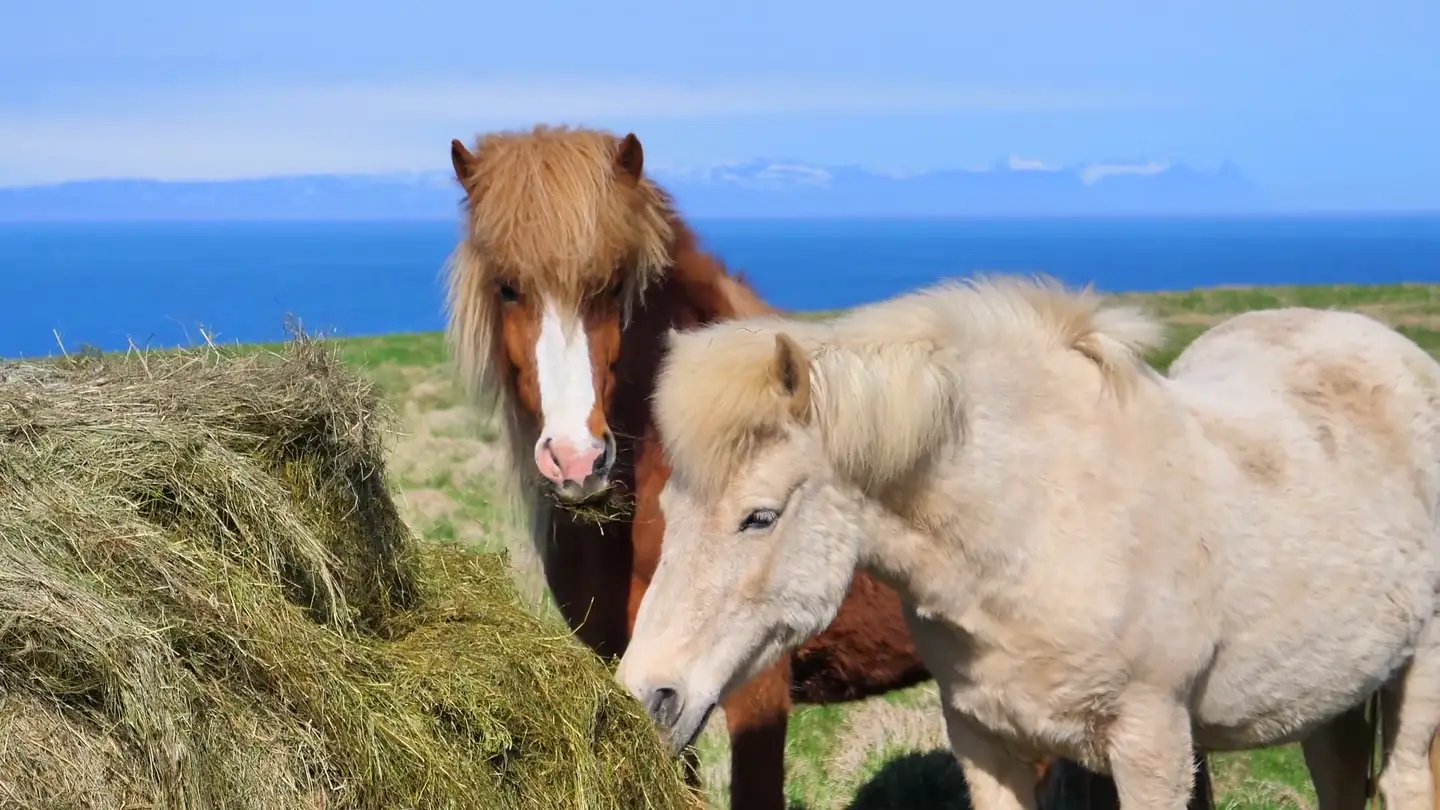
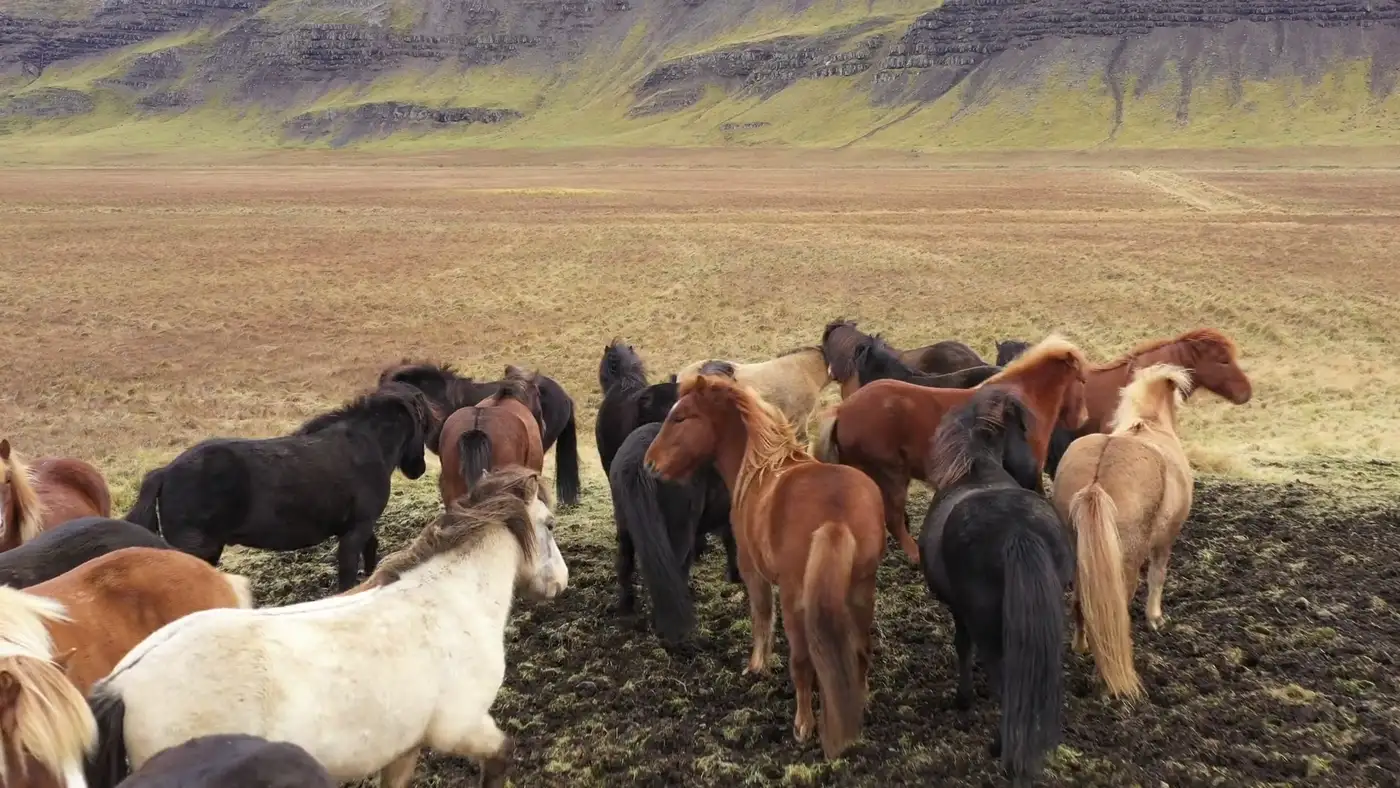
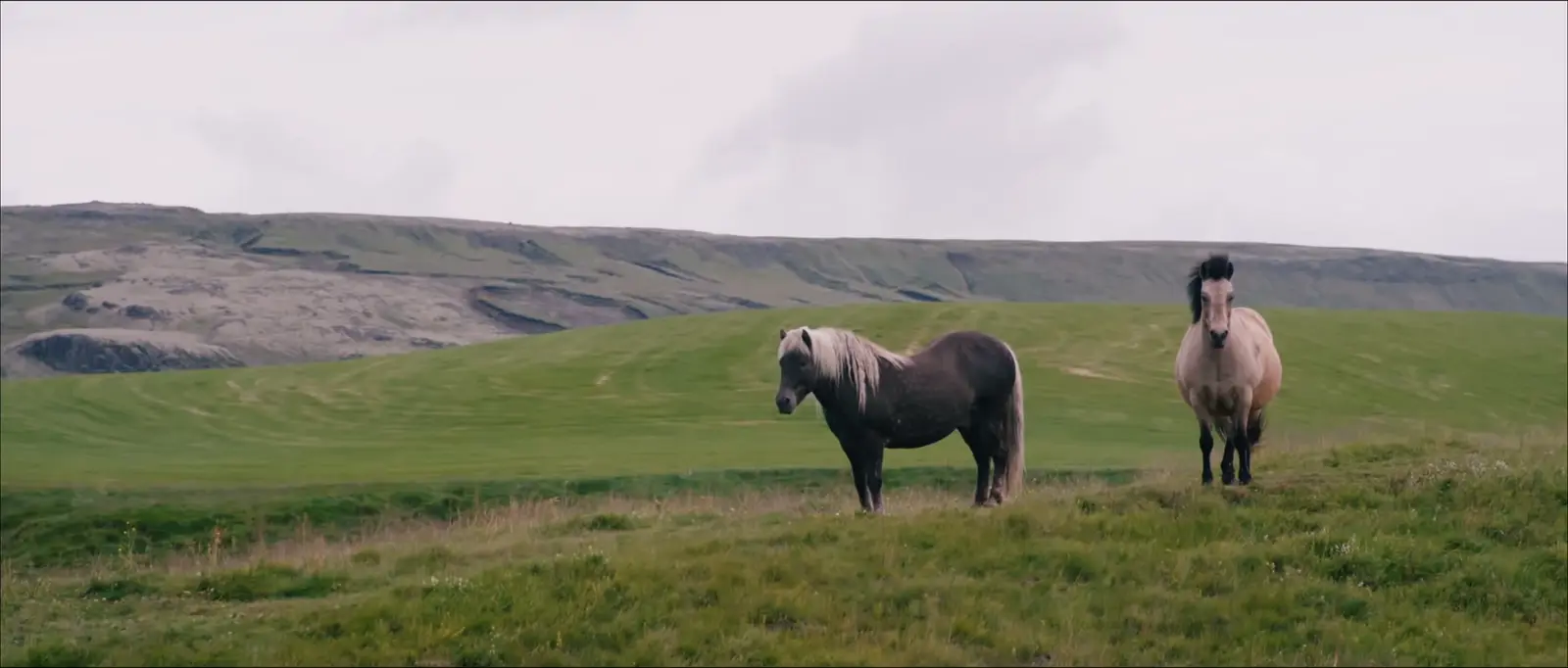
First shock: the horses live outside. Horses of Iceland states it plainly: the horse is the only domesticated animal kept outdoors year-round in Iceland. You will not see rows of stables, but herds in large enclosures.
Second shock: in summer, in the north, large herds are released into isolated mountain valleys called afréttur. They graze grass and wild plants there for three months, with no human intervention.
Third shock, and this is the best time of year: in autumn, you have to go and find them. These are the réttir. Horses are gathered and sorted in a circular enclosure, in groups of about fifty at a time. This practice persists mainly in the north of the island, and over recent decades it has become possible to participate rather than merely watch from the sideline.
What you pack, and what stays at home
This is the point most articles overlook, and it is the one that spoils a trip. Iceland’s food and veterinary authority, the MAST, prohibits entry of secondhand equestrian equipment. The list it publishes covers saddles, bridles, nosebands, saddle cloths, rugs and whips. Used riding gloves are forbidden as well.
Riding clothing and boots do pass, provided they are clean. The MAST requires machine washing or dry cleaning before entering Icelandic territory. For items that cannot go through either, its protocol calls for thorough rinsing with detergent, drying, spraying with 2 per cent Virkon S (20 grams per litre of water), then storage of at least five days before any contact with an Icelandic horse. Helmets follow the same treatment.
Practical translation for your bag: your saddle stays at home, you ride the farm’s. Pack boots that can handle machine washing, or new boots still in their packaging. For your head, a helmet in your size is safer than a poorly fitted loaner, provided you start disinfection five days before departure and not the night before.
The animal welfare angle
These rules are not red tape. The MAST notes that Icelandic horses are unvaccinated and remain vulnerable to infectious agents from abroad. It is the island’s isolation that protects them, and your equipment is a vector.
That same isolation has a consequence few travellers know about, and it is instructive. RESPE, the French équine epidemiosurveillance network, classes the Icelandic horse among breeds sensitive to summer dermatitis, an allergy to the saliva of midges of the genus Culicoides. A prospective study published in 2018 in Acta Veterinaria Scandinavica tracked horses exported from Iceland to Switzerland: more than half of exported adults develop the disease within two years of first exposure to culicoids, whereas those exposed before seven months of age retain the same low risk as horses born locally. If you ever consider buying an Icelandic, this guide to summer dermatitis will save you a nasty surprise.
Once there, before you mount, check three things. The state of the back and withers under the saddle cloth. How many outings your horse has already done that day. The ratio of your weight to the size of the horse being offered you. An operator that answers all three questions without hesitation is a good operator.
Frequently asked questions
I have never ridden before. Can I still go?
Yes, on short, supervised outings. The tölt makes riding accessible from hour one. Save multi-day trekking formats for later.
Can I bring my own horse?
No. Horses of Iceland is categorical: no horse or other équine may enter the country. And a horse that leaves Iceland never returns.
Should I bring my own helmet or hire one there?
Bring yours, but follow the MAST protocol five days before you leave. A disinfected, properly fitted helmet beats an approximate loaner.
Planning this trip
Once you have chosen your angle, farm or trekking, the rest depends on your operator. Our sélection of equestrian travel agencies compares those that programme Iceland and those that do not. You will also find a stay profile for an Icelandic farm in our equestrian trips. And if this is your first horse trek, first read about the mistakes beginners make outdoors in summer.
Sources consulted: Horses of Iceland, the official programme run by Business Iceland, for the gaits, outdoor horse-keeping, the réttir and the entry ban. The MAST, Iceland’s food and veterinary authority, for equipment, disinfection protocol and lack of vaccination. The Icelandic Environment Agency and Energy for horse-riding traffic rules. Visit Iceland, the official travel guide run by Business Iceland, for the gathering calendar. The Landsmót organisers and the international fédération FEIF for 2026 dates. RESPE and a prospective study published in 2018 in Acta Veterinaria Scandinavica for summer dermatitis.
Left out for lack of primary source: the speeds of 30 to 48 km/h (19 to 30 mph) attributed to the skeið. Average temperatures in an Icelandic summer. The exact number of horses living in Iceland, the Icelandic statistics office itself noting that this count is unreliable.