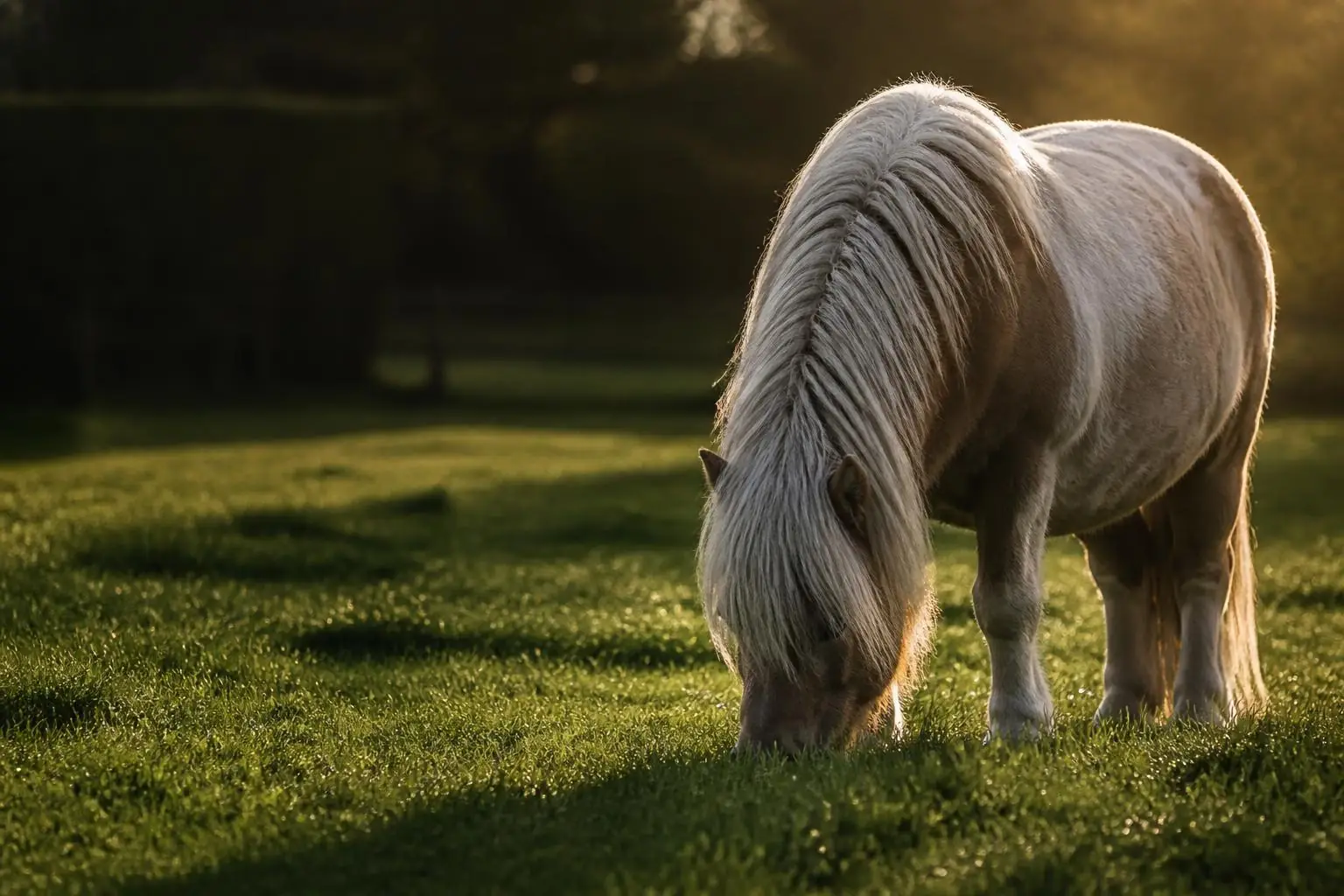

Yes, the green, lush grass of summer can confine a horse to his box within hours. Beneath an innocent appearance, a pasture that greens after rain or a closely grazed field regrowing can concentrate sugars capable of triggering laminitis, one of the most painful and feared inflammations affecting the foot. The trap is insidious because it often strikes horses in seemingly perfect health, perhaps carrying a little extra weight, with no obvious problems.
Laminitis is not a spring plague you forget by June. In summer, each thunderstorm followed by sunshine reignites grass growth and reloads the herbage with sugars. Knowing when and for which horse green becomes dangerous is already protecting his feet.
Why summer grass is a sugar trap
Grass manufactures sugar by day through sunlight (photosynthesis) and stores it in the form of fructans and simple sugars. At night, if temperatures remain mild, the plant burns this réservé to grow. But when a cool night follows a sunny day, or when the plant is stressed (drought, overgrazing, late frost), it accumulates sugars without expending them.
The result: a low pasture yellowed by drought then greened by a storm, or a field in late-afternoon full sun, can be far richer in sugar than a lush, tall meadow in the morning. These sugars in excess deregulate the intestinal flora and circulation in the foot. This is the starting point for laminitis. To understand the complète mechanism and forms of the disease, our comprehensive guide to équine laminitis details each stage.
The horses most at risk
Not all horses are equally vulnerable to grass sugar. Profiles requiring close monitoring:
- Overweight horses and ponies. Excess fat disrupts sugar metabolism. A horse that gained condition over spring enters summer as a high-risk candidate. Learning to assess body condition objectively makes all the difference: here’s how to judge your horse’s body score without scales.
- Ponies and hardy breeds. Bred to survive on poor pasture, they store energy with remarkable efficiency and end up overweight on our rich meadows.
- Older horses or those with hormonal disorders. Cushing’s syndrome and équine metabolic syndrome significantly increase risk, even on apparently modest grass.
- Horses with a history of laminitis. One episode weakens the foot permanently and makes recurrence far more likely.
Warning signs to watch for
Laminitis rarely announces itself loudly at the start. It’s small changes, easily blamed on heat or hard ground, that betray the first troubles:
Stiffening gait
The horse walks gingerly, hesitates on hard ground, turns reluctantly. He may shift weight towards his hindquarters to relieve his front feet, adopting the characteristic camped-under posture.
Warm feet and a bounding digital pulse
One or more feet abnormally warm, with a strong digital pulse palpable at the fetlock, is a significant signal. This pulse, normally subtle, becomes bounding when inflammation takes hold.
A horse unwilling to move
He stands still, refuses to move forward, lies down more than usual to relieve his feet. At this stage, pain is already sévère: this is an emergency.
Before turning a horse out in summer, consider multiple factors rather than relying on a single criterion:
- The horse’s profile: body condition, breed type, laminitis history, age and hormonal status.
- Grass condition: closely grazed and stressed pasture or regrowing after rain, full sun exposure, boot stage. Short, yellowed grass is NOT a safety guarantee.
- Time of day: sugars rise through the afternoon and peak late in the day; they fall lowest early morning after a mild night.
- Quantity consumed: grazing time and pasture area available, plus supplementary feed. Balancing the whole requires a precisely calculated ration.
Protective measures for summer
You don’t eliminate pasture, you manage it. The strategies that genuinely reduce risk:
- Turn out early morning, bring in before afternoon. Grass sugar content is lowest late at night and early morning.
- Limit grazing area with a smaller paddock or moveable fencing, rather than leaving an at-risk horse over acres of green.
- A grazing muzzle for highly sensitive horses, which substantially reduces intake whilst keeping the horse on pasture with companions.
- Be cautious after storms or cutting. Grass that regrows rapidly is grass recharging with sugar. The same applies just after the first hard frost of late season.
- Keep the horse in work and at good weight through the rest of the year. Prévention is equally about daily care and farrier follow-up.
In doubt? Call the vet, not tomorrow
Laminitis is an emergency. Every hour matters because the foot can deteriorate rapidly, with rotation of the pedal bone in sévère cases. At the slightest suspicion (warm feet, bounding pulse, a frozen horse), deny access to grass, settle the horse quietly on thick, soft bedding, and call your vet without delay. Never force a laminitic horse to move for exercise, and never improvise treatment.
Key takeawaySummer’s lush grass is no peaceful backdrop. For an overweight horse, a hardy pony or a senior, it can tip into veterinary emergency. Monitoring body condition, managing grazing time and responding at the first sign remain your best insurance against laminitis.
This article is for information only and does not replace veterinary advice. Sources: IFCE, RESPE, veterinary publications on équine metabolic syndrome and laminitis.