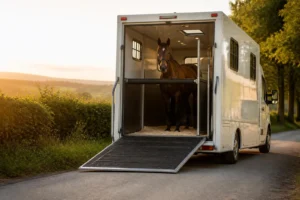

In scorching sun, a closed horsebox becomes a pressure cooker: temperatures soar well beyond 113°F (45°C), engine heat and the horse’s own respiration compound the problem, and heat stress can set in within minutes. During a heatwave, transporting your horse demands careful planning. Here is what makes a journey genuinely dangerous, the warning signs you must recognise, and the measures that truly protect your horse.
A horsebox in the sun is a rolling oven
A horsebox or lorry body is sheet metal, a dark roof and an enclosed space. Stationary without air circulation, interior temperature climbs rapidly above the outside air. At 90°F (32°C) outside, the interior can exceed 113°F (45°C), and humidity spikes dangerously: the horse breathes, sweats, and that moisture becomes trapped. Yet it is precisely this humidity that prevents perspiration from cooling the animal.
A horse sheds heat primarily through sweating. Immobilised in a confined, poorly ventilated space, it loses this cooling capacity. Add the stress of transport, which already raises heart and breathing rates, and you have the perfect scenario for heat stress. The danger is not theoretical: every summer, horses arrive dehydrated or in thermal distress after inadequately prepared journeys. The temperature thresholds at which a horse is in danger during a heatwave apply just as much, and perhaps more critically, inside a vehicle.
A summer journey relies on concrete criteria, not instinct:
- Departure time: travel during cooler hours (early morning, late evening) rather than at peak heat.
- Ventilation: upper and lower vents open, roof ventilation where available, never a closed horsebox parked in direct sun.
- Journey duration and stops: minimise travel time, avoid parking the vehicle in full sun.
- Hydration: water before, during and after the journey, with electrolytes if exertion and heat demand it.
- Horse’s condition: an older animal, overweight, unwell or already fatigued copes far less well with heat.
Warning signs of heat stress to recognise
Heat stress is an emergency. You must recognise it before, during and immediately after transport. The signals that should alert you: rapid, shallow breathing that does not settle, flared nostrils, profuse sweating or conversely abnormally dry, hot skin when the horse should be perspiring. Add to this depression, a horse staggering or refusing to move forward, elevated pulse, and sometimes a rectal temperature above 103°F (39.5°C).
Faced with these signs, stop immediately, park in shade, open everything, cool the horse with fresh water (legs, neck, between hindquarters) and call a vet. Unmanaged heat stress can lead to serious injury. When in doubt, an unnecessary vet call is far preferable: prompt horse care responses save time and sometimes the animal’s life.
Seven essential steps for transporting during a heatwave
None of these measures is complicated. Together, they make the difference between a controlled journey and a risky one.
- Adjust your travel times: depart before 9 am or after 7 pm. A night journey remains the best option during heat waves.
- Never park in direct sun: stationary, a closed horsebox becomes a thermal trap within minutes. Seek shade and keep stops in sunlight brief.
- Ventilate thoroughly: open upper and lower vents, roof vents if your vehicle allows. Air must circulate both when moving and when stationary.
- Hydrate before, during, after: offer water regularly. The question of horse hydration in summer is central; a dehydrated horse copes far less well with heat.
- Lighten your load: fewer horses means less accumulated body heat and more air per animal. Avoid heavy rugs in summer.
- Shorten journeys: split long distances into stages, plan rest stops in shade to ventilate and water.
- Plan your arrival: unload without delay, place the horse in shade or under shelter, allow it to recover before any exertion.
Never leave a horse in a horsebox or lorry parked in direct sun, even for a few minutes, even with windows and ramps slightly open. Temperature rises sharply. Heat stress is a veterinary emergency: if in doubt, cool the horse and call without delay. This article provides prévention guidance and does not replace veterinary advice.
The right vehicle makes all the difference
Not all vehicles are equal in managing heat. A well designed interior with effective ventilation, materials that limit the greenhouse effect and generous openings significantly reduces risk. Light coloured roof, distributed vents, partitions allowing air flow, capacity matched to horse numbers: these criteria matter as much as crash protection. Before buying or hiring, compare on these points by consulting our guide to choosing a horse lorry truly suited to your needs, including summer journeys.
European regulations already govern équine transport, notably ventilation and temperature conditions, through the Regulation on the protection of animals during transport. But the best rule remains the rider’s common sense: in hot weather, always ask whether the journey is truly necessary today, or whether it can wait for a cooler day.
- Parked in sun, a closed horsebox can exceed 113°F (45°C): trapped humidity prevents the horse from cooling itself.
- Travel during cooler hours (before 9 am, after 7 pm or at night) and never park in direct sun.
- Maximum ventilation, reduced load, water before, during and after the journey.
- Heat stress equals emergency: rapid breathing, depression, hot skin, above 103°F (39.5°C). Cool and call the vet.
- A well ventilated vehicle and appropriate capacity significantly reduce thermal risk.
Sources: IFCE (équine transport and welfare), RESPE, Regulation (EC) No. 1/2005 on the protection of animals during transport.