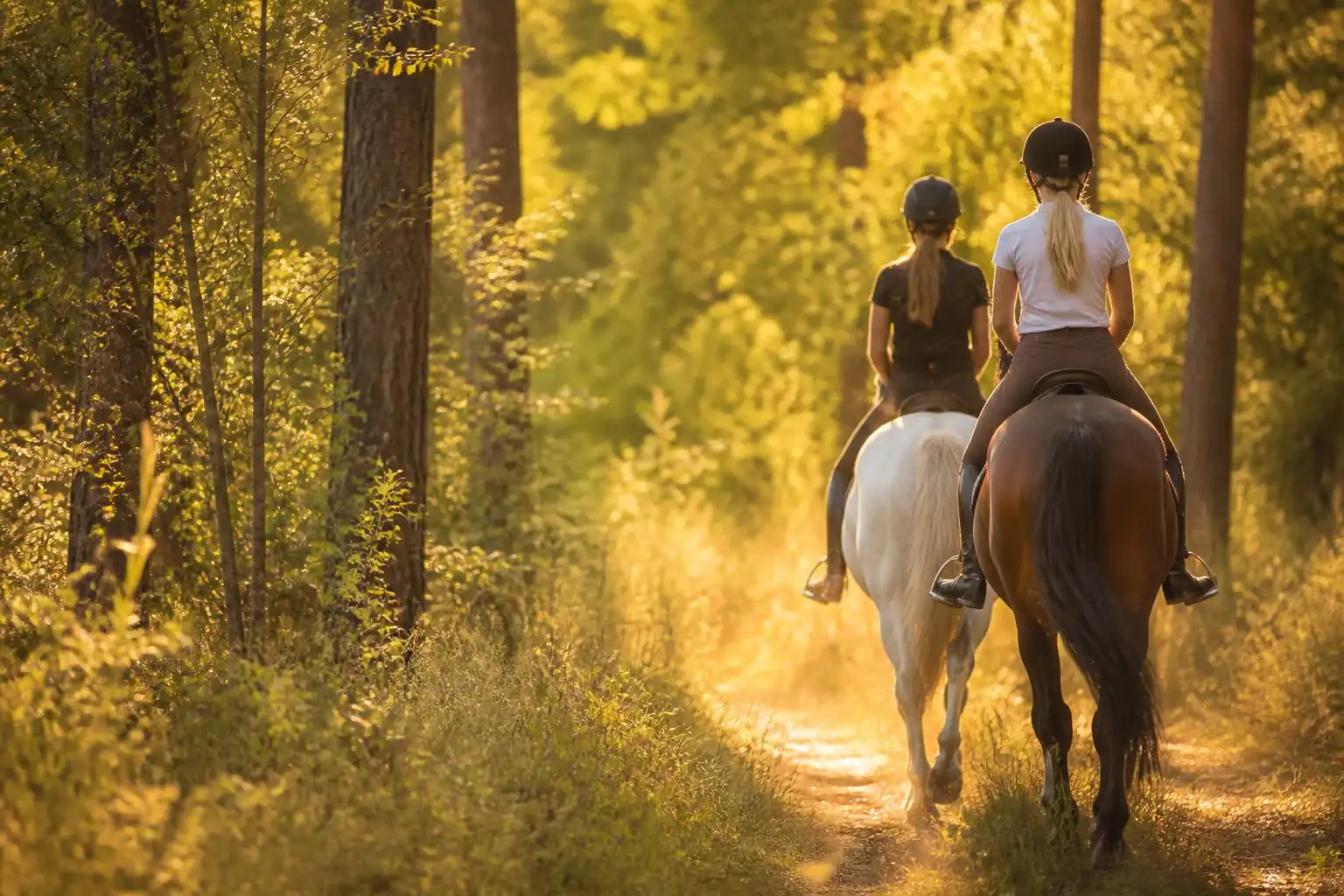

The first summer trail ride is won or lost long before you swing into the saddle: an unfit horse, poorly shod or dehydrated will transform a glorious day into a misadventure, sometimes worse. The good news is that beginner mistakes follow predictable patterns, which means they’re nearly always avoidable. Here’s what needs planning to keep the outing enjoyable for both horse and rider.
Mistake One: Overestimating Your Horse’s Fitness
A horse schooled for an hour weekly in the arena isn’t ready for 4 hours of climbing. Like any athlete, a horse builds fitness gradually: duration and terrain increase progressively over several weeks before a big outing. An unfit horse tires, stumbles and recovers poorly. Better a short, successful first ride than an ambitious one that ends badly.
Mistake Two: Neglecting Hooves and Shoeing
Trail surfaces (flint, tarmac, rocky paths) bear no resemblance to arena footing. Proper trimming or shoeing, checked by your farrier before the season starts, prevents soreness and lost shoes miles from anywhere. Discuss terrain-appropriate protection with your farrier beforehand. Neglected feet will bring the whole day to a halt.
Mistake Three: Forgetting About Water and Heat
Summer hydration matters before, during and after. Let your horse drink at clean water sources along the route, start early to avoid peak heat, and never push an overheated horse. A sweating horse loses both water and electrolytes: our detailed advice is in our guide to équine nutrition and hydration. Remember this rule: never more than 4 hours (6 kilometres) without access to water.
- Fitness: horse trained progressively for the intended distance and terrain.
- Hooves: recent trimming or shoeing, suited to terrain, approved by your farrier.
- Hydration: water sources identified in advance, early start, rest breaks in shade.
- Route: realistic distance and elevation gain, well-marked path, a loop rather than an out-and-back for first-timers.
- Safety: helmet worn, charged phone, someone knows your route and expected return time.
- Tack: well-fitted saddle to prevent back and withers soreness over distance.
Mistake Four: Not Knowing the Terrain (and What Grows There)
A horse turned out or paused on a trail may graze on poisonous plants. Know how to spot the main toxic species before letting your horse nibble roadside vegetation: our guide to plants toxic to horses helps identify them. For your route, choose a well-marked path for a first outing, avoiding main roads and technical sections.
Mistake Five: Rushing the Journey There
Many fine trails start with transport. A stressed or tired horse from a poor journey begins the ride on the wrong foot. Take care with loading, ventilation and rest stops: our guide to horse transport covers all this. And once home, tend to recovery properly, including legs and back, using the techniques in our horse care section.
For more on transport and watering away from home, consult the IFCE guidance on reducing transport stress.