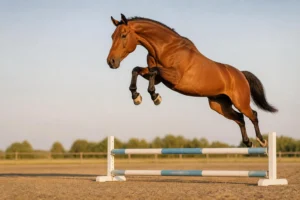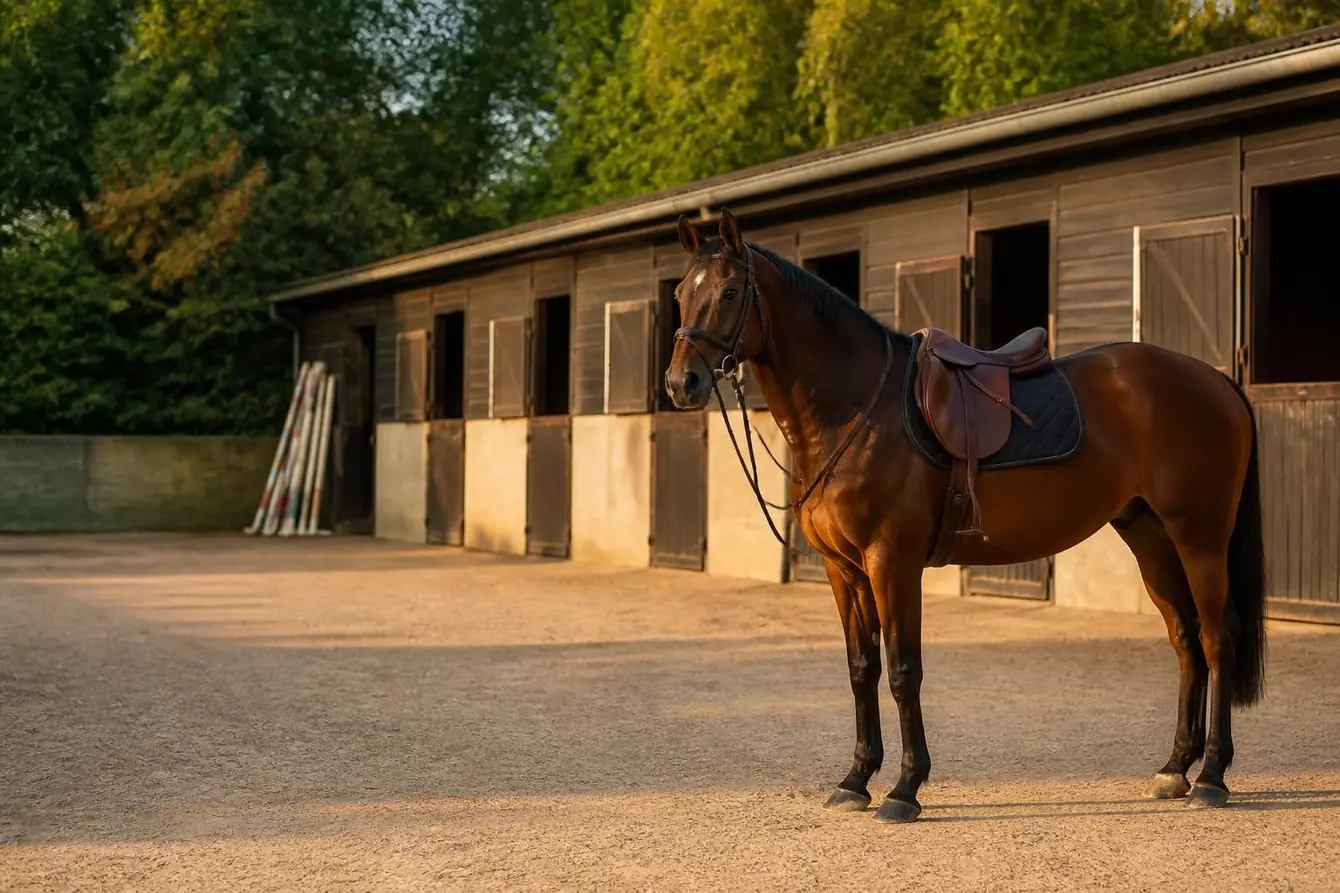

From Saturday, 5 September to Sunday, 13 September 2026, for nine days, hundreds of riding clubs and pony clubs across France will open their doors to the public. This is Journées du Cheval (Horse Days), an initiative run by the French Equestrian Federation, with this year’s slogan posing a simple question: “What if the new school year was a chance to start a new adventure?”
For families on the fence, it’s the only window in the year when you can visit several stables in a few days, see horses up close, talk to the instructor, and leave without signing anything. But you need to know what you’re actually looking at. A newly resurfaced arena and a clubhouse with a coffee machine tell you nothing about teaching quality. The condition of the ponies, the number of riders per lesson, and how clearly someone answers when you ask the actual total cost for the year tell you far more.
Here’s what the initiative covers, and eight things you can verify yourself in a single visit, with no equestrian knowledge required.
Nine days when clubs showcase themselves
The initiative runs from 5 to 13 September 2026, spanning both weekends. Participating establishments are announcing open days, introductory rides, hacks, activities, facility tours, and taster sessions in different disciplines. Several themed days are planned throughout the week, including school riding, equine-assisted therapy, equi-coaching, and equestrian careers.
One thing to understand before you go: there is no national programme, no set times, and no standard fees. The federation provides a free interactive map where each establishment lists its own event, and invites the public to contact the facility directly for their programme. By 27 August, more than six hundred appointments were already listed on this map, with the number climbing as clubs sign up.
In other words, Horse Days isn’t one event: it’s hundreds of local events sharing the same name the same week. Free entry, duration, minimum age, whether booking is required: all of that is decided club by club. A phone call the day before saves driving thirty kilometres (18.6 miles) for a fully booked session. Our Horse Days page covers what is officially announced.
Why autumn is the only time you can actually compare
In most establishments, riding lessons aren’t sold individually but as an annual package or termly contract. The Wednesday afternoons and Saturday mornings that every family wants are allocated in September and don’t come free again afterwards. Once you’ve paid, changing your mind is expensive.
The federal sports season also changes at the same moment: it runs from 1 September to 31 August, and your licence follows this exact calendar. That’s what makes this fortnight a decision point, not just a September outing. We’ve detailed what a licence actually covers and what it doesn’t in our article on the August 31 changeover.
The good news is that timing works in your favour. In September, a club needs to fill its lesson slots. It answers questions, shows you facilities, lets you watch a class. In January, the same request is treated as a whim.
Eight things you can judge a club on in a single visit
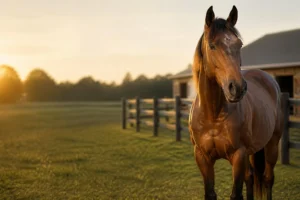
- The condition of the horses and ponies. No prominent ribs, no soft bellies on thin legs. Clean coat, recently trimmed hooves, no wounds, and no hair loss where the girth, headcollar, or the corners of the mouth would sit.
- The number of riders per instructor. Count the riders in the arena while you visit. Beyond eight to ten beginners per instructor, nobody can correct positions or intervene quickly if something goes wrong.
- The displayed qualifications. A paid instructor must hold a state diploma and professional card. Diplomas and the facility’s authorisation are usually displayed in reception. If they’re nowhere to be seen, that’s a question worth asking calmly.
- The loaned equipment. Look at the helmets they lend to children: uncracked shells, complete chin straps, adjustable fit, European safety standard clearly marked inside. Check the girths, stirrup leathers, and saddle pads too. Dry, cracked leather on club equipment means there’s no maintenance budget.
- The arena surface and fencing. Arena footing that’s neither concrete nor so deep horses sink into it, fences with no barbed wire, gates that close, a visible first aid kit, and an accessible telephone.
- Clear pricing. Ask how many lessons are in the annual package, what happens during school holidays, whether the licence and club membership are included, and what happens to the money if your child is injured in November. A precise, written answer is a very good sign.
- The label and federation membership. Poney Club de France, Cheval Club de France, École Française d’Équitation: these designations correspond to set standards. We’ve covered this in our guide to federation labels.
- How staff speak to riders. Listen to a lesson from the edge of the arena for five minutes. An instructor who knows their students’ names, who explains rather than shouts, and riders who groom and untack their own pony: that’s the most reliable indicator, and the only one you can’t fake for an open day.
The horses speak before the instructor
A riding school horse works hard, often several hours a day, with riders still learning to sit properly. That’s not a problem in itself: it’s a job, and a good riding school horse is worth its weight in gold. The problem starts when nothing makes up for that workload.
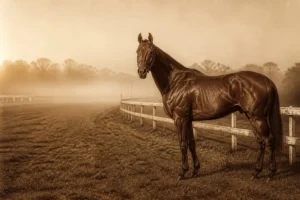
The signals worth noting are visible without any technical knowledge. A horse that backs away when you approach its box, ears pinned back when being saddled, ponies that never go out to pasture or a paddock, visible lameness at walk on hard ground, hollow backs in several horses from the same stable. By contrast, animals that come to their stable door, that graze together in the afternoon, that are groomed by children without anyone tensing up: that tells you an establishment is doing well.
Ask also how many hours a pony works in a day and whether it’s rotated with others. You can ask this simply: how many lessons does Sweetie have today. The answer, and especially the expression on the person’s face as they give it, is worth more than any brochure.
The advertised price is almost never what you’ll pay
The figure posted at reception is the lesson package price. You then add the federation licence, club membership if it exists, personal equipment, holiday camps if you take them, Galop (level) exam fees, and sometimes competition entry fees. This total is what actually fits (or doesn’t) in your family budget in February, not the lesson package price.
We’ve separately calculated the cost of a single lesson and the cost of a full year, with striking variations from one region to another. Two clubs twenty kilometres (12.4 miles) apart can show price differences of several hundred euros for comparable services, and the reverse is also true: the cheapest isn’t always cheapest in the end if the package excludes half the school holidays.
One last point few people think to ask about: their make-up lesson policy. A child ill for three consecutive Wednesdays, that happens every winter. Some clubs offer a replacement slot, others don’t. That’s a conversation to have in September, not January.
Trying before buying a licence, it’s all arranged
Many families think you need to be licensed to ride a horse for the first time. That’s not true. The insurance contract taken out by the federation for member establishments covers non-licensed people during supervised introductory sessions, within a short time limit, precisely to make trial lessons possible. There’s also a temporary licence option, designed for camps and discovery periods.
So the question to ask the club is straightforward and legitimate: is this discovery session covered, and under what terms. A serious establishment answers in three sentences. All the details on licence types, SIF account numbers, and what they allow is gathered in our file on the licence, SIF account, and competitions, and the insurance itself is described on our rider insurance page.
What you absolutely should not buy before the first lesson
The temptation to leave an open day with a complete outfit is real, and it’s the best way to waste two hundred pounds (about ninety euros) on nothing. Nearly all clubs lend a helmet and riding hat for discovery sessions, and sturdy jeans with closed shoes with a small heel are enough to start.
Only one purchase is worth making early, and that’s a helmet. It’s the one piece of equipment that doesn’t share well, that must fit perfectly, and that needs replacing after any impact, even with no visible damage. We’ve compared models and explained safety standards in our riding helmet guide. Everything else can wait until the first term, when you’ll know if the passion sticks.
The child coming down from the pony will tell you what matters
A discovery session rarely lasts more than thirty minutes, and some of that is spent on the ground. That’s normal, and it’s actually a good sign: brushing, picking out hooves, fitting the bridle, leading the pony back, that’s as much part of riding as the trot.
Watch what happens when they come back. A child who talks about the pony by name, who asks when they can go again, who describes what they did rather than what they were told, has encountered something real. A child who was frightened, who was shouted at, or left standing for fifteen minutes waiting for their turn in the middle of the arena, that tells you something too, and it applies to the whole club. If several disciplines are on offer during the week, try getting them to sample two: our overview of equestrian sports and our pony guide help you see what exists beyond the word “riding.”
Finding an event near you
Two resources complement each other. The interactive map for the initiative lists facilities that have registered an event for these nine days. For everywhere else in the year, our equestrian directory lists establishments by town, with their activities, so you can prepare a visit and compare before you go. Our guide to riding centres and stables explains what distinguishes a pony club from a private livery yard, two very different types of establishment with different purposes.
One final tip: visit two clubs, not one. The second will show you what you missed at the first, and it only costs an hour.
Non-negotiable, even for a ten-minute introduction
- A helmet, fastened, for everyone who rides, regardless of age or duration.
- Supervision by a qualified person, at a registered establishment, with public liability insurance.
- Never two children on the same pony, never a child held at arm’s length on a horse by someone on the ground who doesn’t have the lunge rope.
- Closed shoes with a small heel, and nothing loose around the neck.
- Nobody walks behind a horse without speaking to it first and without someone holding it.
- If anything makes you uncomfortable during the visit, you owe no explanation: leave and look elsewhere.
To remember
- Horse Days 2026 runs from Saturday, 5 September to Sunday, 13 September, for nine days, in establishments voluntarily signed up to the federation initiative.
- There is no national programme, no set times, no standard fees: each club sets its own arrangements, and calling ahead remains essential.
- More than six hundred appointments were already listed by late August on the initiative map, with new clubs being added right up until the last moment.
- The federal season changes on 1 September, and annual packages fill up in the first two weeks: this is when you can still compare.
- Eight things are enough to judge a club without knowing horses: animal condition, riders per instructor, displayed qualifications, loaned equipment, arena surface and fencing, fee clarity, labels, and how staff speak to students.
- The lesson package price is not the yearly cost: licence, membership, equipment, camps, and exam fees add to it.
- A supervised discovery session is provided by the federation without a year-round licence, within a short time limit, and a temporary option exists to extend your trial.
- Buy nothing before the first lesson, except possibly a properly fitting helmet.
Which riding club is within twenty minutes of you
Riding centres, pony clubs, private stables, and livery yards, town by town, with the activities offered: prepare your visit before you head out.
And if the rider in your family is you, the question of qualifications comes up quickly: the Galop programme, what is required at each level, and how they build from one club to another are all gathered in our Galops guide.
Sources consulted 27 August 2026: official Horse Days page from the French Equestrian Federation, dates, activity titles, themed days, and interactive event map; information notice for FFE licence insurance contracts covering conditions for supervised discovery sessions and temporary licences; definition of the sports season published by the French Institute for Horse and Equestrianism. Equirider is affiliated with no federation, and fees and programmes are the responsibility of each establishment.