
Yes, an ordinary pasture plant can kill a horse in just a few hours. Yew is the most acute threat (200 to 400 g of leaves are enough), but ragwort, acorns, autumn crocus and sycamore maple claim victims every year. The danger peaks in summer, when grass becomes sparse and scorched, and horses begin browsing hedgerows and plants they would normally avoid. Here are the species to watch, how quickly they act, and what to do in the critical hour that follows.
Why the risk intensifies in summer
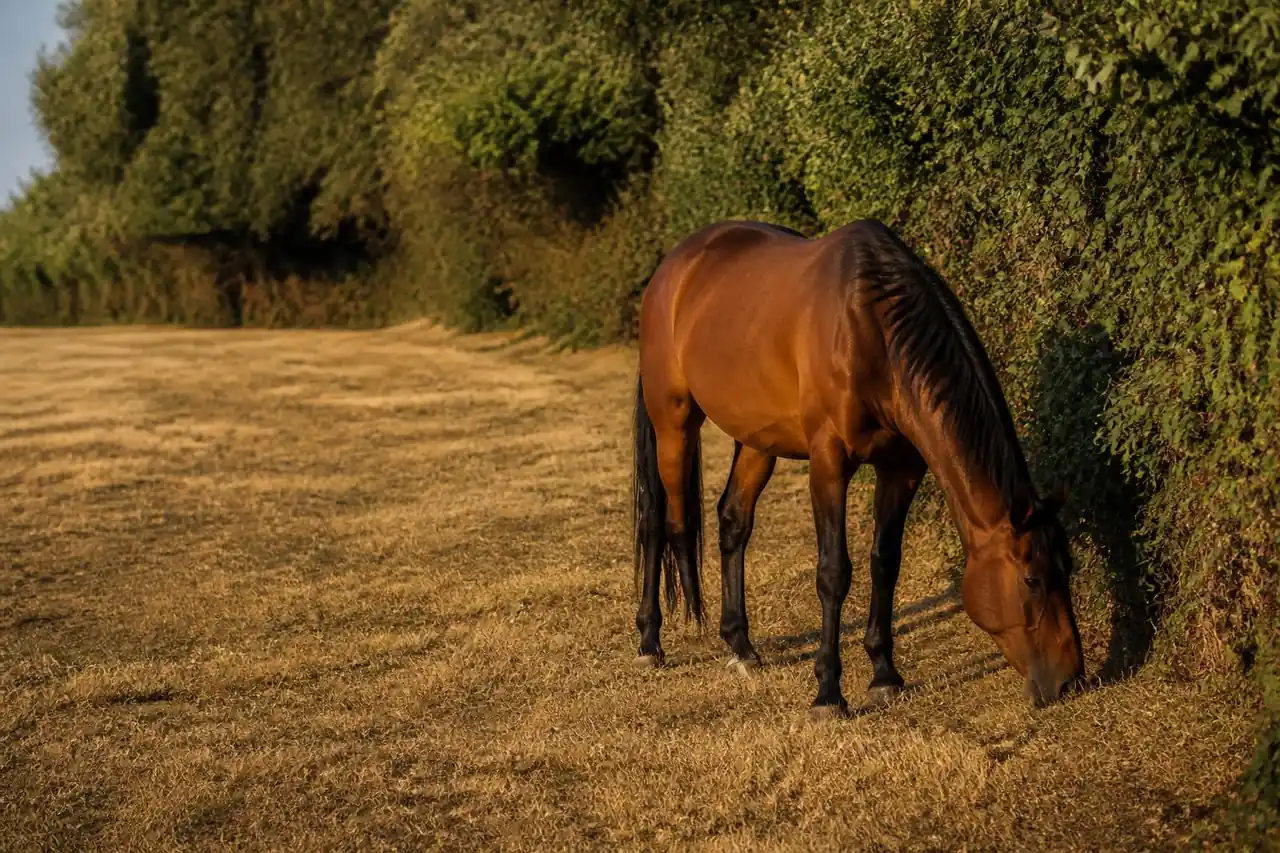
A well-fed horse on a lush pasture will naturally sort its food and instinctively avoid most toxic plants, which tend to taste bitter. But the moment grazing becomes thin and dry, that protective instinct vanishes: the animal grows hungry, browses lower, tears at roots, and forages along borders and hedgerows. This is precisely where the most dangerous species thrive. A balanced ration and supplementary forage remain the first line of defence: a satisfied horse rarely seeks out the plant that will kill it.
The second classic summer trap involves hedge trimming. Yew or thuja branches tossed over a fence, or grass clippings, become lethal bait. Yew remains toxic even when dry, sometimes for months on end.
The four plants that kill fastest
1. Yew (Taxus baccata): death within minutes to hours
It is the fastest poison in the field. Taxine, an alkaloid found in needles and seeds, stops the heart. The lethal dose is shockingly small: 200 to 400 g (7 to 14 oz) of leaves for an adult horse, equivalent to a single mouthful torn from an ornamental hedge. The horse is often found dead near the fence with no sign of struggle. There is no antidote. The only protection is the complète absence of yew within reach, including cut branches.
2. Ragwort (Senecio jacobaea): the silent killer
Daisy-like yellow flowers, common on poor and overgrazed pastures. Its pyrrolizidine alkaloids destroy the liver gradually and irreversibly: the toxin accumulates, and the animal may be poisoning itself for weeks before showing any symptoms. Bitter to the taste, horses reject it when grass is plentiful, but consume it when pasture is depleted. Insidiously, once dried in hay it loses its bitter taste without losing its toxicity, becoming undetectable during haynet sorting.
3. Acorns and oak (Quercus): colic and kidney damage
Leaves and acorns are rich in tannins. When ingested in quantity, especially during grass shortage, they cause colic, dark diarrhoea and sometimes fatal kidney damage. A horse that acquires a taste for acorns may eat dangerously large amounts. At the first sign of digestive distress, knowing the first steps to take during colic can save precious time.
4. Sycamore maple (Acer pseudoplatanus): atypical myopathy
This is the threat most closely monitored by veterinarians. The toxin, hypoglycin A, concentrates in the samara seeds (the helicopter-like fruits in autumn) and in young seedlings and shoots (in spring). It triggers atypical myopathy, massive muscle destruction with a mortality rate of 70 to 90 per cent. The RESPE network tracks disease clusters across France each year. Typical symptoms include stiffness, trembling, very dark brown urine, and a horse remaining recumbent.
And the rest: autumn crocus, oleander, foxglove, black locust
The list does not end there. Autumn crocus from damp meadows (colchicine alkaloid), ornamental oleander (a handful of leaves suffices), foxglove, box, black locust, dog’s mercury and bracken fern are all toxic to varying degrees. The rule: whenever in doubt about any plant in the pasture or neighbouring hedge, identify it before allowing the horse access. Our référence guide details each species in the resource toxic plants for horses.
Call your veterinarian immediately if your horse shows any of these signs without obvious cause:
- sudden depression, stumbling or remaining down;
- muscle tremors, stiffness, difficulty moving;
- very dark brown or red urine (a strong indicator of myopathy);
- colic, diarrhoea, excessive salivation;
- irregular heart rate, abnormally pale or bluish mucous membranes.
What to do in the critical hour
When poisoning is suspected, speed makes the difference. In order:
- Call your veterinarian immediately. This is the first reflex, before anything else. Describe the symptoms and when they appeared.
- Remove access to the plant. Move the horse away from the pasture or isolate the suspected area to prevent it or other horses from consuming more.
- Do not attempt to induce vomiting. It is pointless and impossible: horses cannot anatomically regurgitate. Do not give any medication or home remedy without veterinary advice.
- Limit movement. If muscle damage is suspected, forcing a horse to walk will worsen the injury. Keep it calm.
- Collect a sample. A photo or piece of the suspected plant will help your veterinarian identify the toxin and tailor treatment.
Before each grazing season, a walk around the field and its surroundings allows you to evaluate hazards using simple criteria:
- Grass density: sparse pasture drives horses to browse plants they would otherwise ignore.
- Hedges and trees bordering the fence: yew, sycamore, oak, oleander, black locust less than a neck’s length away.
- Damp areas: autumn crocus and buttercups thrive here.
- Neighbouring garden waste: grass clippings and hedge trimmings deposited near the fence.
- Hay quality: hay from poor meadows may contain dried ragwort, invisible to inspection.
Prévention beats crisis management
Prévention comes down to a few simple habits: maintaining the pasture so it stays dense, fencing at a safe distance from dangerous hedges, pulling out ragwort colonies before flowering (wearing gloves), verifying hay provenance, and never depositing hedge clippings in a field. During heat waves, when grass scorches, supplementary forage dramatically reduces risk: a satisfied horse will not seek poison. Attention to feeding also lowers the risk of laminitis, the other major threat of the summer season. Adding a pasture check to your routine care takes only minutes and may save a life.
This article is for information and prévention purposes only and does not replace veterinary advice. If poisoning is suspected, contact a veterinary professional immediately. Authority sources: IFCE (Institut français du cheval et de l’équitation), RESPE (Réseau d’épidémio-surveillance en pathologie équine, particularly for atypical myopathy), ANSES and Vetagro Sup.