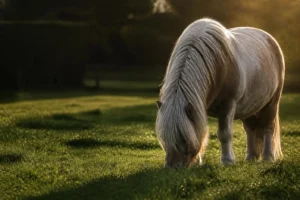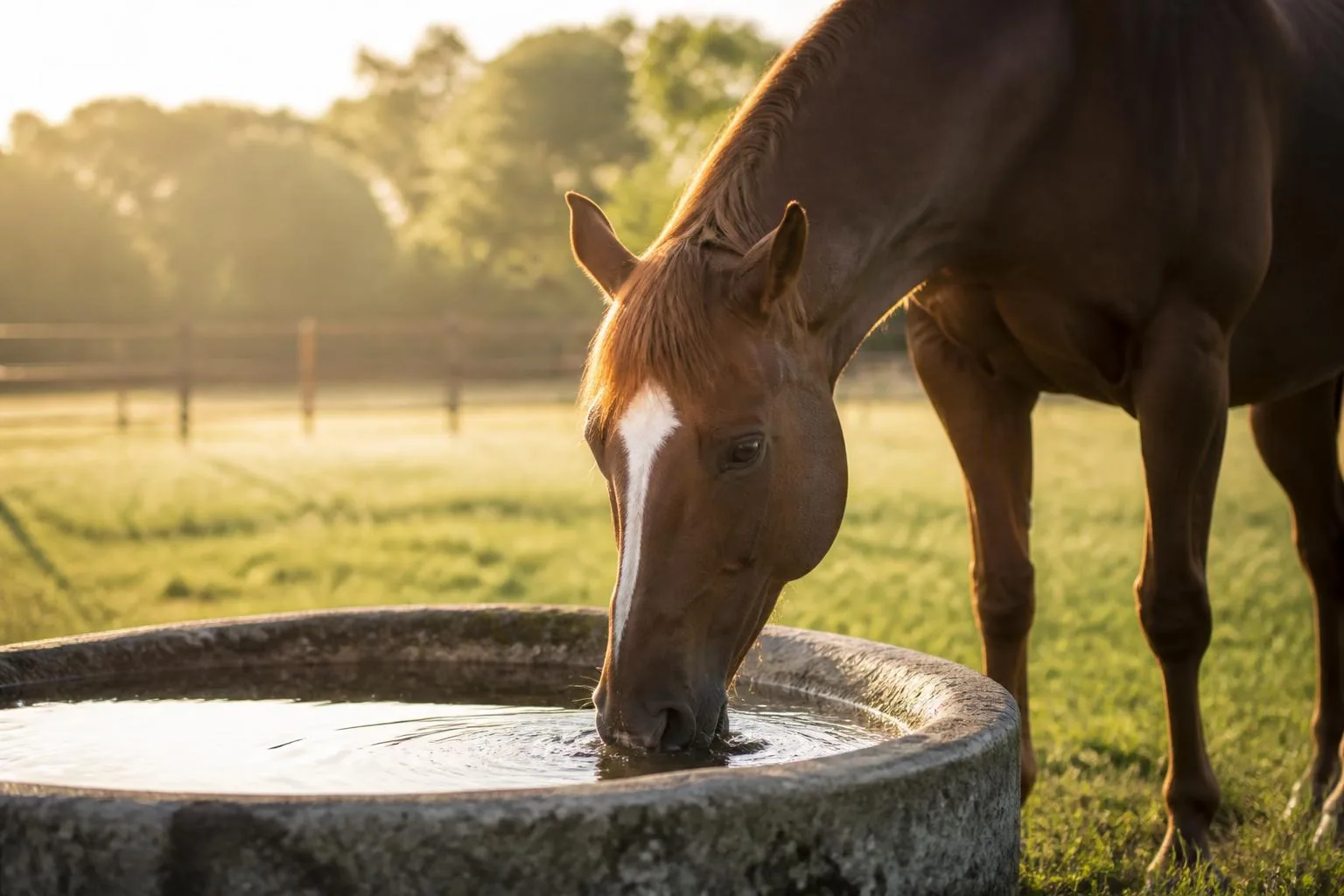

An adult horse typically drinks between 30 and 50 litres of water per day, rising to 60 or even 70 litres (16-18 US gallons to 15-18 US gallons in extreme heat) during periods of intense heat, exertion or lactation. In summer, the genuine concern is not whether your horse feels thirsty: it is that he may be drinking less than he is losing through perspiration, a shortfall that may not be immediately obvious. Here’s how to maintain proper hydration when temperatures soar, and how to recognise dehydration before it becomes a veterinary emergency.
How much water does a horse really drink in summer?
According to the IFCE (Institut Français du Cheval et de l’Équitation), daily water consumption typically ranges between 20 and 60 litres (5-16 US gallons), and increases markedly with heat, work and a dry forage diet (hay, haylage). A horse fed hay will naturally drink more than one grazing fresh grass, since spring pasture already contains significant moisture. Golden rule: water deprivation should never exceed 4 consecutive hours, particularly before exercise.
Why clean water makes all the difference
A fastidious horse will refuse warm, stagnant or soiled water, and may slip into under-consumption without your noticing. In summer, check water troughs several times daily, clean them thoroughly, refresh the water, and ensure that a subordinate horse in the field has unobstructed access to the water source without being chased away. Fresh, clean water available at all times represents the cornerstone of summer care.
Electrolytes and sweat loss: the overlooked élément
When a horse sweats, he loses far more than water: he loses vital minerals including sodium, chloride and potassium. After strenuous exercise or an exceptionally hot day, rehydration with plain water alone may not suffice. A simple salt lick on hand covers many needs; electrolyte supplementation should be tailored to the individual horse, ideally under veterinary guidance, and never in excess. On this matter, seeking professional advice is far better than guessing.
- The skin pinch test: Gently pinch the skin on the neck; it should spring back within 2 seconds. A skin fold that persists is a warning sign.
- The gums: Should be pink and moist under normal conditions; dryness or stickiness indicates dehydration.
- Capillary refill time: Press the gum and release; colour should return within 2 seconds.
- General lethargy: A sluggish demeanour, sunken eyes, reduced urine output or dark urine are all concerning.
- Water consumption: Monitor the water trough level daily, this is your most reliable indicator.
If you are seriously concerned (persistent skin tenting, lethargy, refusal to drink), call your veterinarian immediately.
Essential routines during extreme heat
Schedule work for early morning or evening, provide shelter from direct sun, avoid transport during peak heat, and offer tepid rather than ice-cold water to a sweating horse. A horse suffering from excessive heat can be cooled by thorough hosing with cool water, followed by scraping away excess moisture. For guidance on genuinely dangerous temperature thresholds, see our feature on heat stress and the at-risk horse, and for shelter provision in the field, our article on essential shelter against summer heat.
Adjusting the feed, not just the water
Hydration is part of a wider nutritional balance. A well-formulated ration, maintained body weight and unrestricted water access form an integrated whole. To calculate portions according to age, workload and your horse’s condition, use our horse ration calculator based on INRA guidelines, and to monitor body condition during peak grazing season, try our weight and body condition score calculator.
Source: IFCE, Water and watering for horses. This article is informational and does not replace the advice of your veterinarian.