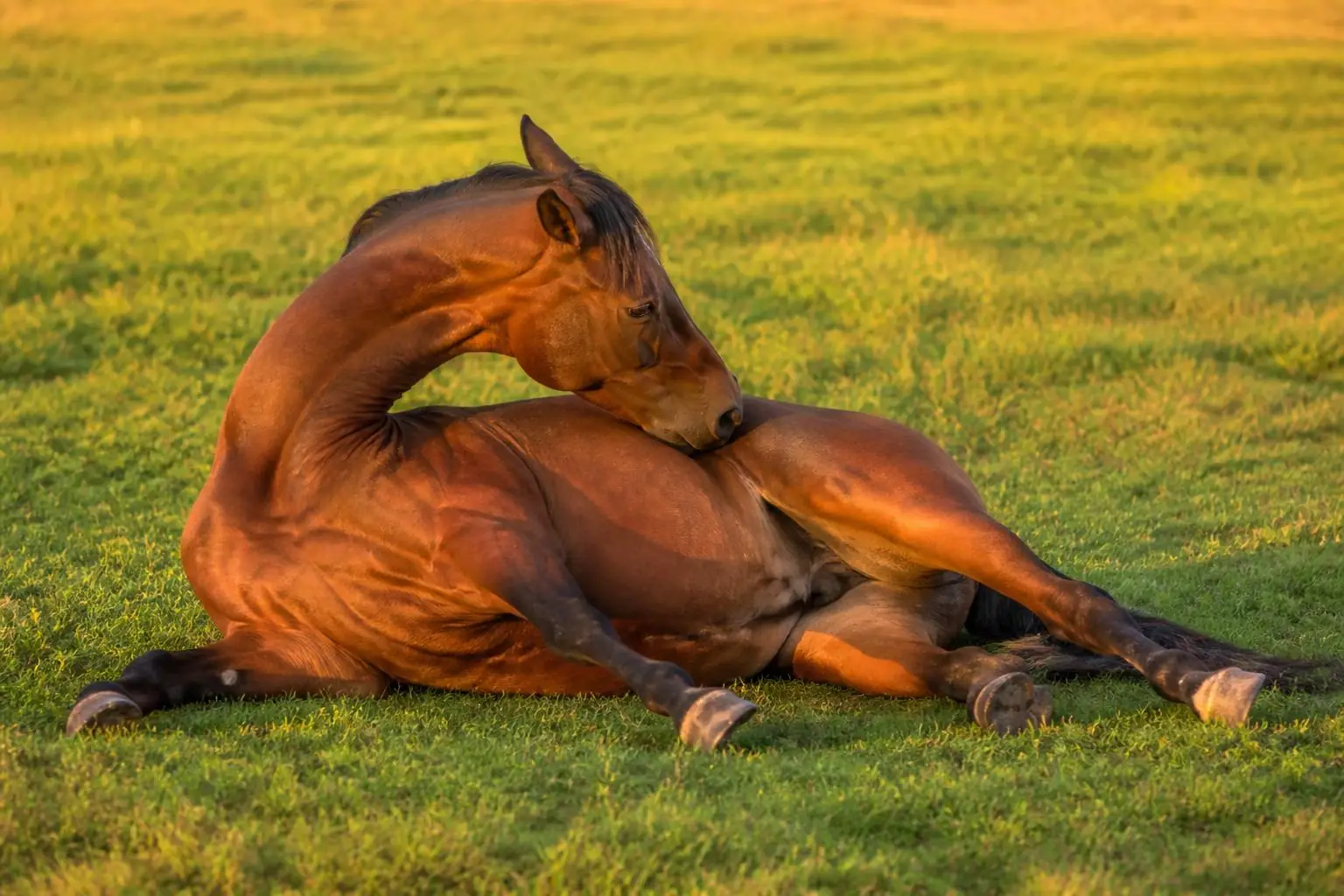

Your horse lies down, gets up, paws at the ground, turns to look at his belly. He stops eating, he sweats, he kicks at his flank. These signs demand your immediate attention: they often signal colic. Colic remains the leading cause of death in horses, and every minute matters. The good news is that a few simple actions, taken early, can change the outcome. Here is how to respond, what to do, what never to do, and when to call the vet without delay. To keep the protocol at hand, our guide to first aid in colic details each step.
Recognising colic before it is too late
Colic is not a disease but abdominal pain. Horses cannot vomit, and their long digestive tract blocks, twists or dilates easily. Pain is the first thing you see. A healthy horse grazes, rumbles his hay, responds to his surroundings. A horse with colic withdraws into himself.
The classic signs are easy to spot once you know them. The horse rolls or lies down then gets up repeatedly. He paws the ground with a foreleg. He turns his head towards his flank, sometimes nipping at his belly. He strains as if to urinate without success. He sweats though he is doing nothing. He refuses all food, even a treat. His droppings become scarce or stop altogether. In sévère cases, he throws himself on the ground violently. Any single one of these signs is reason enough to act.
Not all colic cases are equal. These points help the vet assess severity and help you describe the situation by phone:
- Pain intensity: a horse throwing himself down and rolling relentlessly is suffering more than one lying quietly, gently pawing.
- Heart rate: a high pulse climbing higher is a strong warning sign. At rest, an adult horse averages 28 to 40 beats per minute.
- Gum colour: pink, moist gums are reassuring; grey, purple or dry gums are concerning.
- Gut function: presence or absence of droppings, belly distension, digestive sounds present or silent.
- Duration: discomfort passing in ten minutes is nothing like pain that lasts or returns in waves.
Why colic strikes harder in summer
Colic has many causes: blockage from impacted feed, intestinal spasm, twist, sand ingestion, parasites, ulcers, worn teeth grinding poorly. Summer adds its own pitfalls. Heat makes horses drink less whilst they sweat more, and a dehydrated intestine moves food more slowly. Digestive contents dry out and block. Ensuring good water intake in summer is one of the most direct ways to reduce risk.
Dry ground in July and August brings another danger. When grass becomes sparse, horses graze close to the soil and swallow sand that accumulates in the intestine. Ration changes play a role too: abrupt switches to hay as pasture scorches, new forage batches, transport, stress. A herbivore’s digestive system thrives on routine. Any sudden break increases risk. Adjusting quantities methodically, using for example a tailored ration calculator, smooths out these shocks.
The first steps that truly matter
Facing colic, your role is not to treat but to secure and observe whilst awaiting the vet’s advice. Start by calling your vet, or decide to call very quickly if signs persist. In the meantime, make your horse safe.
Remove food. Empty the hay net, take away hay and grain, cut off pasture access. A digestive tract already blocked should receive nothing more. Leave water available without forcing intake. Place the horse in a calm, safe space: a thickly bedded box or small paddock, away from obstacles where he might injure himself rolling. Stay with him and note what you see: time of onset, behaviour, last dropping, last meal, temperature if you can take it. This information is gold for the vet on the phone.
- Never give any medication on your own initiative. Painkillers mask signs and skew the vet’s examination, sometimes to the point of delaying a life-or-death decision.
- Never feed the horse, even if he asks. No hay, no grain, no treats until the vet gives clearance.
- Never force him to trot or canter for hours. Exhaustion worsens his condition.
- Never try home remedies like oil, warm wine or herbal teas. They have no proven effect and may harm.
- Never waste time waiting for it to pass on its own when pain is sévère or prolonged.
Should you walk a horse with colic?
Everyone asks this, and the answer deserves nuance. Walking a horse with colic can help for one reason only: to prevent him from rolling violently and injuring himself, and to keep him somewhat active. Quiet walking at a walk, in hand, on flat ground, is sometimes useful whilst awaiting the vet.
But walking does not cure colic and unravels no twist, despite common belief. It should never become an exhausting marathon. If the horse wants to lie down quietly without rolling violently, you may let him: a horse lying calmly does not twist his intestine simply by being on the ground. The real danger is brutal, repeated rolling. Walk him if it calms him, stop if it exhausts him, and always follow the vet’s instructions once you have him on the phone.
When to call the vet in an emergency
When in doubt, call. Mild colic that passes is always better than a twist caught too late. Certain signs demand an immediate call, without hesitation. Severe pain, a horse throwing himself down without relief, grey or purple gums, a belly swelling before your eyes, a racing heart, no droppings for hours, or pain lasting beyond twenty to thirty minutes.
On the phone, be précise. Describe the time of onset, the signs observed, last dropping, last meal, gum colour, and temperature if you have taken it. The vet will judge whether to come urgently and will guide you whilst waiting. Some colic cases settle with simple médical treatment, others require surgery that succeeds only if decided quickly. How fast you react directly affects your horse’s chances. To anchor these reflexes, keep our emergency colic response checklist within reach.
Prévention beats crisis
The best colic is the one that never arrives. Prévention rests on a few solid habits. Feed regularly, fibre-rich, with hay freely available or nearly so, and avoid large grain meals. Change forage gradually, over one to two weeks, never overnight. Always leave clean, fresh water available, especially in summer.
Exercise your horse daily, as immobility slows transit. Monitor ground conditions to limit sand ingestion, and keep his teeth and worming current, two points often overlooked in colic causes. Lastly, watch stressed horses or those prone to gastric ulcers, more exposed to digestive troubles. These daily actions are part of sound seasonal health care.
- Repeated rolling, pawing, a horse watching his flank, refusing food: act at the first sign.
- Remove all food, leave water, secure the horse, call the vet and write everything down.
- No medication, no home remedies, no exhausting walks without veterinary guidance.
- When in doubt, call. How fast you respond directly affects your horse’s chances.
- Water freely, hay in abundance, gentle transitions: summer demands heightened vigilance.
This article provides guidance on recognising colic and responding quickly, but never replaces veterinary advice. Only a professional can diagnose, prescribe treatment and administer medication. Give nothing without prescription: painkillers given too early can mask a surgical emergency and cost your horse his life. Facing colic, your role is to secure, observe and call. Guidance from leading bodies such as the IFCE and RESPE all point the same way: in doubt, contact your vet without delay.
The essentials to take away
Colic shows as abdominal pain: a horse rolling, pawing, looking at his flank, refusing food, sweating without effort. Your first steps come down to a few simple reflexes: remove food, leave water, secure the animal, call the vet and note everything, never medicating yourself or exhausting the horse by walking. Summer heightens risk through dehydration, sand and ration changes, making prévention even more valuable. The factor that saves most horses is speed. At any doubt, turn to our colic first aid guide and contact your vet.