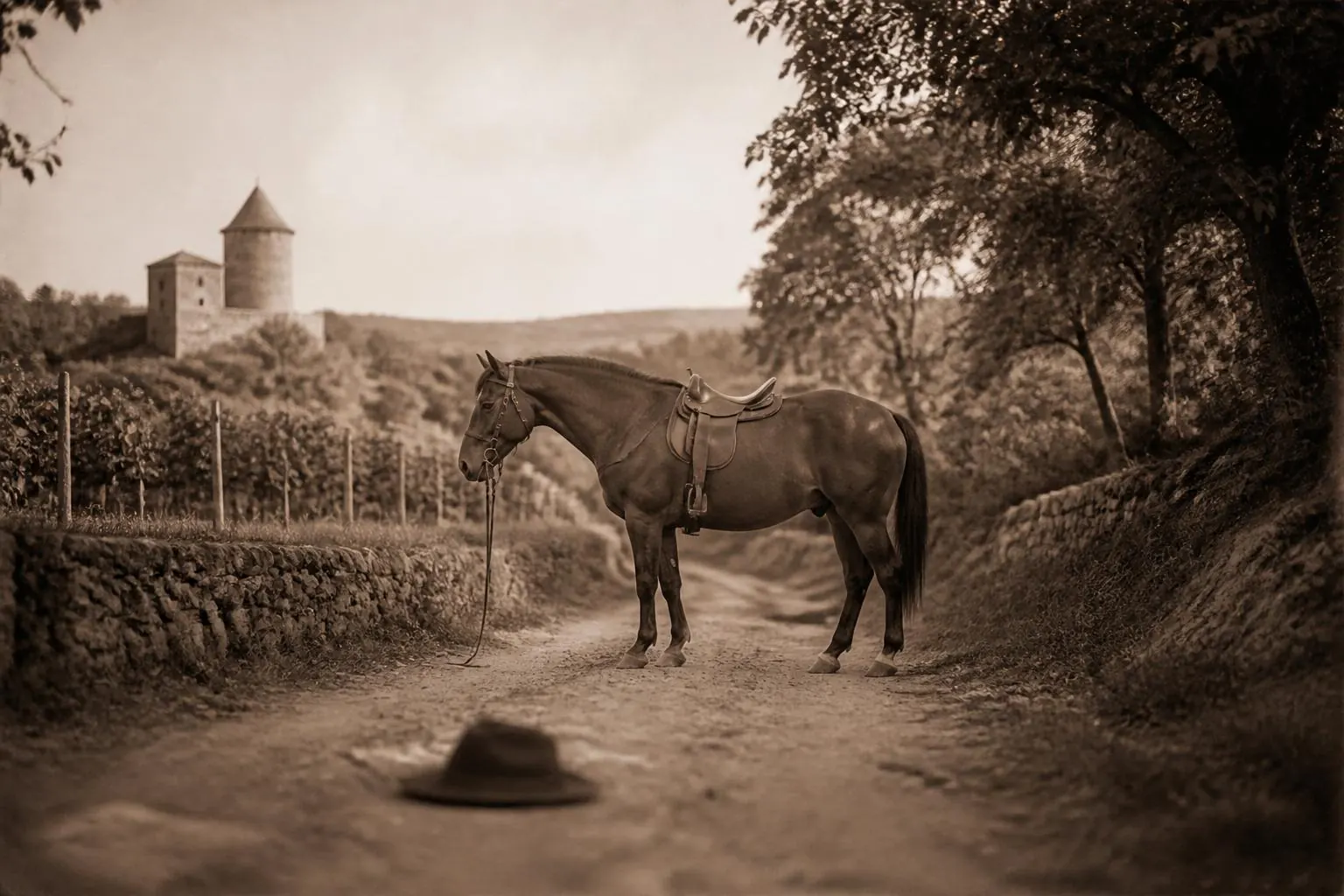

Between 1567 and 1570, during the thick of civil war, Michel de Montaigne rides out for a gentle hour’s journey from his home. On the return, one of his servants, galloping flat out on a sturdy carthorse, collides with him head-on. Carried back to the house “presumed dead” for more than two hours, he would later write the chapter of the Essays where he recounts what it feels like to believe oneself dying. His Dordogne tower, where he wrote it, opens for a dramatised visit on Sunday, 20 September 2026, during European Heritage Days.
A ride “in perfect safety”, on the wrong horse
Montaigne opens his account with uncertainty: “during our third troubles, or the second, I cannot quite recall”. The Second War of Religion ran from 1567 to 1568, the Third from 1568 to 1570: the accident occurred between his thirty-fourth and thirty-seventh years, when he was still a counsellor at the Bordeaux parliament and his château stood, in his own words, “in the thick of all the troubles of France’s civil wars”.
The detail that speaks to every rider comes next. Believing himself safe so close to home, he saw no need to take “better equipment”: he rode “a horse quite comfortable, but hardly reliable”. A comfortable horse, not a safe one.
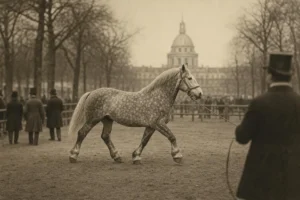
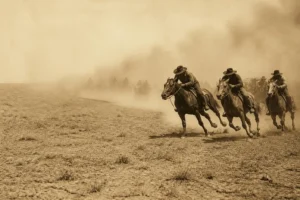
On the return, one of his men, “tall and strong, mounted on a powerful carthorse with a mouth completely out of hand, fresh otherwise and vigorous”, wanted to show off and outpace his companions. He drove his horse “at full gallop straight into my path”, and came “like a colossus down upon the small man and small horse”. The carthorse of the day was the workhorse, sturdy and uncut, the mount of the household; a mouth “completely out of hand” was a mouth that no longer responded to the bit.
The tally in a single sentence: the small horse “knocked down and sprawled senseless”, Montaigne “ten or twelve paces beyond, stretched on his back, his face wholly bruised and torn”, his sword more than ten paces away, his belt in pieces, “having neither movement nor feeling, no more than a log”. It was, he writes, the only time he lost consciousness until then.
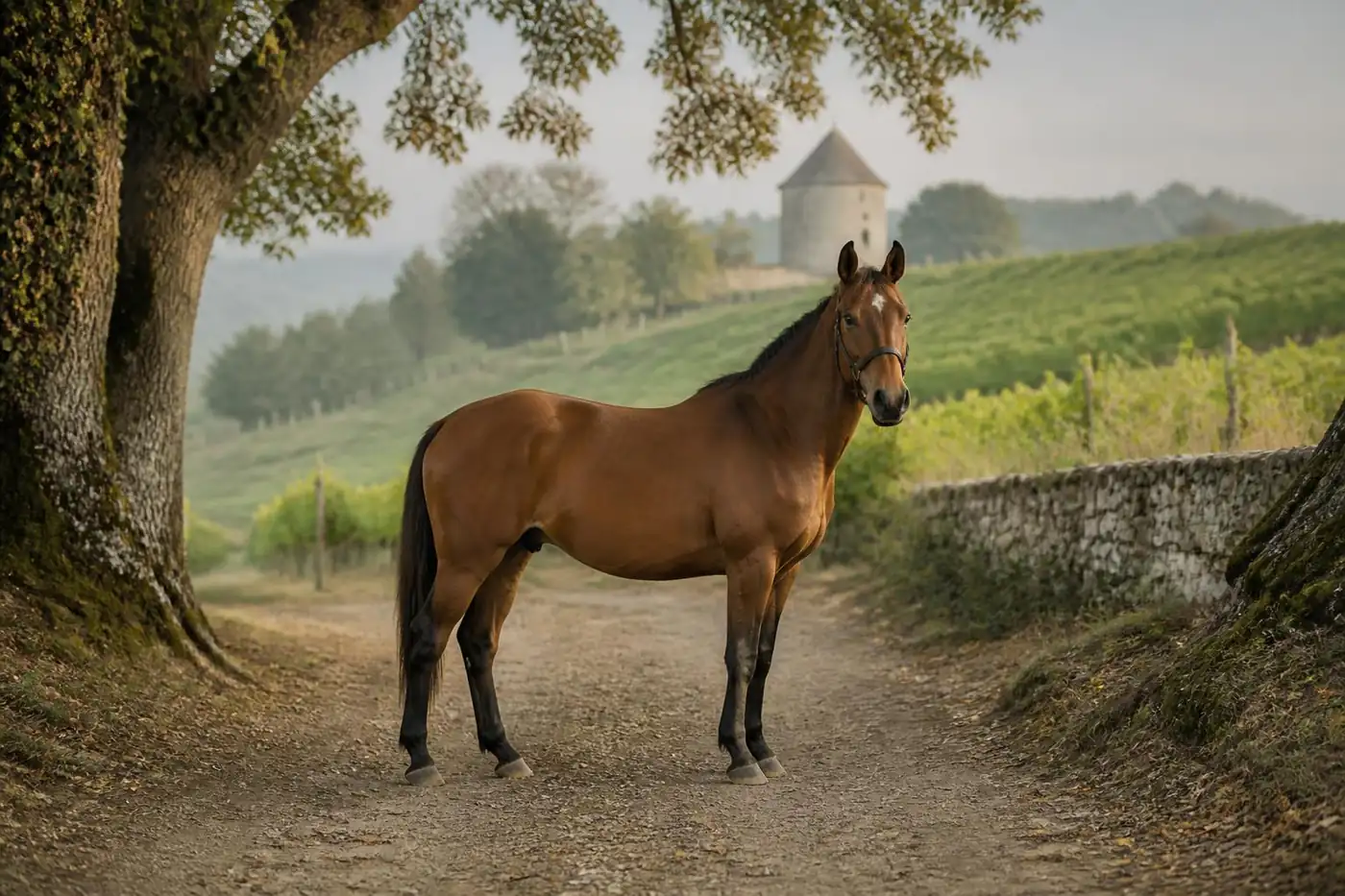
Video, 105 seconds
What the video shows
On the return, one of his servants, galloping flat out on a sturdy carthorse, collides with him head-on. Carried back to the house presumed dead for more than two hours, he would later write the chapter of the Essays where he recounts what it feels like to believe oneself dying. His tower opens 20 September 2026.

More than two hours “presumed dead”
His companions try everything to revive him, believe him dead, and carry him by hand to the house, about half a league (roughly 1 mile, or 1.6 km) away, by a path “long and very bad”. After “more than two full hours”, he begins to move and breathe again. Set upon his feet, he vomits “a full bucket of pure blood”, and does so several times before arriving home.
What follows explains why this chapter is still read today. Montaigne sees his own house “without recognising it”. He answers questions. Those near him would even report that he ordered his wife be given a horse, as he saw her struggling in a path “steep and difficult”. He has no memory of it: “these are mere effects the senses produce of themselves”.
In bed, he refuses all remedies, “convinced that I was mortally wounded in the head”. He describes a weariness without pain, close to approaching sleep. The pains return two or three hours later, “my limbs all bruised and crushed”, and he spends two or three such bad nights that he believes “I am dying all over again”.
The most troubling detail: memory of the accident is the last thing to return to him. Those around him hide how he fell to spare the responsible servant, and invent other versions instead. Only the next day, when his memory “began to open”, does the image of the horse bearing down on him strike him “like lightning”. His conclusion runs to a single line: “to grow accustomed to death, I find there is nothing but to draw near it”.
What a rider today reads in this account
We do not diagnose a man who died in 1592. But what he describes, prolonged loss of consciousness, actions performed without memory, the accident’s memory returning last of all, is precisely what riders learn today to take seriously: a rider who has lost consciousness does not remount, he is examined. Montaigne notes that he was “unarmoured”, that is, without armour; no head protection is mentioned in his account.
Four and a half centuries later, the approved helmet is required by nearly all clubs and competition rules, and our guide to riding helmets reminds us of a rule Montaigne did not have: after any impact, it must be replaced, even if no visible damage shows. The rest of the account, the accident caused by a third party, the transport, the immobilisation, falls today under rider and third-party liability coverage.
The choice of horse, lastly, has not aged: a horse “quite comfortable, but hardly reliable” suits a hack, not an emergency. The fall of Genghis Khan in 1226 also begins with a horse that shies.
Eight to ten hours in the saddle: Montaigne never stopped riding
The accident did not put him off horses, quite the opposite. In the chapter “Of Horses”, he writes: “I do not dismount willingly when I am on horseback, for it is the position in which I find myself most at ease, whether healthy or ill”. In “Of Vanity”, later: “I can keep to the saddle without dismounting, colic-ridden though I am, for eight and ten hours, and without tiring of it”.
“Colic-ridden” is no affectation. Montaigne suffered from gravel, the kidney stones that killed his father, and it is partly to treat it in spa towns that he undertakes, after the first edition of the Essays, a journey of seventeen months and eight days, from 22 June 1580 to 30 November 1581, through France, Switzerland, southern Germany and Italy. On horseback. “If I find myself poorly fitted for mounted travel, I stop”, he notes; it was at the baths of Lucca that he learned, in September 1581, of his election as mayor of Bordeaux.
Long-distance walking route 89, called the Montaigne Trail, follows today his return from Italy between Lyon and the Massif Central. On horseback, our selection of riding holidays includes an itinerary through the valley of châteaux in Périgord and another through the vineyards of Bordeaux, on either side of his château.
His tower opens Sunday, 20 September 2026
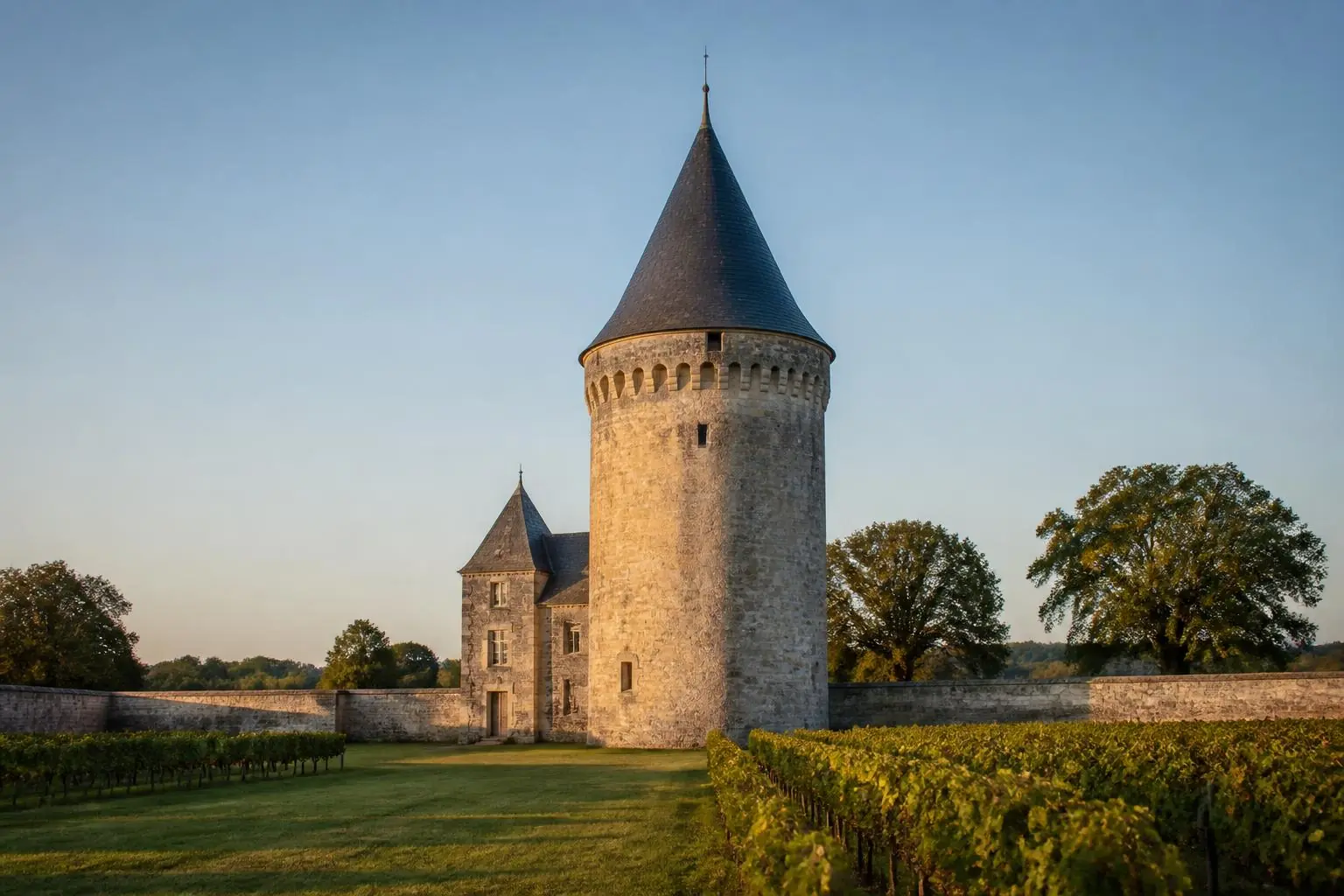
Montaigne died in his château of Saint-Michel-de-Montaigne, in Dordogne, on 13 September 1592, at fifty-nine. The château burned in January 1885; only the “library” tower from the 16th century survives, spared by the flames, where he wrote the Essays and had inscribed on the beams his Greek and Latin sentences. It has been listed as a historic monument since 28 March 1952.
For European Heritage Days on 19 and 20 September 2026, the château announces a dramatised visit to Montaigne’s Tower on Sunday, 20 September, with actor Pierre Lefranc in the role of the writer, by reservation only, limited places. Another equestrian event of this heritage weekend: the exhibition Rosa Bonheur and the horse at Chantilly.
How we judge this account
It is written in the first person by the victim, and published in the first edition of the Essays, in Bordeaux in 1580. Montaigne himself signals what he does not remember: the year, the gestures he performed before regaining awareness, the version of his fall he was not told. We cite the text from the Bordeaux copy, in modernised spelling. The distances are his own, a league and half-league “French”, roughly equivalent to 2.5 and 1.25 miles (4 and 2 kilometres) by the standards of the time. The servant’s name, those of the two horses, and the exact place of the collision are not known. The account is valued for what it describes, not what it measures.
Sources consulted for this article: Essays, book II chapter 6 “Of Exercise”, book I chapter 48 “Of Horses” and book III chapter 9 “Of Vanity”, Bordeaux copy (1595 edition, Wikisource); Wikipedia entries “Michel de Montaigne”, “Château de Montaigne”, “Wars of Religion (France)”, “Carthorse” and “League” in French; “2026 Events” page on the official website of Château Michel de Montaigne (Saint-Michel-de-Montaigne); portal of European Heritage Days of the French Ministry of Culture. Equirider is affiliated with none of these organisations.