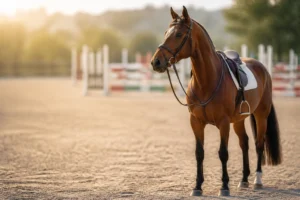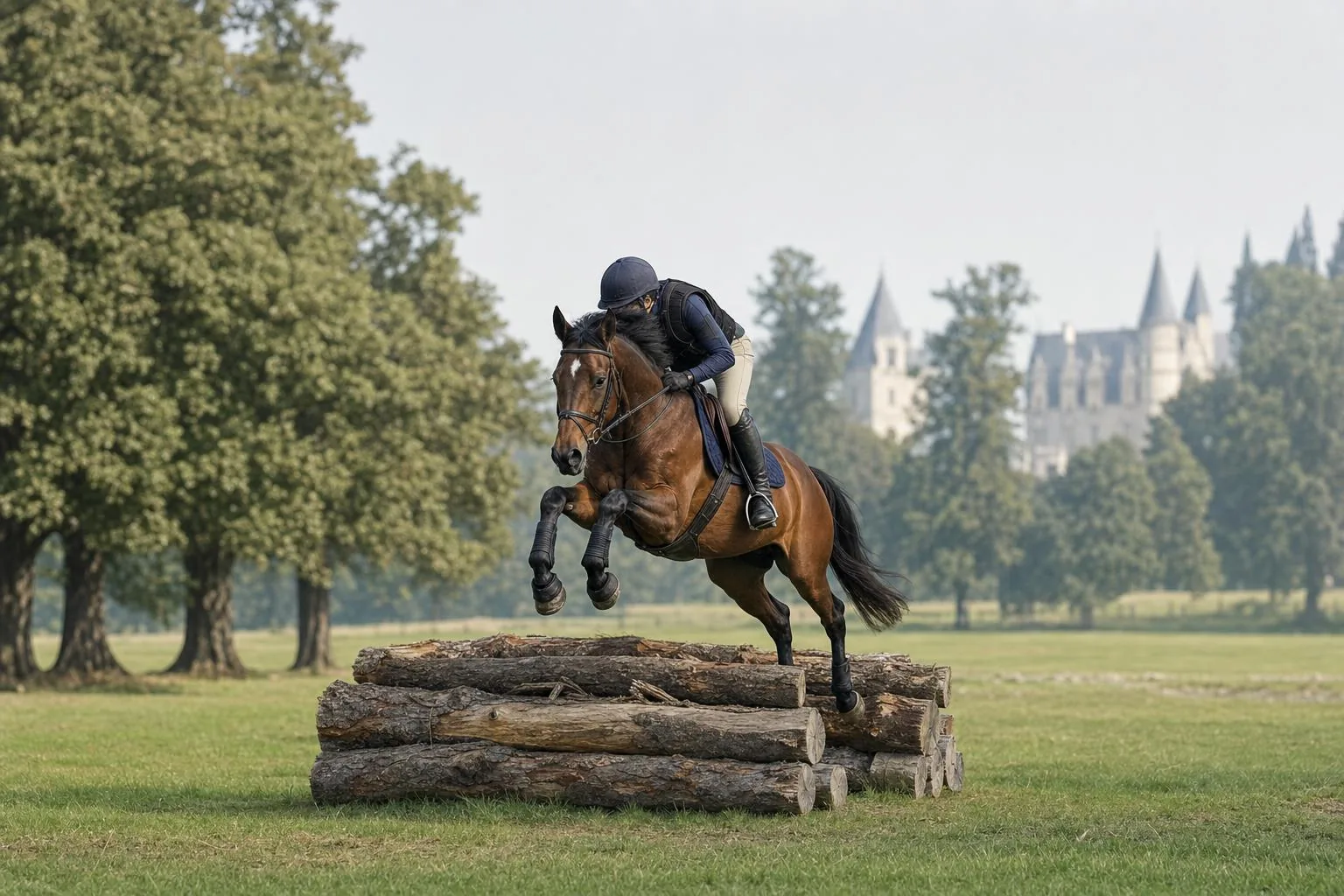

From Wednesday 16 to Sunday 20 September 2026, the National Stud of Pompadour in Corrèze hosts the French Equestrian Society’s Grande Semaine de Complet: approximately 550 young horses and ponies aged 0 to 6 years old, the national finals for 4, 5 and 6-year-olds, a young horse CCI that serves as a stepping stone to the World Young Horse Championships at the Lion d’Angers, and the International Anglo-Arab Days. Entry is free, and the weekend coincides with the European Heritage Days, which open the château and its stables to visitors.
This is neither a show jumping championship nor a grand prix: you come not to watch stars, but to watch the next generation take shape. The horse that will jump a five-star event in 2032 almost certainly passes through this cross-country course this week, ridden by someone who has known it for eighteen months.
The Grande Semaine de Complet 2026 at Pompadour: dates, free entry and what to expect
The Grande Semaine de Complet closes the cycle of the three major French Equestrian Society weeks, following show jumping at Fontainebleau in late August and dressage at Le Mans last week. Pompadour has remained unchanged: the event finals have been held at the stud for more than thirty editions (the organiser claims the 34th, whilst another SHF page lists the 33rd, the count varying depending on whether a blank year is included). We outlined the logic behind these finals in our article on 4-year-old horses at Fontainebleau, and that of scoring young horses in our piece on the Le Mans dressage final.
What the organiser’s homepage promises visitors amounts to a handful of essentials: free entry, an exhibitors’ village, on-site catering, and a young horse sales area for horses aged 0 to 7 years linked to SHF Market, the equestrian society’s trading platform. The official programme is shown on a site map (dressage and jumping on the arenas, cross-country on the racecourse and stud grounds), with one caveat worth noting: the schedule is provisional and may be altered until the last moment. Detailed timings by category are not published clearly on the website at the time of writing.
To understand the three phases these horses must complete, dressage, cross-country and show jumping, our guide to event riding sets out the rules and how penalties are calculated.
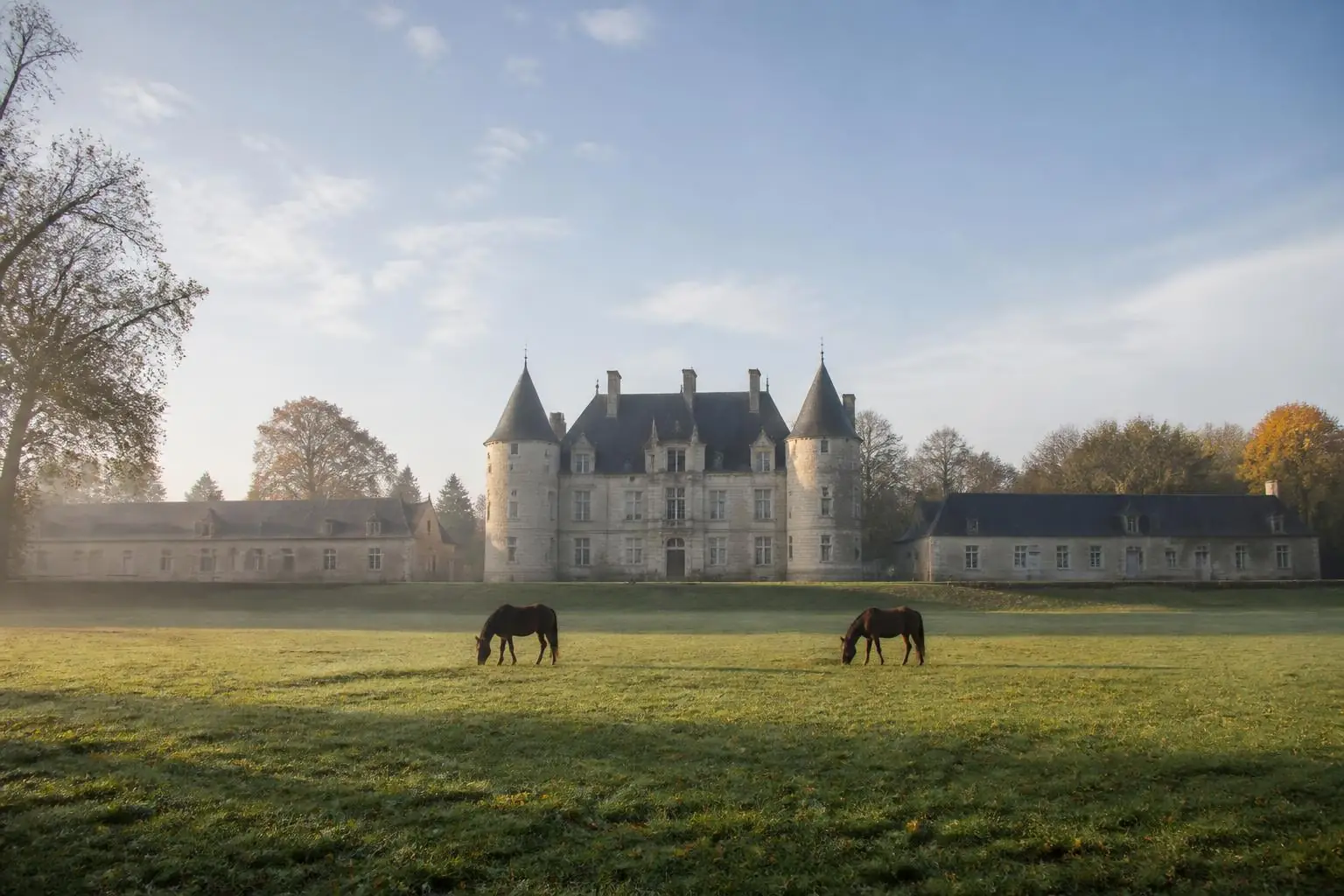
Pompadour, royal stud of Louis XV and birthplace of the Anglo-Arab horse
The setting is no detail. The estate of Pompadour, a medieval château remodelled in the Renaissance, was given by Louis XV to his favourite, Jeanne-Antoinette Poisson, who took the title of Marquise de Pompadour. She never lived there. In 1761, the king established a royal stud, and for more than two and a half centuries since, the site has scarcely ceased to breed and present horses. The stud has been part of the French Institute of the Horse and Horsemanship since 2010.
In the nineteenth century, it was here that the Anglo-Arab breed was established, a cross between Thoroughbred and Arab horse, conceived to produce a lighter, more enduring saddle horse than the Thoroughbred, yet taller and more powerful than the Arab. Successive directors of the stud, including Eugène Gayot from the 1840s onwards, made it the laboratory of the breed. It is no accident that the national event finals are held here rather than elsewhere, a discipline in which the Anglo-Arab long dominated French teams. Our page on Nouvelle-Aquitaine equestrian life situates Pompadour amongst the region’s great breeding centres.
How a young event horse qualifies for the SHF final at Pompadour
You do not enter Pompadour, you qualify for it. Young horses compete throughout the season on the SHF circuit, in “classic cycle” or “free cycle” competitions spread across the country. Each good placing earns prize money. These cumulative winnings either open, or close, the door to the final.
Minimum earnings: 180, 255 and 415 euros (£155, £220, £360) depending on the horse’s age
For the 2026 final, the SHF has set minimum earning thresholds in the classic cycle: 180 euros (£155) for a 4-year-old, 255 euros (£220) for a 5-year-old, 415 euros (£360) for a 6-year-old. In the free cycle, the bar is lower, between 50 and 75 euros (£43-65) depending on age category. For ponies, the young pony cycle requires 37.50 euros (£32) at 4 years old, 45 euros (£39) at 5 years old and 50 euros (£43) at 6 years old. These amounts may seem trifling in a sport where a made horse sells for tens of thousands of euros; they are not a prize, they are a filter. A horse that has reached these thresholds has been placed several times in the year, and has therefore been judged sound, reliable and sufficiently trained to tackle a cross-country final.
That is where it differs from an adult competition: at this age, the goal is not the fastest time but the horse that jumps boldly, gallops with ease and returns calm. A young horse that panics on a cross-country final has nothing to gain from it, nor does its breeder.
The 6-year-old CCI, a stepping stone to the World Young Horse Championships at the Lion d’Angers
For the 6-year-olds, the Pompadour final takes the form of a young horse CCI, an international competition recognised by the FEI. This is the stage that carries the greatest weight for what follows in a career: the organiser notes that this competition serves as selection for the World Young Horse Event Championship, held every autumn at the Lion d’Angers in Maine-et-Loire. A 6-year-old that emerges well placed from Pompadour may find itself a month later in the French young horse team, under the scrutiny of buyers from around the world. The national circuit and its rules are described in our guide to the French Equestrian Society.
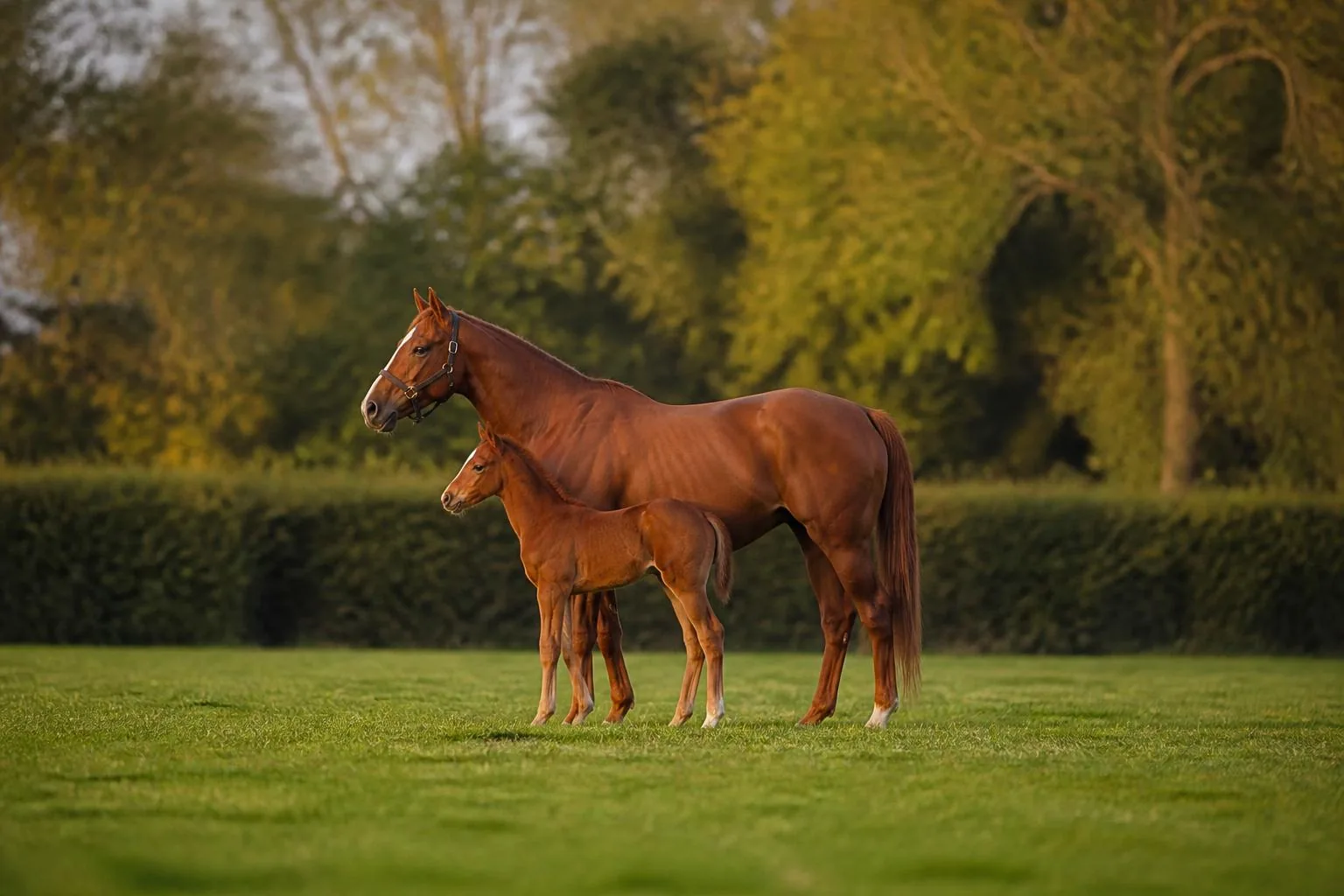
International Anglo-Arab Days: foals, stallions and mares judged at Pompadour
Within the same enclosure, from 17 to 20 September, the National Anglo-Arab Association hosts its International Days, the other half of the Grande Semaine. Horses are judged that have never jumped an obstacle: the French championship for conformation and gaits for 2-year-olds, 3-year-olds, mares with foals at foot and foals, as well as the national competition for 3-year-old stallions, the outcome of which determines the accreditation of future breeding stock.
The judge assesses conformation and gaits in hand or at liberty, and for candidate stallions, their ridden aptitude and genetics. A foal of a few months parading at Pompadour on a September Thursday may be, six years later, the 6-year-old in the young horse CCI on the same ground. It is this continuity, from birth to international selection on a single site, that makes the week unique. Other French sport horse breeds, including the Selle Français, do not have such a concentrated fixture.
European Heritage Days at Pompadour château: stables open during the finals weekend
The calendar adds another layer. The European Heritage Days fall on 19 and 20 September 2026, which is to say the Saturday and Sunday of the finals. The programme announced for Arnac-Pompadour includes free access to the château and its stables, with opening of spaces rarely accessible to the public, including the château’s clock mechanism and the timberwork of the main wing. A visitor can therefore, in a single day, watch 5-year-olds jump cross-country obstacles in the grounds, then climb to the rafters of a fifteenth-century château. Check opening times with the Pompadour tourist office before you travel: the national Heritage Days webpage for the site had not been updated for 2026 at the time we checked.
For those unable to travel to Corrèze, the same weekend, 17 to 20 September, the National Stud of le Pin in Normandy hosts its own international event competition, which we keep up to date in our equestrian competition calendar.
Our sources for this story
The dates (Wednesday 16 to Sunday 20 September 2026), location (National Stud of Pompadour), free entry, exhibitors’ village, figure of approximately 550 young horses and ponies aged 0 to 6 years and selection for the Lion d’Angers world championship come from the official Grande Semaine de Complet presentation page, consulted 15 September 2026. The qualifying prize money thresholds (180, 255 and 415 euros in the classic cycle, 50 to 75 euros in the free cycle, 37.50 to 50 euros for ponies) come from the French Equestrian Society’s “National Final” page and the “Qualifications and Schedule” announcement on the event website. The International Anglo-Arab Days programme (French championship for conformation and gaits, national 3-year-old stallion competition, dates 17 to 20 September) comes from the National Anglo-Arab Association. The stud’s history (royal stud in 1761, transfer to the French Institute of the Horse and Horsemanship in 2010) comes from the organiser and the Institute. We were unable to establish: the exact number of horses qualified by age category, precise timings for each final, and the edition number, given as 33rd by one page and 34th by another. The organiser itself notes that the schedule is provisional.