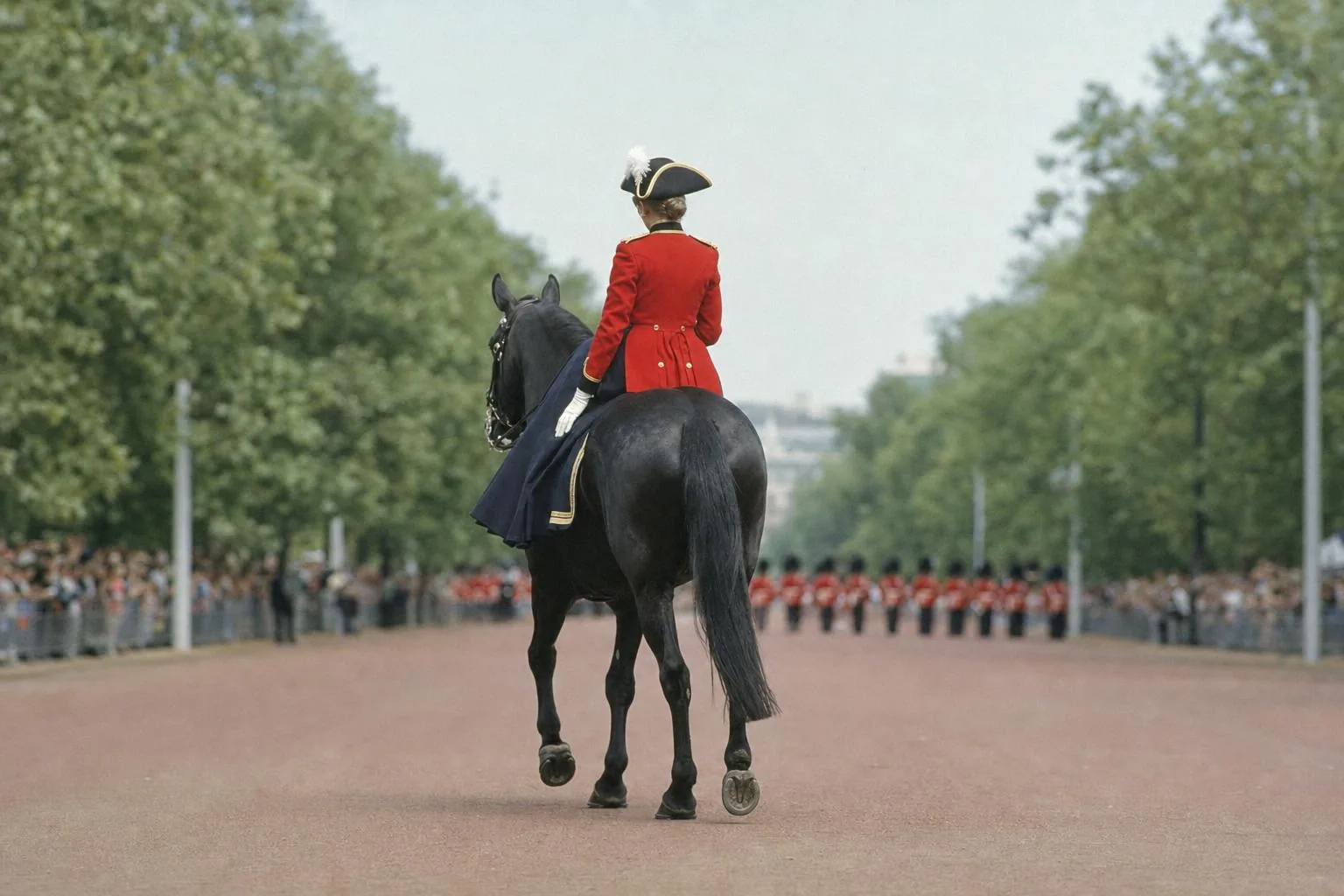

On 13 June 1981, on the Mall in London, a 17-year-old fires six shots towards Elizabeth II as she rides down the avenue sidesaddle on Burmese, a 19-year-old black mare given to her by the Royal Canadian Mounted Police. The cartridges are blanks. The mare shies, the Queen shortens her reins, lays a hand on the horse’s neck and the parade carries on. Five years later Burmese retires, and the Queen chooses never again to train another horse for Trooping the Colour: she goes by carriage at 60, although she will still be riding at 90.
The image went around the world: a sovereign in a scarlet tunic, a horse swerving, a gloved hand calming it. Behind the scene lies a mare born in the hills of Saskatchewan, eighteen consecutive parades, and a spontaneous answer from the Queen, years later, when she was asked about her favourite horse: “Burmese”.
13 June 1981, the Mall: six shots at a Queen riding sidesaddle on her 19-year-old mare
Trooping the Colour is the official birthday parade of the British sovereign, held on a Saturday in June between Buckingham Palace and Horse Guards Parade. Until 1986 Elizabeth II took part on horseback, riding sidesaddle in the uniform of the regiment whose colour was being presented that day. She was 55 in 1981. Beneath her, Burmese, a 19-year-old black mare, was on her thirteenth parade.
Where the Mall meets Horse Guards Road, as the procession turns towards the parade ground and the crowd is at its thickest, six bangs ring out a few yards from the Queen’s horse. Archive footage shows the mare leaping sideways, the rider taking up the contact again, shortening her reins with the left hand and laying her right hand on the neck. Two Household Cavalry officers push their horses in to flank her. Prince Philip and Prince Charles, riding behind, close up. The Queen does not stop and does not look back; she rides on to Horse Guards, where the ceremony is held in full.
On video · 107 seconds
Burmese, the Queen’s mare: Six Shots at Elizabeth II on Horseback
Her mare Burmese, trained in Canada, holds the parade together. The Queen will never replace her.

Marcus Sarjeant, 17, and a starting pistol: who fired at the Queen’s horse
The gunman was Marcus Sarjeant. He was 17, lived with his mother in Capel-le-Ferne, near Folkestone in Kent, and had been turned down in turn by the Royal Marines, the army, the fire service and the police. The six shots came from a starting pistol, a replica Colt Python that fires only blanks. A Scots Guards lance corporal, Alec Galloway, vaulted the barrier, pinned him to the ground and handed him over to the police.
He told investigators he wanted to “be somebody”. He cited the murder of John Lennon in December 1980, the attack on Ronald Reagan in March 1981 and the one on John Paul II in May: three famous men targeted in six months, three gunmen whose names everyone knew. On 14 September 1981 he was tried under the Treason Act 1842, a law passed after a series of blank shots fired at Queen Victoria, and sentenced to five years in prison for “wilfully discharging a firearm near Her Majesty with intent to alarm her”. He served three, was released in October 1984 and changed his name.
What really frightened Burmese: two cavalry horses, not the six bangs
Here is the detail that riders remember and the wider public overlooks. Asked about the incident later, the Queen explained that her mare had not been frightened by the shots themselves, but by the two Household Cavalry horses that had rushed up alongside to shield her. A horse is a flight animal: a single bang makes it start, but two companions bursting into a gallop at its flanks trigger a far deeper reflex, the urge to go with the herd.
That a 19-year-old mare, in the middle of a crowd and a military band, could take six shots at point-blank range and be back at the walk within a few strides is no miracle. It is the result of precise schooling, begun eleven years earlier, some 3,000 miles (5,000 km) from London. For what that habituation work involves, our guide to backing a young horse, step by step explains how a young horse learns to accept noise, contact and the unexpected.
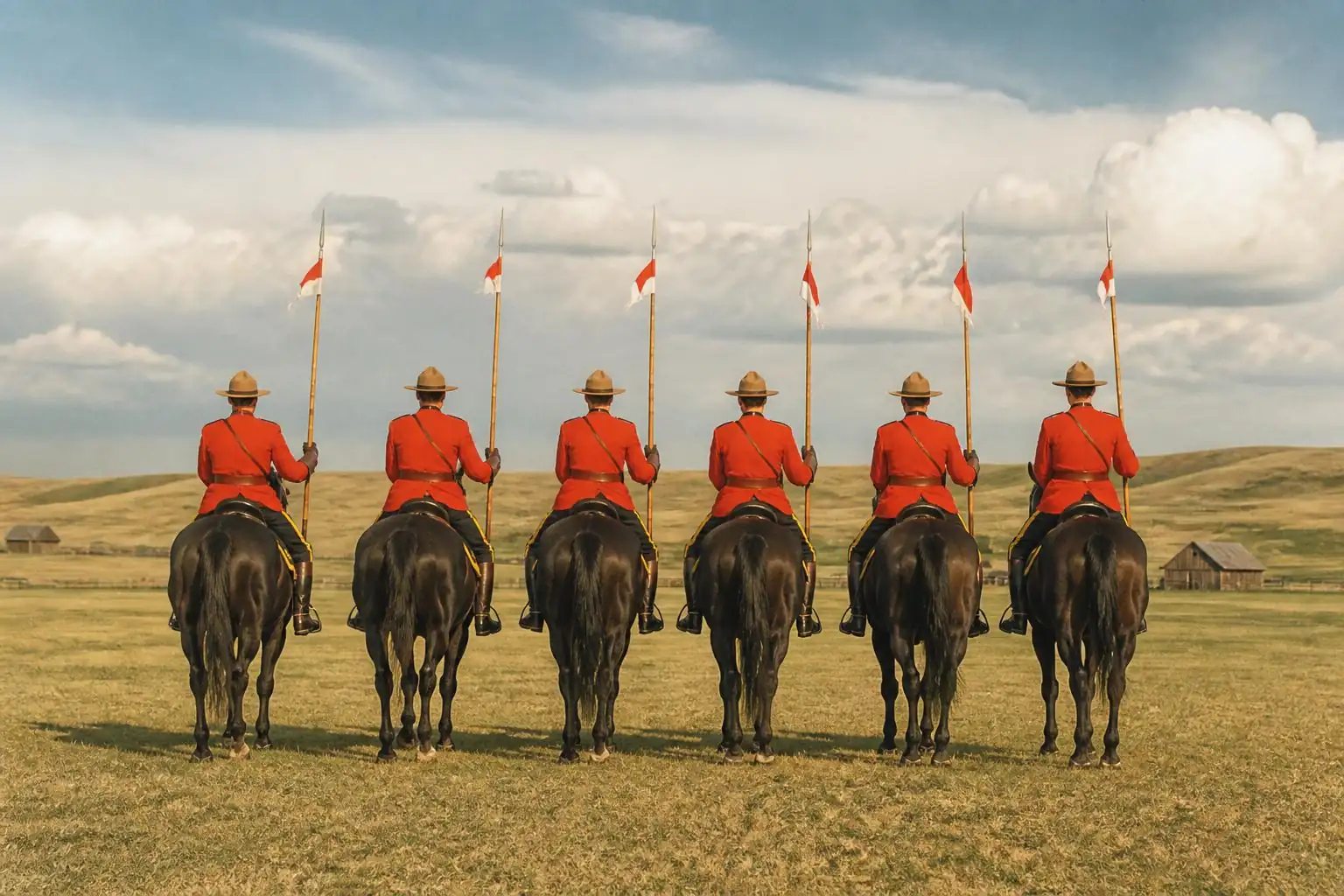
Born in Saskatchewan, schooled in Regina: the mare Burmese before the Queen
Burmese was born in 1962 at the Royal Canadian Mounted Police breeding ranch at Fort Walsh, near Maple Creek, in the Cypress Hills west of Regina. The Mounties breed only black horses, mostly from crosses of Thoroughbred and Hanoverian, for their Musical Ride, the choreography of 32 riders in scarlet tunics with pennoned lances that Canada has been showing the world since the late nineteenth century. The filly was schooled by Sergeant Major Fred Rasmussen, at the Regina depot and then in Ottawa, and she made her career in the Ride.
A Musical Ride horse works amid brass, applause, snapping flags and horses crossing at the gallop a few inches apart. It is accustomed very early to sharp noises. That schooling explains what happened on the Mall better than anything else: Burmese did not take the six bangs as something new, she recognised them.
28 April 1969, Windsor: a black mare given to the Queen, eighteen Trooping the Colours in a row
On 28 April 1969 the Royal Canadian Mounted Police were in England to perform at the Royal Windsor Horse Show. On that occasion they presented the Queen, who is also the sovereign of Canada, with a 7-year-old black mare from their stables. The tradition of giving the monarch a Musical Ride horse began that day: it would continue with Centenial in 1973, Saint James in 1998, George in 2009, Elizabeth in 2012 and, in 2023, Noble, for King Charles III.
Two months later Burmese paraded for the first time at Trooping the Colour. She would be there every year until 1986, eighteen consecutive parades, always ridden sidesaddle by the Queen, a seat now seen only at ceremonies and a few traditional shows, and one that Empress Elisabeth of Austria had taken as far as the hunting field a century earlier, as we told in the story of Sisi and the 500 riders who came to watch her jump in Ireland. Away from the parade, Elizabeth II rode astride, without a riding hat, in Windsor Park. A solid black coat, with no white markings, was the entry requirement for the Ride: our pages on horse coat colours explain why a true black remains one of the rarest colours.
1986: Burmese retires, and the Queen never rides in the parade again
In June 1986 Burmese was 24. It was her last public appearance. And this is where the story takes an unexpected turn: rather than train a new parade horse, which the Palace could easily have arranged, the Queen decided to attend Trooping the Colour by carriage from then on. She chose an open phaeton built in 1842 for Queen Victoria and took the salute from it. She was 60. She would go on riding regularly in Windsor Park well past her 90th birthday.
The Palace never gave any reason other than this one: she did not wish to train another charger, the name the British cavalry gives to an officer’s horse. For anyone who has kept a horse for seventeen years, the decision needs no comment. Burmese was turned out to grass in Windsor Great Park, where she died in 1990, aged 28. For what an older horse that has worked hard needs, from suitable grazing to regular dental and foot care, our horse care guide covers the essentials, retirement included.
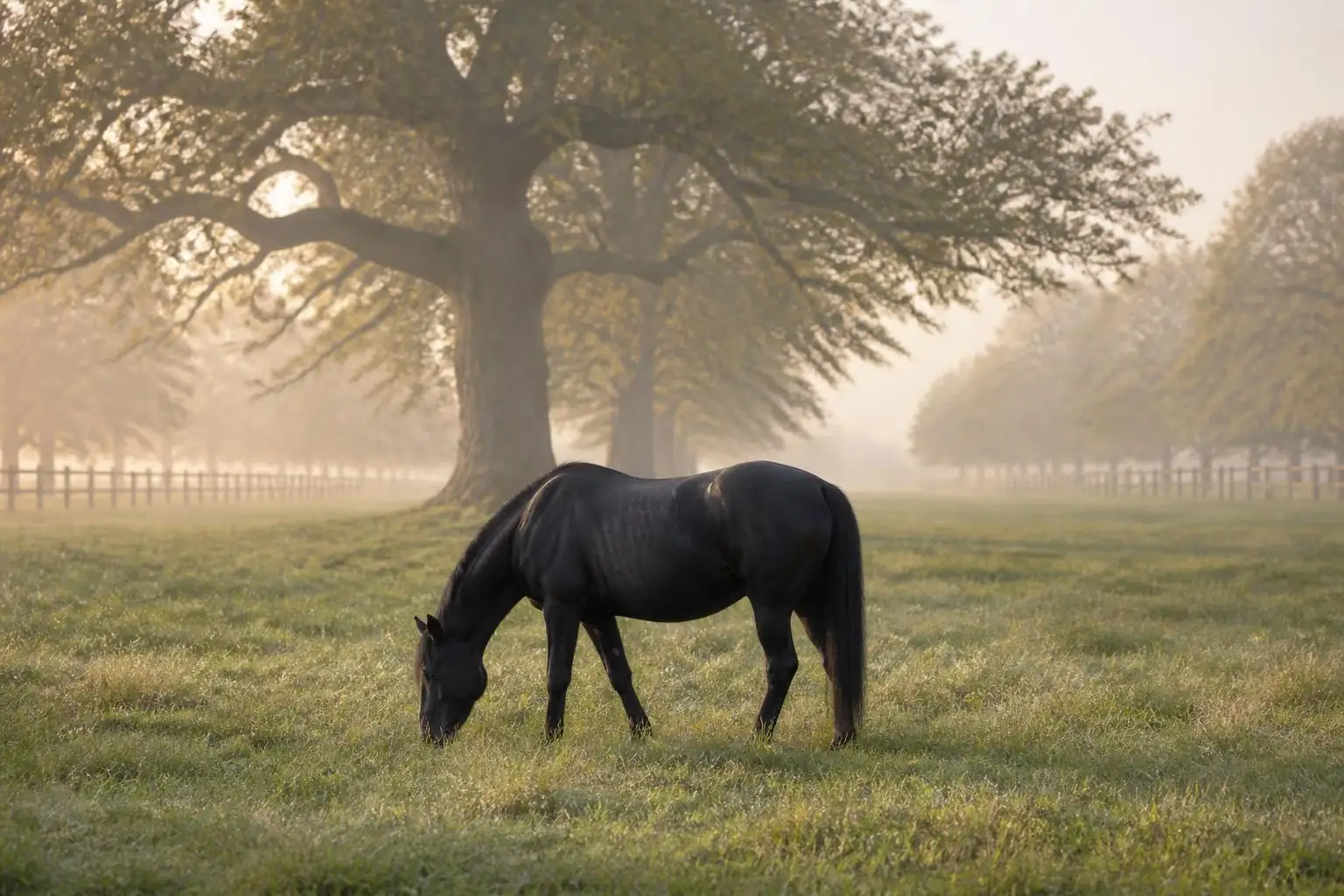
Two bronze statues for a mounted-police mare: Burmese from Ottawa to Regina
Few horses have two statues. Burmese has two, and the Queen is in the saddle in both. The first was unveiled in 1992 on Parliament Hill in Ottawa, for the 125th anniversary of Canadian Confederation. The second, in bronze, by the sculptor Susan Velder, stands in front of the Legislative Building in Regina, a few miles from the depot where the filly was schooled. It was unveiled in May 2005, for the centenary of the province of Saskatchewan, in the Queen’s presence, in driving rain and a bitter wind: witnesses say she refused to have the landau covered.
Elizabeth II died on 8 September 2022 at Balmoral. Her bond with horses was never confined to the parade: a Thoroughbred breeder and the owner of Ascot winners, she had also had a Californian horseman brought to Windsor in 1989, a man who claimed he could saddle an unbroken horse in half an hour, so that she could see it for herself, as we recounted in the story of Monty Roberts and his thirty-five minutes.
The mare Burmese and 13 June 1981: how we weigh the evidence
Established by dated, concordant documents: the date of 13 June 1981 and the place (the Mall, at Horse Guards Road); six blank cartridges fired from a starting pistol; the identity, age and sentence of Marcus Sarjeant (Treason Act 1842, five years, trial on 14 September 1981, released in October 1984); Burmese’s origin (Royal Canadian Mounted Police breeding, born in 1962, given on 28 April 1969 at the Royal Windsor Horse Show); the eighteen Trooping the Colours from 1969 to 1986; the switch to the phaeton from 1987; the mare’s death in 1990; the statues in Ottawa (1992) and Regina (2005).
Reported, but not documented to the same degree: the Queen’s explanation that the cavalry horses frightened Burmese more than the shots did, quoted in the British press without a date or an official transcript; Burmese’s specific training with firearms, inferred from the standard training of Musical Ride horses and not from a document about this particular mare; the word “Burmese” as her answer to the question of her favourite horse, quoted by several biographers, with no primary source identified.
What we do not say: nothing about the Queen’s state of mind that day beyond what the footage shows, nothing about Sarjeant’s psychiatric assessment, which has never been made public in detail.
Noble, 2023: the line of horses from Canada continues under King Charles
In March 2023 the Royal Canadian Mounted Police gave King Charles III a 7-year-old black mare, Noble, who had toured with the Musical Ride in 2022 and was chosen for her calm. On 17 June 2023 the King rode her in his first Trooping the Colour as sovereign: it was the first time since 1986, since Burmese, that a British monarch took the parade on horseback. Noble, less experienced than her predecessor, fidgeted and broke into a canter for a few strides, under the eyes of cameras that this time were mostly asking whether the rider would stay on. The Queen’s horse had set the bar high.
Burmese, Elizabeth II’s favourite mare: the key points
- 13 June 1981: six blank shots fired on the Mall during Trooping the Colour; Burmese shies, the Queen brings her back to the walk and completes the parade.
- The gunman: Marcus Sarjeant, 17, with a starting pistol, five years in prison under the Treason Act 1842.
- What frightened the mare, according to the Queen: the two cavalry horses that came to flank her, not the bangs.
- Burmese: a black mare born in 1962 in Saskatchewan, schooled for the Royal Canadian Mounted Police Musical Ride, given on 28 April 1969, eighteen consecutive parades from 1969 to 1986, died in 1990 at Windsor.
- After her: the Queen never trained another parade horse and went by phaeton from 1987; two bronze statues show her in the saddle on Burmese, in Ottawa and Regina.
- What came next: Noble, given by the same Mounties, ridden by Charles III in June 2023, the first monarch on horseback at the parade since Burmese.
M A N È G E
According to the Queen herself, what really frightened Burmese that day?
Burmese had already been through eighteen parades without flinching at bangs. That day, the Queen later said, what really unsettled her was the two cavalry horses that came to flank her just after the shots.