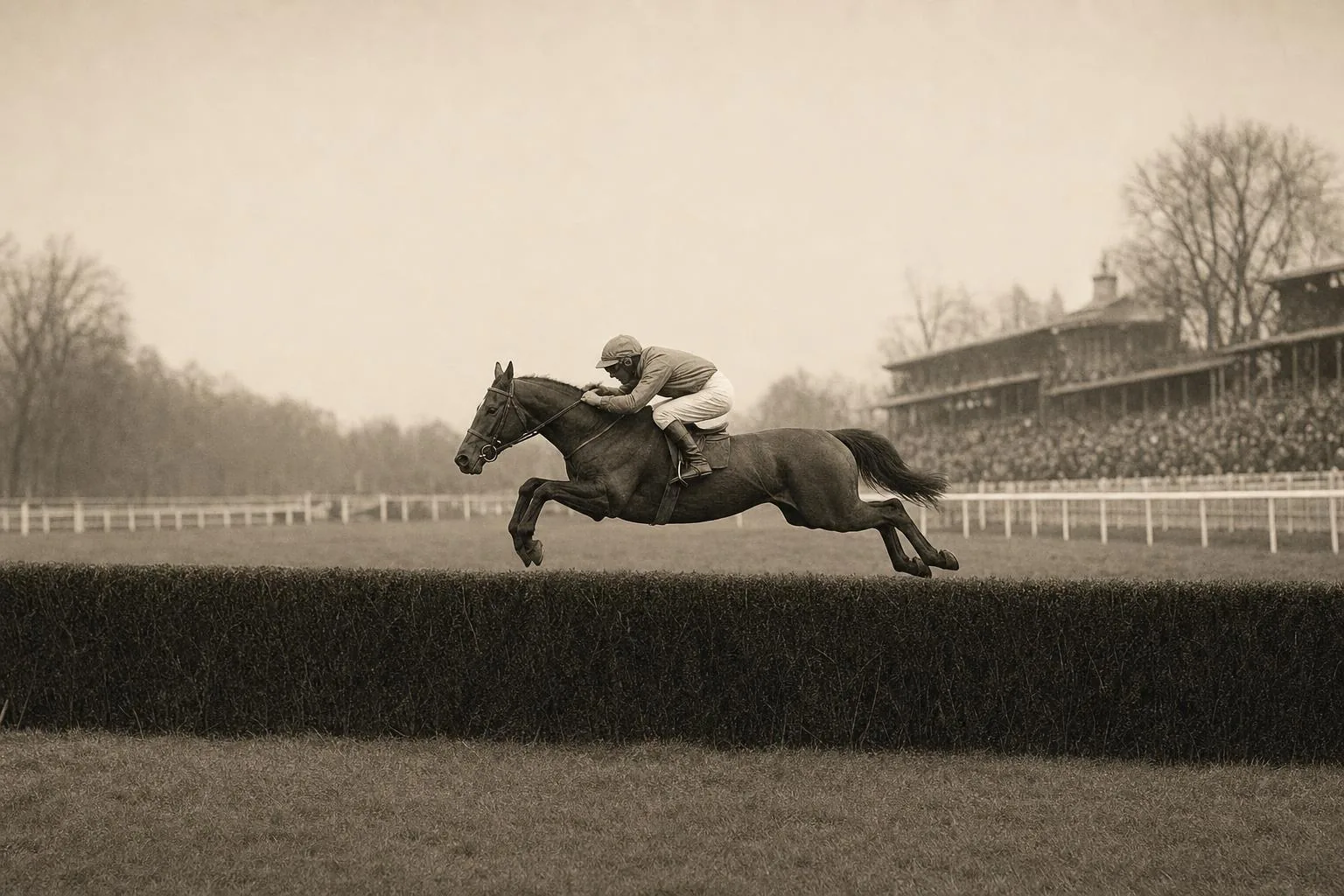

In A Moveable Feast, Ernest Hemingway recounts a day at Auteuil when he and his first wife Hadley had money on a horse called Chèvre d’Or, quoted at 120 to 1, enough “to live on for six months”. The horse was leading by twenty lengths when it fell at the final jump. Yet it wasn’t this fall that made him quit racing: he stopped, he writes, because it consumed too much time, he’d become too entangled in it, and he knew too much about what was happening at Enghien.
Between 1922 and 1924, the young Toronto Star correspondent, living in Paris with his first wife, “worked” two racetracks, Auteuil and Enghien, with a betting bank he kept secret. From this experience he produced a short story, a meditation on the emptiness left behind, and one of the most honest passages ever written on gambling.
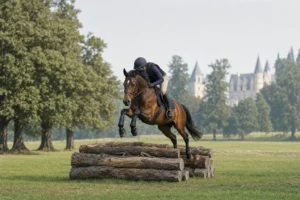
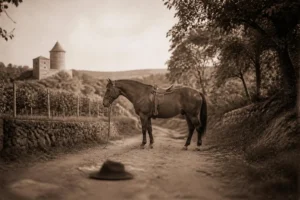
Chèvre d’Or at Auteuil: 120 to 1, leading by twenty lengths, falling at the final jump
The passage occupies a single sentence in the chapter titled “A False Spring”. Hemingway writes, in substance, that his wife had once at Auteuil a horse named Chèvre d’Or, quoted at 120 to 1, which was leading by twenty lengths when it fell at the final jump, carrying on it enough savings to keep them for six months. He adds: we tried never to think about it; that year we were winners, until Chèvre d’Or.
At 120 to 1, a bet of 100 francs (£20 / €24) would have returned 12,000 francs (£2,400 / €2,880). The couple were living then in a two-room flat without a bathroom on the rue du Cardinal-Lemoine, with the public baths at the end of the street. Hemingway notes a detail that reveals everything about Hadley: she did not cry over the money; she cried for the horse.
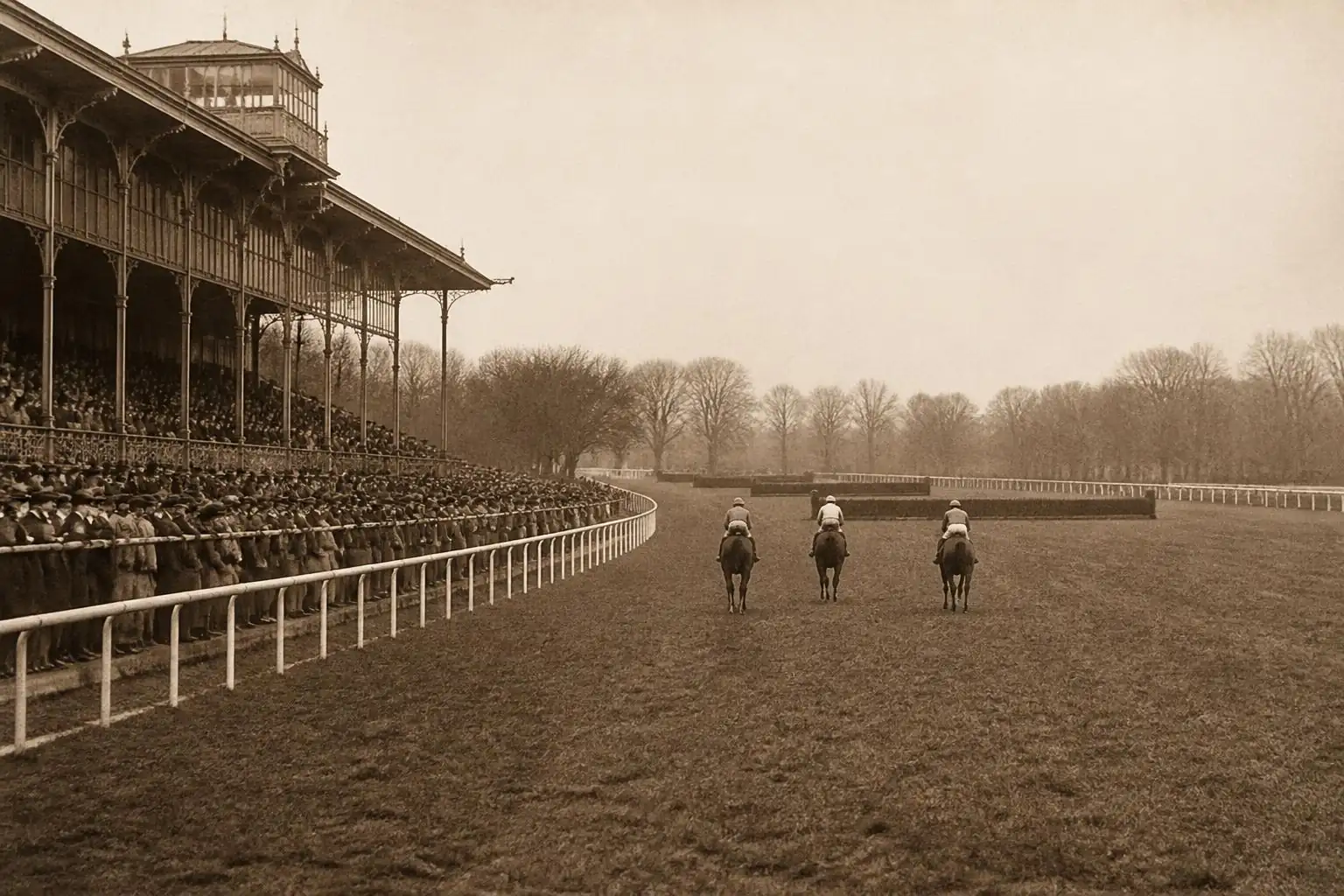
A curiosity of translation: in the French edition we consulted, the odds have vanished, and Chèvre d’Or “wore number 121”. The English original plainly states “a hundred and twenty to one”. The Auteuil racecourse, opened in 1873 in the Bois de Boulogne, is dedicated to steeplechase and hurdle racing, with its famous rail-ditch-and-fence. A horse leading by twenty lengths and falling at the final fence remains the scenario Auteuil serves up to this day, one the hurdle jockeys at Auteuil know by heart.
On video · 106 seconds
Hemingway at Auteuil: Six months’ savings on Chèvre d’Or at 120 to 1
He did keep betting, then stopped altogether. Here’s what he said, word for word.

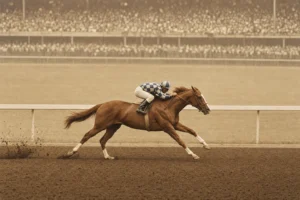
Enghien, “a pretty little rogue of a track”: the day 85 francs for 10
Hemingway’s other track was Enghien, which he describes as the pretty little “thieving” racecourse, home of the outsider. He tells of a spring day when money arrived from the Toronto Star. The couple take the train from Gare du Nord and picnic on a raincoat, in the grass, in front of the old grandstand, the brown-wood betting windows and the green of the hedges.
An acquaintance from the San Siro races at Milan gives him two horses, “no each-way bets”. The first wins by four lengths at 12 to 1. The second, quoted at 18 to 1, leads throughout and “just holds on” to the post. At the bar beneath the stand, the payout board shows: 85 francs for 10 (£17 for £2 / €20 for €2.40). Hadley, watching the drenched horse go by, nostrils flared: “Poor thing. We only had money on it.”
The rule Hemingway set himself that day deserves remembering: a quarter of winnings for each of them, half set aside as “racing capital”, kept secret and separate from everything else. This Enghien-Soisy racecourse still stands, fifteen kilometres from Paris, and steeplechasing continues there.
Auteuil from the top of the stand: jockeys, trainers and doped horses, what Hemingway came to know
The next chapter, “The End of an Avocation” in English, is the most clear-eyed. Hemingway admits it wasn’t really racing at all: “it was gambling on horses, but we called it racing”. Gambling lingered near the couple “like an exacting friend”, and he, so harsh on the vices of others, tolerated this friend “the most false, the most beautiful, the most thrilling, vicious and exacting, because she could be profitable”.
His method speaks to the seriousness of the gambler: he “worked” both tracks in season, Auteuil and Enghien; one had to watch a steeplechase from high up in Auteuil’s stands, and the climb was steep, to see what each horse was doing, which could have won but didn’t, and why. He followed the odds, and the moment when a stable was going to “try” with a horse. He read Paris-Sport Complet each evening, bought at the kiosk, with Auteuil results and Enghien’s next-day programme. And he ended up knowing “too many people, jockeys, trainers, owners, too many horses and too many things”.
He also recounts, in another chapter, carrying to Enghien money that Ezra Pound had collected to extract T.S. Eliot from his bank job, and betting it on steeplechase horses which, he believed, ran under stimulants: one of them unseated its jockey before the start. That’s his testimony, not an official report, but it’s what he means by “I knew too much about what was happening at Enghien”.
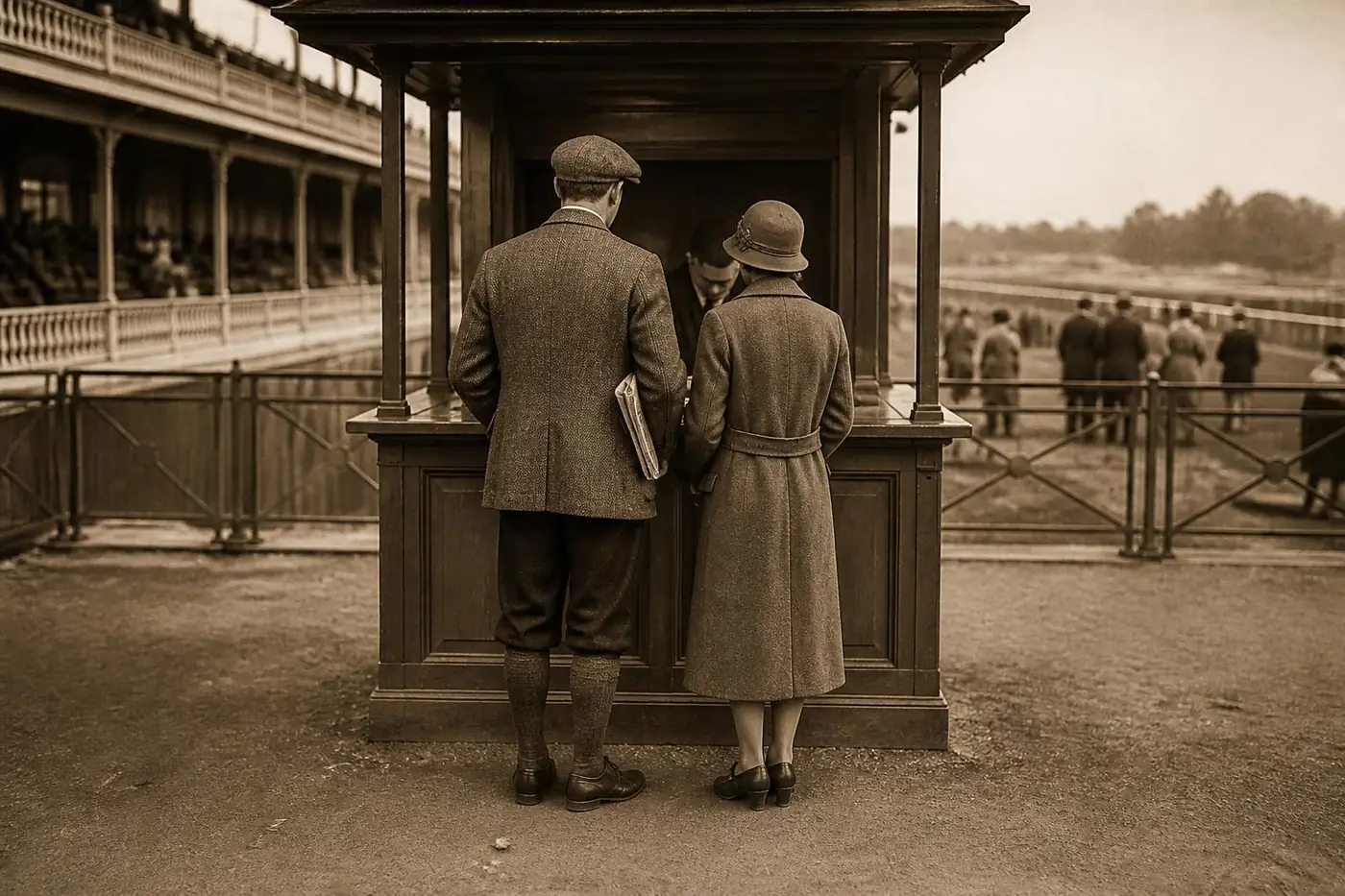
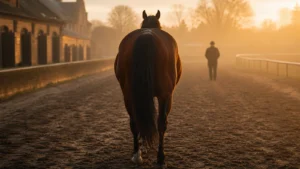
Why Hemingway quit the races: too much time, too entangled, and a void to fill
The answer lies in three reasons, which he gives himself. First, time: “it took full-time work to handicap intelligently, and one couldn’t make money that way”, and that time was stolen from his writing. Next, the trap: “I became too involved in it”. Finally, the knowledge: he’d learned too much about Enghien, and about the flat tracks too.
What he writes after this speaks to anyone who’s ever stopped something: “when I gave up working the races, I was pleased, but it left a void”. If it was bad, the void fills itself; if it was good, you have to find something better. He puts the racing capital back into common funds, deposits it at the Guaranty Trust on the Boulevard des Italiens, and lunches with his friend Mike Ward, who offers the exit: “anything you have to bet on to get a thrill isn’t worth looking at”. Mike proposes better: cycle racing, “you don’t need to bet on it”.
An American writer of another generation made the opposite choice: Charles Bukowski spent his life at the racetrack, and we explain why Bukowski went to the races almost every day. Two answers to the same temptation.
“My Old Man”: the only Hemingway racing story that survived the stolen suitcase
Hemingway justified going to the races because he wrote about them. In late 1922, a suitcase containing his manuscripts was stolen from Hadley at the Gare de Lyon. Only one racing story escaped, because it was in the publishers’ mail: “My Old Man”, written in 1922 and published in 1923 in Three Stories and Ten Poems, his very first book. It tells, in the voice of a boy, the life of an American steeplechase jockey who races at San Siro, then in France, and ends with a fall. The two chapters from A Moveable Feast would not appear until after his death, in 1964.
Hemingway at Auteuil and Enghien: what we can verify
- What the text says, word for word: Chèvre d’Or, Auteuil, 120 to 1, leading by twenty lengths, fall at the final jump, “enough savings to live on for six months”. Enghien: two winners the same day, 12 to 1 then 85 francs for 10. Reasons for stopping: time, entanglement, what he knew about Enghien.
- What we don’t know: the exact date of Chèvre d’Or’s race, the amount in francs wagered, and whether a horse of that name appears in Auteuil programmes from those years. A Moveable Feast is a book of memories written thirty years after the events, and Hemingway himself warns that the reader may read it as fiction.
- The translation trap: the French edition consulted transforms the odds into a race number “121”; the English original gives the actual odds.
- Sources: Ernest Hemingway, A Moveable Feast (1964), chapters “A False Spring” and “The End of an Avocation”; Paris est une fête, French translation, chapters “Un faux printemps” and “Une occupation abandonnée”; note on the short story “My Old Man” (Three Stories and Ten Poems, 1923); histories of Auteuil (1873) and Enghien-Soisy racecourses.
Hemingway’s racing rule: the only rule he kept
Hemingway bet “only what we’d decided we could spend”, and he stopped the day gambling began to overtake everything else. Today, bets on horse racing are restricted to adults, and any wager must remain a leisure budget set in advance, never savings. If you struggle with gambling, the Joueurs Info Service helpline answers at 09 74 75 13 13 (non-premium call). To understand odds and payouts before you bet, read our guide on how to bet on a horse, and find racing news in our turf section.
Hemingway, Auteuil, Enghien: what matters about Chèvre d’Or
- Chèvre d’Or, 120 to 1, leading by twenty lengths, fell at Auteuil’s final jump: “enough to live on for six months” lost in one stride. Hadley cried for the horse, not the money.
- He stopped not because of a fall, but because racing consumed his time and he knew too much; the void was filled by cycle racing.
- Only one racing story survived the 1922 stolen suitcase: “My Old Man”, the tale of a steeplechase jockey.