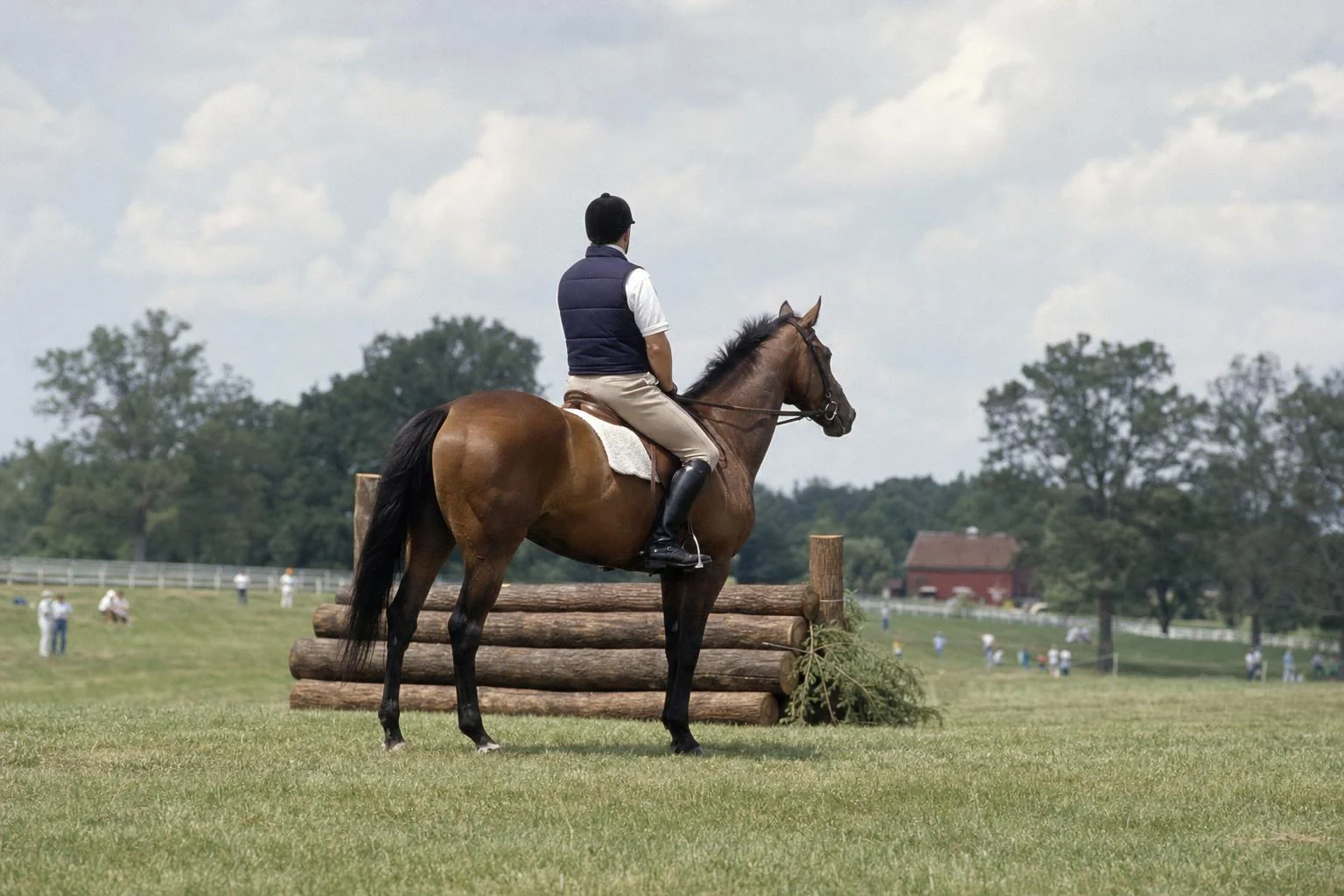

Christopher Reeve, the actor who played Superman four times, learned to ride at 32 for a film, despite being allergic to horses. Ten years later, on 27 May 1995 at Culpeper, Virginia, his Thoroughbred Buck stopped dead in front of the third fence on the cross-country course, a 3 ft 3 in (1 m) rail the horse had apparently found uninteresting. With his hands caught in the reins, Reeve pitched over the horse’s neck and landed on his head: first and second cervical vertebrae shattered, complete paralysis, a ventilator for life. He never blamed his horse. “He’s a wonderful, gentle animal. Nothing that happened was his fault,” he wrote, and from his hospital bed he kept track of Buck’s training until the horse found new owners. Here is what we know about the fall, the horse and what Reeve said about both.
Christopher Reeve, the Superman actor who was allergic to horses
In 1985, Christopher Reeve is 32, with four Superman films behind him and a part to master: Count Vronsky in a television adaptation of Anna Karenina, a cavalry officer who rides in a steeplechase. He cannot ride. Worse, he is allergic to horses. He takes antihistamines, learns, and discovers that he loves it. Back in the United States he carries on at Martha’s Vineyard, the allergies eventually fade, and by 1989 he has taken up eventing, the discipline that combines dressage, cross-country and show jumping.
This was no celebrity whim. Reeve, 6 ft 4 in (1.93 m) and about 220 lb (100 kg), was an all-round sportsman: sailing, skiing, glider piloting. In the saddle he had a reputation as a conscientious rider. The United States Combined Training Association (USCTA) was even preparing to feature him on a poster about riding safety, to be photographed in the weeks after 27 May 1995.
Buck, the 12-year-old Thoroughbred bought for eventing
In late 1994, while filming Village of the Damned, Reeve bought a 12-year-old American Thoroughbred, Eastern Express, whom he nicknamed Buck. He was an experienced horse, chosen so that Reeve could progress: together they were preparing the 1995 season at Training level (fences of around 3 ft 3 in, or 1 m), with Preliminary level, the gateway to international competition, as the target for 1996.
He had been due to compete in Vermont that Memorial Day weekend. His trainer invited him instead to the finals of the Commonwealth Dressage and Combined Training Association at Commonwealth Park in Culpeper, Virginia, an hour and a half from Washington. Three hundred riders were entered. On Saturday morning, in the dressage phase, Reeve finished fourth out of 27. Then came the cross-country.
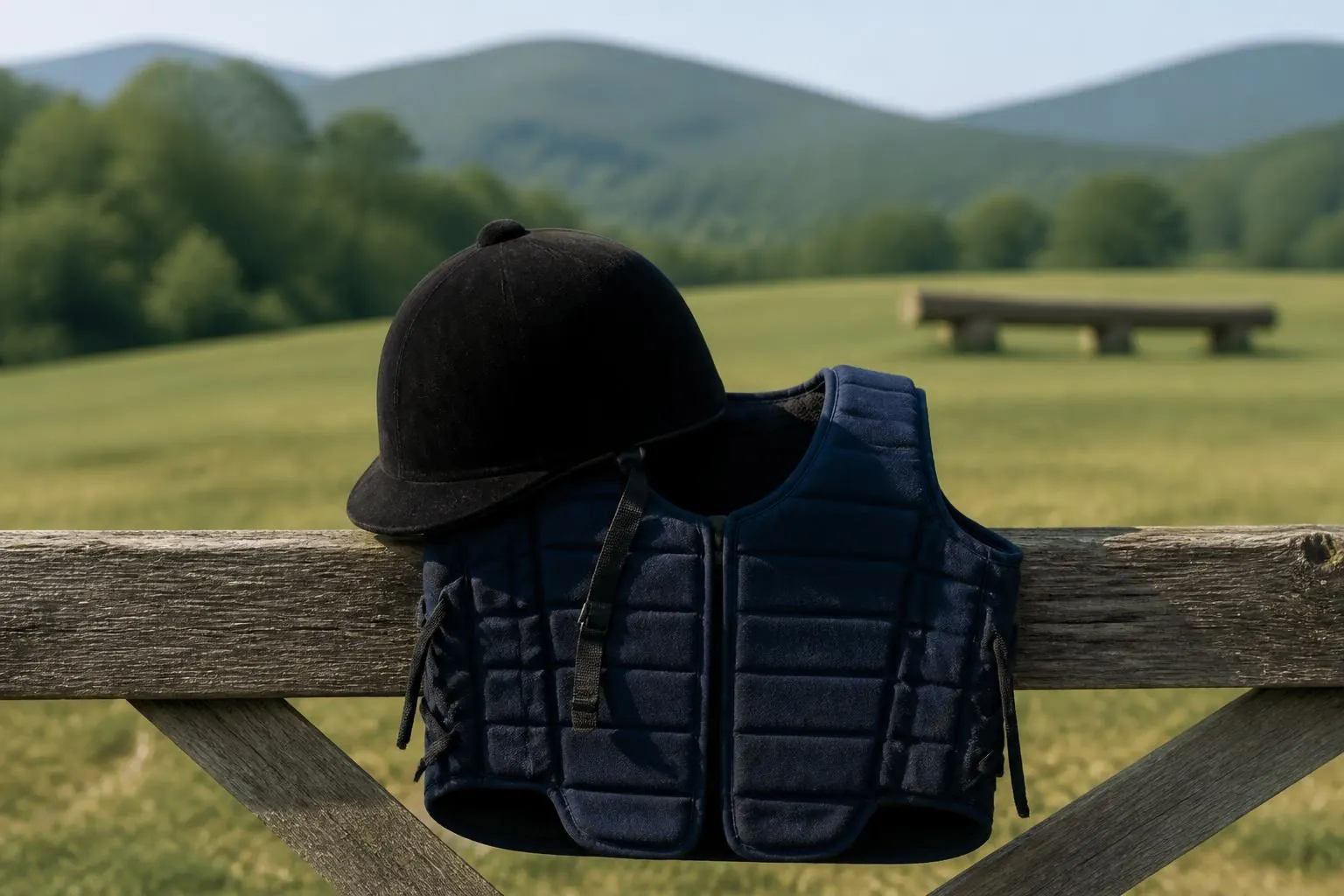
Culpeper, 27 May 1995: Buck refuses the third cross-country fence
Like every event rider, Reeve walked the course on foot before riding it. Eighteen fences. He worried about numbers 16 and 17, which were technical, and walked past number 3 without a thought: a fixed rail in the shape of a W, 3 ft 3 in (1 m) high, which the centre’s owner would describe as a triple bar. A routine fence, one he had jumped a hundred times in training.
Shortly after 3 p.m., he set off. Buck cleared the first fence, then the second, without hesitation. He reached the third at a gallop and stopped dead. A refusal, the most ordinary event in cross-country. But Reeve, travelling at pace, went over the horse’s neck. His hands stayed trapped in the reins, so he could not protect himself with his arms: as he fell, he pulled the bridle and bit off the horse’s head. He came down vertically, on the crown of his head, on the far side of the rail. Buck was unhurt.
The event’s first responders were with him within three minutes. Reeve was not breathing; they gave him mouth-to-mouth, and he regained consciousness in the ambulance, just long enough to murmur that he could not breathe. Culpeper hospital, then a helicopter to the University of Virginia Medical Center in Charlottesville. He never kept any memory of the fall. He was wearing a helmet and a protective vest, as his autobiography Still Me and the next day’s press confirm.
C1-C2: what the fall broke in Reeve, and the centimetre that decided everything
On 31 May, the neurosurgeon John Jane read out a statement: complex fractures of the first and second cervical vertebrae, no movement, no spontaneous breathing. C1 and C2, the atlas and the axis, hold the head on the spine; breaking them is the most serious of all neck injuries, and most people with this injury do not reach hospital alive. Reeve owed his survival to the rescuers’ three minutes and to a piece of luck his doctors summed up for him, as reported by his own foundation: a centimetre further to the left, and he would have died on the spot; a centimetre further to the right, and he would have walked away with a concussion.
He spent five days sedated and delirious. When he understood, he whispered to his wife Dana: “Maybe we should let me go.” She replied: “I’ll support whatever you decide. But I want you to know that I’ll be with you for the long haul. You’re still you. And I love you.” The words would give his book its title. On 5 June 1995, John Jane operated for hours: wires passed beneath the vertebral laminae, a bone graft taken from the hip and placed between C1 and C2, a titanium rod, and holes drilled in the skull to fix the head to the spine. Reeve had been given a one-in-two chance. The day before, a man in a yellow gown and blue cap, with a Russian accent, had burst into his room, introducing himself as his proctologist: Robin Williams, his friend since their days at the Juilliard School. “For the first time since the accident, I laughed.”
- The sequence of events is well established. Date, place, fence 3 of 18, the refusal, the hands trapped in the reins, the bridle pulled off, the fall onto his head: the account comes from witnesses quoted by the Washington Post as early as 1 June 1995 (including Monk Reynolds, the owner of the centre) and from Reeve’s own book, Still Me (1998). Reeve himself has no memory of the fall.
- The cause of the refusal has never been settled. A shadow in front of the horse, a rabbit, a poorly judged approach, a rider moving forward too soon: everything has been suggested, nothing has been proven. Reeve eventually wrote that going over it again and again only tormented him.
- Reeve’s words about Buck are authentic. “He’s a wonderful, gentle animal. Nothing that happened was his fault.” They are reported, along with the horse’s fate, in Christopher Andersen’s biography Somewhere in Heaven (2008), and repeated on Wikipedia.
- The medical figures are those of 1995. John Jane’s statement, the one-in-two chance at surgery and the “centimetre” are doctors’ remarks relayed by Reeve and his foundation, not a general prognosis for C1-C2 fractures.
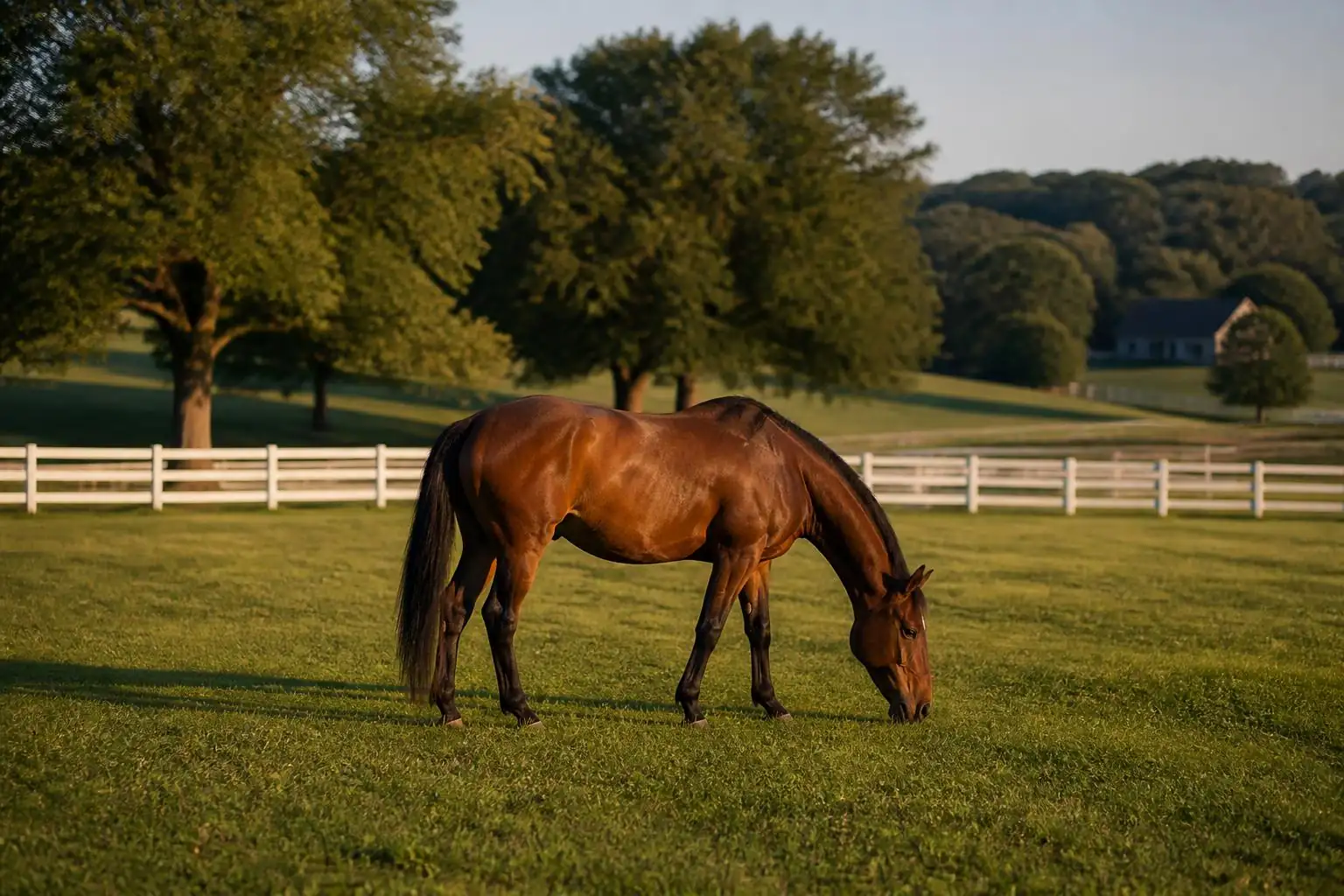
Why Christopher Reeve never blamed his horse Buck
A 12-year-old Thoroughbred who stops in front of a 3 ft 3 in (1 m) rail after two perfect fences looks like a fault on the animal’s part. Reeve rejected that reading, and he did so in three ways.
First, in practice. After the accident, Buck was put at livery at Gathering Farm in Hamilton, Massachusetts, in the heart of the East Coast’s great eventing country. From his hospital room and then from his rehabilitation centre, Reeve rang the yard regularly for news and had videos of the horse’s training sessions sent to him. Then, once it was clear he would never ride again, Buck was sold to new owners. Reeve commented: “He’s a wonderful, gentle animal. Nothing that happened was his fault. I hope he has a long and happy life with his new owners. He’s a wonderful horse.”
Second, in his book. In Still Me, he describes spending the first year going over it: why did Buck stall at such an easy fence? A stupid accident? Had he himself moved forward in the saddle one stride too soon? And he concludes: “I’ve learned that endlessly speculating about what happened serves no purpose other than to torment me. Whatever exactly happened, I now know that I can’t relive the event forever. If I made a mistake, I have to forgive myself for being human.” He does not blame Buck; he considers his own possible fault, and forgives himself for it.
Third, in what every rider knows. A refusal is a reflex, not a betrayal: a horse that has not found its stride, has seen a shadow or felt its rider lose balance will stop. We have written elsewhere about Guillaume Canet’s fall at 17 and Madonna’s three broken ribs: both got back in the saddle. Reeve could not, and perhaps that is why he was so determined to clear the horse.
What Reeve’s fall changed for eventing rider safety
Cross-country is the dangerous phase of eventing: fixed fences, jumped at speed. In the aftermath of the accident, the USCTA pointed out that 72% of the injuries recorded in its competitions occur during the cross-country. Reeve was not reckless: helmet, vest, an experienced horse, a fence at his level. He suffered the most classic mechanism in the sport, the refusal that throws the rider over the horse’s neck, made worse by hands left trapped in the reins, and therefore no arms to cushion the fall.
Thirty years on, the sport has changed. Fixed cross-country fences increasingly use frangible devices, which give way when a horse hits them head-on. The airbag vest, which appeared in the 2000s, inflates when rider and saddle separate and protects the trunk and neck from some impacts; we have compared the models suited to competition. The helmet has become lighter and subject to stricter standards: our 2026 helmet comparison sets out the current standards. None of this equipment guarantees that a fall onto the crown of the head will spare C1 and C2; all of it reduces the risk of getting there. And in France, on the day you fall, it is the FFE licence that pays for part of what follows.
One last point that riders often pick up on in Reeve’s story: he worried about fences 16 and 17 and gave no thought to number 3. Anyone who rides eventing knows the lesson: there is no such thing as an easy fence, only fences you have stopped paying attention to.
Christopher Reeve after the horse: the foundation, a finger that moves, death in 2004
Reeve survived his fall by nine and a half years. He received more than 400,000 letters, published 200 of them with Dana, directed a film in 1997, acted in a remake of Rear Window in 1998, and made his foundation one of the leading funders of spinal cord research. In the early 2000s, to his doctors’ surprise, he regained movement in an index finger and some sensation. He died on 10 October 2004 in Mount Kisco, New York, of cardiac arrest, aged 52. Dana followed him in March 2006.
He never rode again. But he insisted that no one should say the horse had broken him, and he made sure Buck continued his career elsewhere. Between Géricault, who died of his falls and Montaigne, believed dead for two hours, Reeve’s is the only story in which the rider, who would never ride again, pleads for his horse.
Christopher Reeve and his horse Buck in five facts
- 1985: Reeve learns to ride for Anna Karenina, on antihistamines; he takes up eventing in 1989.
- Late 1994: he buys Eastern Express, known as Buck, a 12-year-old American Thoroughbred, to compete at Training level in 1995.
- 27 May 1995, Culpeper (Virginia): 4th of 27 in the dressage, then Buck refuses cross-country fence 3, a 3 ft 3 in (1 m) rail; hands trapped in the reins, a fall onto his head, C1 and C2 shattered.
- 5 June 1995: the neurosurgeon John Jane fixes the skull to the spine (hip graft, titanium rod); Reeve will remain quadriplegic and dependent on a ventilator.
- Buck, at livery in Hamilton (Massachusetts), is followed by Reeve on video and then sold: “Nothing that happened was his fault.” Reeve dies on 10 October 2004, aged 52.