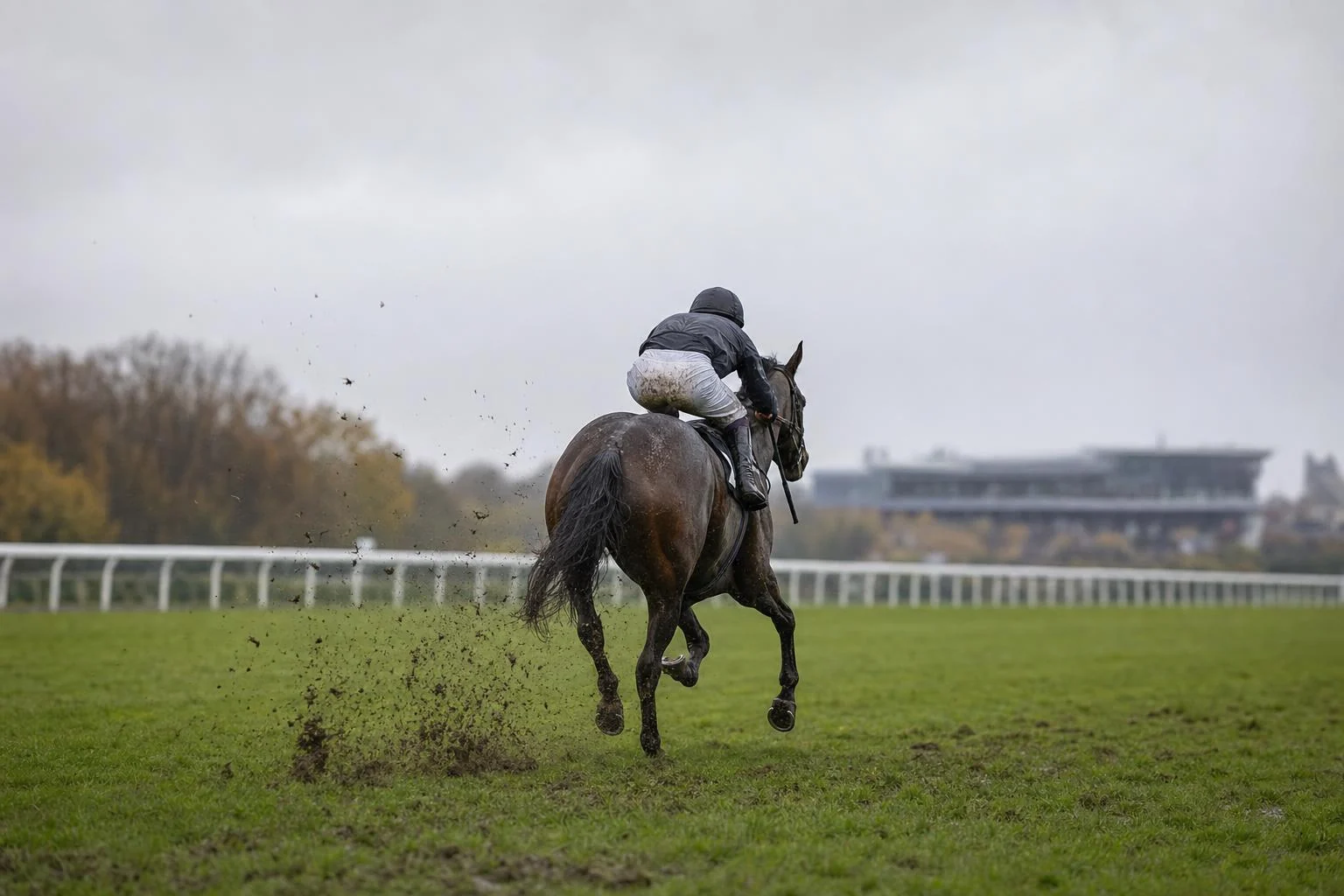

The Qatar Prix de l’Arc de Triomphe 2026 will be run on Sunday 4 October at 4.05pm (Paris time) at ParisLongchamp. Seven Japanese horses appear on the list of entries published by France Galop. Since 1969 and the first runner sent from Japan, thirty-eight Japanese attempts have produced no victory in this race. Four runners-up, one beaten by half a length and another by a head, a third place later disqualified after a positive test, and a long run of disappointments: the Arc is the only major global prize that Japanese horses have never won, though they win almost everywhere else. Here is what is at stake on 4 October, what fifty-seven years of attempts tell us, and the reason Japanese trainers themselves give first.
The 2026 Prix de l’Arc de Triomphe is run on 4 October at ParisLongchamp
The race is scheduled for Sunday 4 October 2026 at 4.05pm, at ParisLongchamp racecourse, 2 route des Tribunes, in the 16th arrondissement of Paris. It is a Group 1 over 1 mile 4 furlongs (2,400 metres) on turf, open to three-year-olds and older, colts and fillies alike, with prize money of €5 million at the 2025 running. No other flat race in Europe brings together so many champions of the distance on the same day.
The occasion in fact spans two days. France Galop announces 18 races over the weekend of 3 and 4 October, including 10 Group 1s, around 35,000 spectators and some fifty nationalities in the stands. Tickets start at €15 for the Village de l’Arc, €20 for general admission, €60 for the finish-line lawn and €80 for the Sommet de l’Arc. To place this fixture among the great races of the world, our selection of the ten greatest horse races in the world ranks it at the top of the 1 mile 4 furlong turf category, and the history of the venue is told in our profile of Longchamp racecourse.
One detail of the programme sums up the subject of this article: Sunday opens with a Parade of Nations featuring five countries, France, England, Ireland, Germany and Japan. In the Arc’s own official staging, then, Japan is one of the five nations at the heart of the occasion. It has never won an edition.
Video · 122 seconds
Arc de Triomphe 2026: 38 Japanese Runners, No Winner, Seven Entries
Seven Japanese horses appear on the list of 73 entries published by France Galop. Since the first runner sent from Japan in 1969, thirty-eight Japanese attempts have produced no victory, with four runners-up and one third place later disqualified. Here is what is at stake on 4 October, and the reason Japanese trainers themselves give first.

Seven Japanese horses entered for the 2026 Prix de l’Arc de Triomphe
France Galop received 73 entries for the 2026 edition, against 78 a year earlier. By country the split is 27 entries for France, 21 of them trained at Chantilly, 21 for Great Britain, 12 for Ireland, 7 for Japan and 6 for Germany. The Irish trainer Aidan O’Brien alone has entered eight.
The seven Japanese horses listed are Forever Young, Shin Emperor, Byzantine Dream, Alohi Alii, Meisho Tabaru, winner of the 2025 Takarazuka Kinen, Admire Terra and the filly Juryoku Pierrot. One essential caveat: an entry is not a runner. At this stage a list of entries is an open option, not a promise to travel. The final field, limited to around twenty horses, will only be known in the week before 4 October, and experience of recent years shows that most Japanese entries never make the journey.
Forever Young, Japan’s best horse, chose the dirt at Belmont over the Arc de Triomphe
The Japanese headliner on this list is Forever Young. Foaled on 24 February 2021, by Real Steel and trained by Yoshito Yahagi for Susumu Fujita, he has won 12 of his 16 starts. He is the first horse to win the Saudi Cup twice, in February 2025 and again in February 2026, and the first Japan-trained horse to win the Breeders’ Cup Classic, on 1 November 2025 at Del Mar. He also finished third in the 2024 Kentucky Derby and second in the 2026 Dubai World Cup.
That record has one thing in common: it is built almost entirely on dirt, the sand surface of the great American and Gulf racecourses. And on 18 September 2026, sixteen days before the Arc, Forever Young ran and won the Jockey Club Gold Cup, a Group 1 on dirt, at Belmont Park. A horse does not string together two Group 1s a fortnight apart on two continents: Japan’s best horse of the moment has therefore chosen American sand over the turf of Longchamp. That is, in itself, the beginning of an answer to the question this article asks.
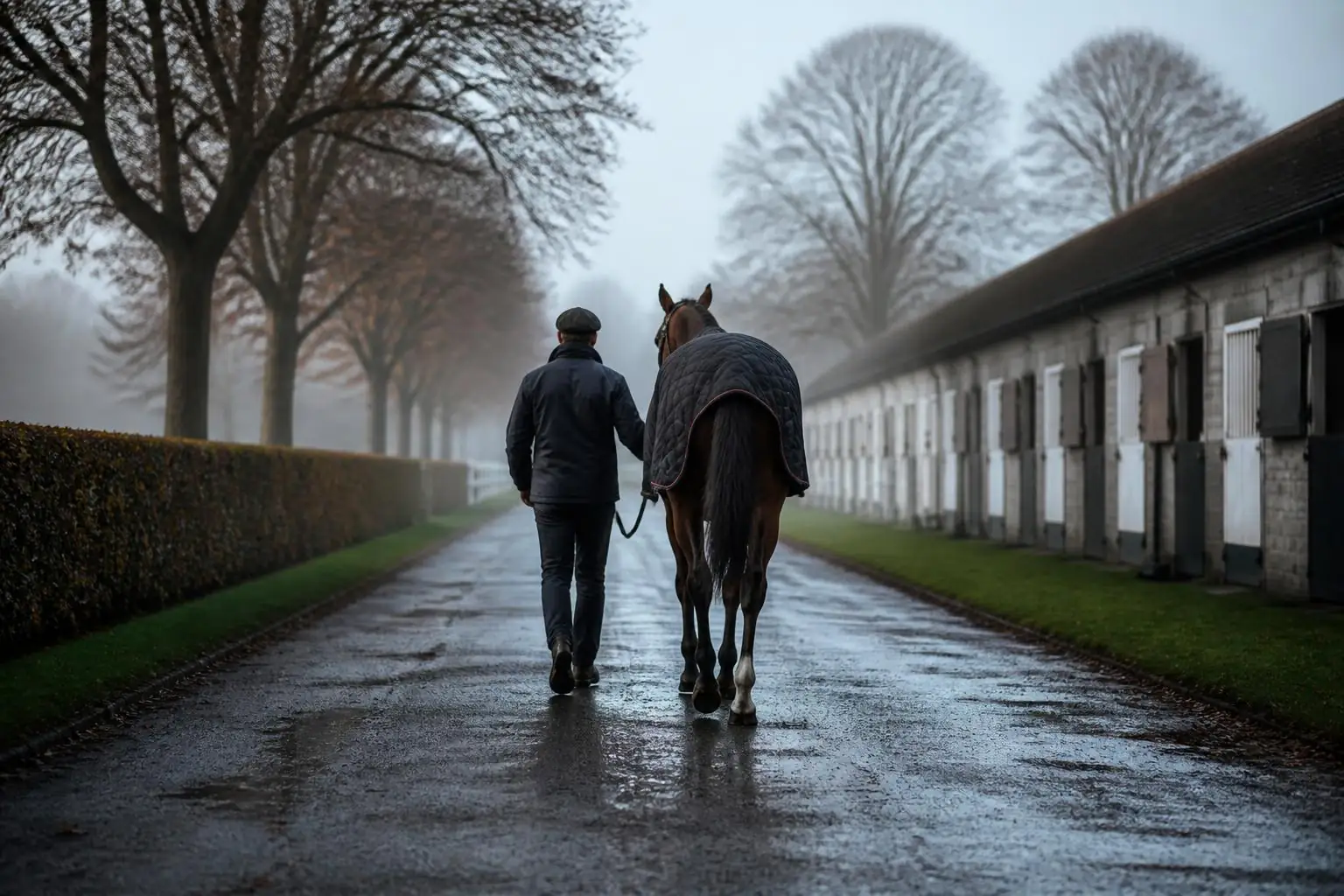
1969-2025: thirty-eight Japanese attempts at the Arc de Triomphe
The first Japanese runner in the history of the Arc was Speed Symboli. That was in 1969, he started at 99-1, and he finished well behind the winner Levmoss. Fifty-seven years later, the tally drawn up after the 2025 edition is unambiguous: thirty-eight Japanese attempts, no victory. Japan has won the Breeders’ Cup Classic, the Dubai World Cup, the Saudi Cup, the Melbourne Cup and Group 1s in Hong Kong. Not the Arc.
Four Japanese runners-up in the Arc: El Condor Pasa, Nakayama Festa, Orfevre
Japan has nonetheless come within touching distance four times. In 1999, El Condor Pasa led in the straight before being collared by Montjeu, who won by half a length. In 2010, Nakayama Festa, a 22-1 shot, was beaten a head by Workforce after leading with 300 metres (about 330 yards) to run. In 2012, Orfevre was still in front at the 300-metre mark when he veered sharply towards the rail and let the filly Solemia past in the very last strides. The following year, back as favourite after winning the Prix Foy, he was beaten five lengths by Treve. Four second places, two of them lost inside the final hundred metres: it is what has fed a Japanese obsession now more than thirty years old.
Deep Impact, third in the 2006 Arc de Triomphe and then disqualified
The most painful episode remains that of Deep Impact in 2006. Japan’s most popular horse came to Longchamp as the red-hot favourite and could finish only third. His jockey Yutaka Take explained afterwards that the horse had coughed in the week before the race. A few weeks later Deep Impact was disqualified after a positive test for ipratropium. On paper, then, Japan lost a third place and gained a wound.
2022-2025: what Japanese horses have really done at Longchamp
The recent cycle is harsher still. In 2022 Japan fielded four runners, a record, and none finished in the first ten: Titleholder eleventh, Stay Foolish fourteenth, Deep Bond eighteenth and Do Deuce, winner of the Japanese Derby, nineteenth of twenty, in a race won by Alpinista on very soft ground. In 2023 the mare Through Seven Seas, trained by Tomohito Ozeki and ridden by Christophe Lemaire, took fourth place, three lengths and a short head behind Ace Impact: Japan’s best result in ten years. In 2024 Shin Emperor finished twelfth of sixteen. In 2025, finally, three Japanese horses lined up: Byzantine Dream, winner of the Prix Foy a few weeks earlier, finished fifth, Croix Du Nord fourteenth and Alohi Alii sixteenth.
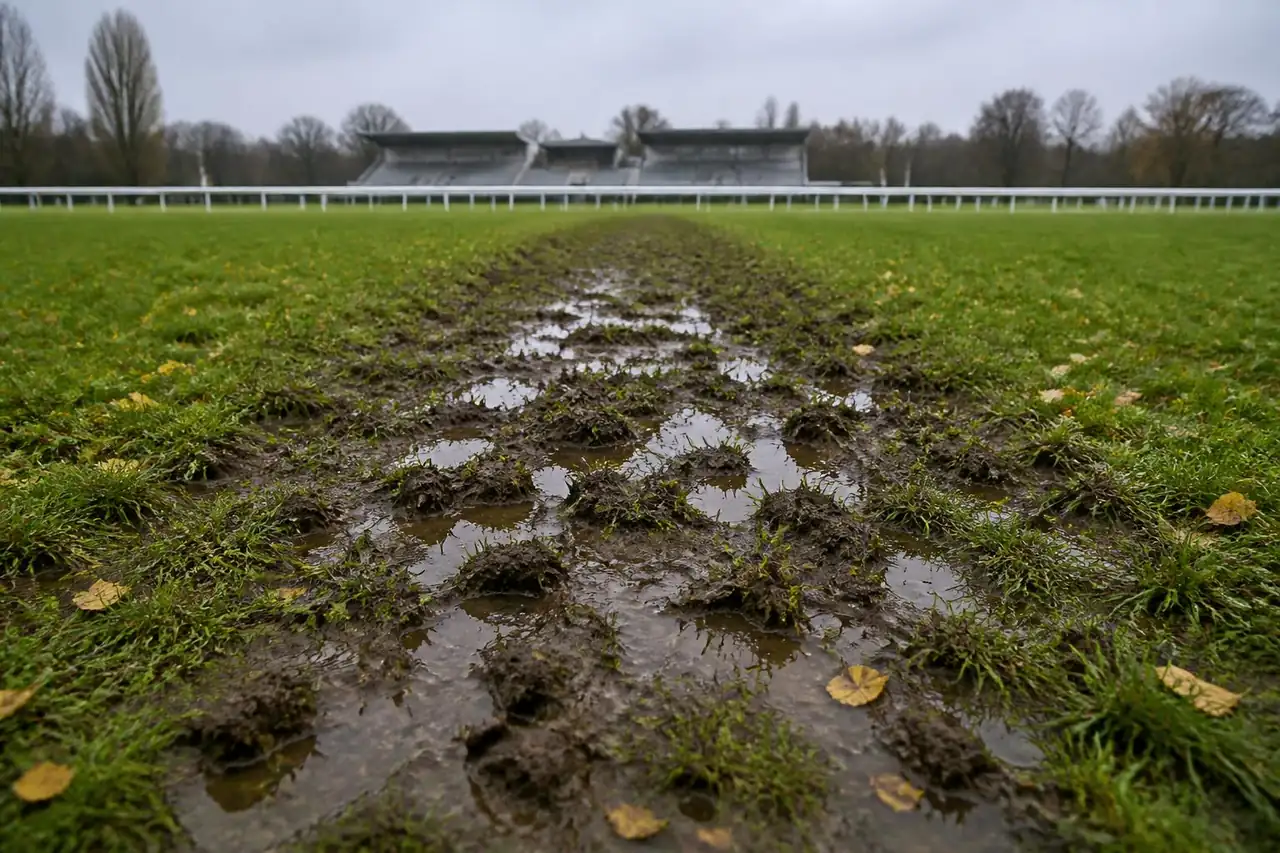
The ground at ParisLongchamp, the first barrier for Japanese horses
The reason Japanese professionals cite first is neither the journey nor the draw: it is the ground. The last two editions run on very soft going show it in figures. In 2022 Alpinista won in 2 minutes 35.71 seconds. In 2025 Daryz took it in 2 minutes 29.17 seconds. On Japan’s firm, fast tracks, a 1 mile 4 furlong race at this level is run markedly quicker. A horse trained all its life to accelerate on hard turf discovers, on an October Sunday in Paris, a track where acceleration no longer exists.
After the 2025 edition, the French jockey Christophe Lemaire, who has been based in Japan for years, summed up his runner’s race in a sentence: the horse felt the ground, and on going that heavy it simply could not change gear. The trainer Hiroyasu Tanaka went further, explaining that adapting to this environment goes, in his view, beyond the question of going alone and deserves to be taken seriously. It is the most interesting admission in the whole file: the problem is not only the mud, it is everything around the race, the calendar shift, the travel, the quarantine, the Longchamp course with its false straight and its slight rise, and a preparation designed for other tracks.
This point matters well beyond racing, because it says something simple about the racehorse: an English Thoroughbred is not an interchangeable machine, it is the product of a soil, a climate and a school of training.
Daryz, Minnie Hauk and Sosie: the European horses to beat in the Arc de Triomphe
The defending champion is Daryz. On 5 October 2025, this three-year-old colt in the colours of the Aga Khan Studs beat the Aidan O’Brien-trained filly Minnie Hauk by a head in a tight finish, with Sosie third and Giavellotto fourth among seventeen runners. It gave the Aga Khan family an eighth Arc de Triomphe, a record, and gave his trainer Francis-Henri Graffard and his jockey Mickaël Barzalona their first win in the race. The first three of 2025, Daryz, Minnie Hauk and Sosie, all appear again on the 2026 list of entries.
Calandagan, the French-trained Japan Cup winner: the exact mirror of the Arc de Triomphe
There is an inverted image of this story, and it dates from November 2025. Calandagan, trained in France by Francis-Henri Graffard for the Aga Khan Studs, went to Tokyo and won the Japan Cup by a head from the local favourite Masquerade Ball, breaking the world record over 1 mile 4 furlongs. He was the first foreign winner of the Japan Cup since Alkaased in 2005. We told the story of that race in our article on Calandagan’s Japan Cup win.
In other words: the same colours, the same trainer and the same jockey who win the Arc in Paris went off, in the same year, and won Japan’s biggest race. The route works in one direction. For fifty-seven years it has not worked in the other.
What to look for in a horse entered for the Prix de l’Arc de Triomphe
A spectator new to the race often looks for the fastest horse. That is not the right yardstick over 1 mile 4 furlongs at Longchamp, still less when it has rained. Here are the markers that really count, and they hold for any runner, European or Japanese.
What to look for in an Arc entry
- The ground first. A horse that has never run on very soft going has no reference point. In 2022 and 2025 the going was described as very soft, and the gap in times between the two editions is more than six seconds: it is not the same race.
- The exact distance. 1 mile 4 furlongs, not 1 mile 2 furlongs and not 1 mile 7 furlongs. Many very good 10-furlong horses do not last out the final quarter-mile at Longchamp.
- The course, not just the track. The climb, the descent towards the false flat and a straight shorter than it looks punish horses that attack too soon.
- Preparation, not reputation. The September trials at Longchamp, including the Prix Foy, give a genuine indication of current form and of how a horse handles the ground.
- Travel and quarantine. For a horse coming from Japan, between the flight, the time difference, acclimatisation and the change of water and forage, the race begins several weeks before the start.
- The weight carried. Three-year-olds receive a weight allowance from their elders, and fillies and mares a further allowance: on heavy ground those pounds count double.
What we do not yet know about the 2026 Arc de Triomphe runners
This article is written eight days before the race and will not pretend to know what it does not. Four unknowns remain wide open. The first is the final list of runners: the 73 entries will not all run, and the number of Japanese actually at the start, anywhere between zero and seven, is not fixed. The second is the state of the ground, which depends on the rain in the preceding days and which, as we have just seen, can reshuffle the hierarchy on its own. The third is the individual programme of each entry, which not every connection has made public. The fourth is the exact status of Forever Young, whose win on Belmont’s dirt on 18 September makes a Paris appearance very unlikely without any official statement having formally ruled it out.
So we offer here no tip, no odds and no list of runners. What can be verified is the entries published by France Galop, the date and time of the race, and fifty-seven years of results.
The 2026 Prix de l’Arc de Triomphe in practice: prize money, distance and getting to ParisLongchamp
The essentials for following the race. The Qatar Prix de l’Arc de Triomphe is run on Sunday 4 October 2026 at 4.05pm at ParisLongchamp, over 1 mile 4 furlongs (2,400 metres) on turf, as a Group 1 open to three-year-olds and older, with prize money of €5 million at the last running. The weekend of 3 and 4 October features 18 races, including 10 Group 1s, and tickets range from €15 to €80 depending on the enclosure. The racecourse is at 2 route des Tribunes, Paris 16e, on the edge of the Bois de Boulogne.
To go further on the discipline, our dedicated pages on French racecourses, on jockeys and their profiles and our racing and turf portal gather the basics: how to read a racecard, how a field is put together and what the different race categories mean.
Sources: France Galop (list of entries for the 2026 Qatar Prix de l’Arc de Triomphe and report of the 2025 edition), France Galop’s official ticketing for the programme, times and prices of Arc weekend, Japan Racing Association and Idol Horse for the review of Japanese runners, Asian Racing Report and Sporting Life for the history of attempts since 1969, Thoroughbred Daily News and the Breeders’ Cup for Forever Young’s record.