
At home, he did nothing. No fierce gallops at dawn, no times clocked in training, just the bare minimum from a horse who seemed bored. On the track at Vincennes, the same animal waited for the final furlongs to remember he was the best trotter in the world, and he passed everyone. Ourasi won four Prix d’Amérique, a record nobody has matched since, and he did it by conserving his effort to the point of insolence. The nickname stuck: the Lazy King. What his driver Jean-René Gougeon understood before anyone else was that you must never try to correct him.
Vincennes, January 1986: the first Prix d’Amérique for a horse said to be idle
On the last Sunday of January, the Bois de Vincennes becomes the trotting capital of the world. That day, a dark chestnut born on 7 April 1980 at the Haras de Saint-Georges, in Saint-Étienne-l’Allier in the Eure, went to post as favourite for the first time. His name was Ourasi, he belonged to his breeder Raoul Ostheimer, and at five he had just completed a huge season: nine wins and four places from thirteen starts, a Critérium des 5 ans, then a Prix de Belgique to open the winter.
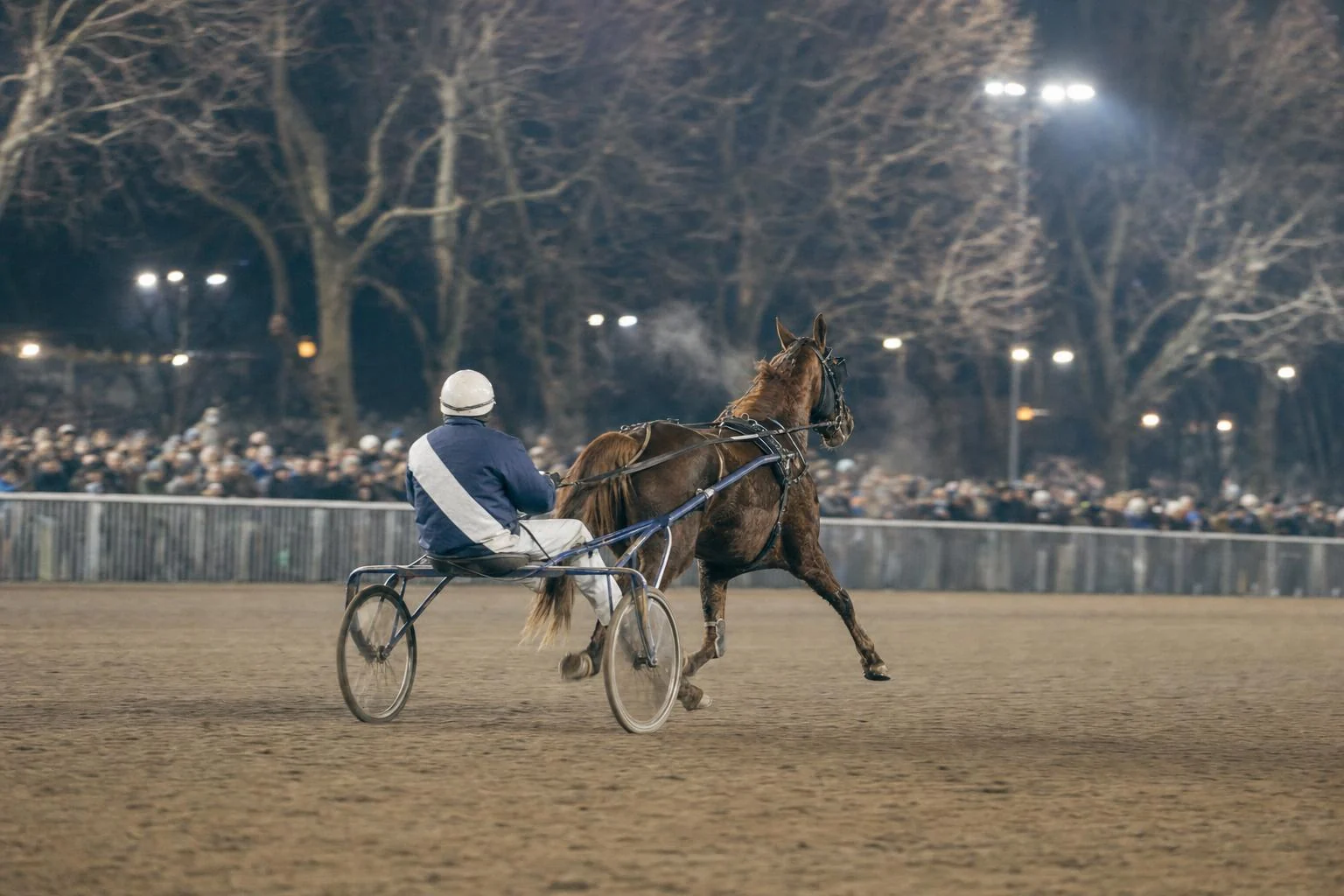
He won. In 1 min 16.6 s per kilometre, a race record at the time, ahead of Mon Tourbillon, who would become his most regular rival. It was the first of four, and nothing in his preparation resembled what the other stables were doing. To understand why the Prix d’Amérique is only run at Vincennes, you have to look at the track: a big loop with a climb, long distances, a surface that punishes short-winded horses. It is a test of stamina disguised as a speed race. In other words, the ideal ground for a horse who keeps everything for the finish.
What Jean-René Gougeon understood about Ourasi: a trotter who only gave himself in races
Here is the heart of the matter, and the reason the nickname is more than a journalist’s kindness. Ourasi is described the same way everywhere: dominant and conquering in a race, stingy with his effort in training. His nonchalance sometimes followed him right into the starting area, and even during the race itself, where he seemed to take an interest in the competition only a few hundred yards from the post. A stud-farm foal, he already preferred apples to work.
A conventional trainer would have corrected this. They would have added work, interval sessions, speed reminders, and tried to wake him up. Jean-René Gougeon, nicknamed the Pope of Vincennes, did exactly the opposite: he worked with the horse’s character instead of fighting it. Ourasi demanded a very meticulous preparation, a stable setting, a routine that never irritated him, and above all nobody asking him in training for what he would only give in public.
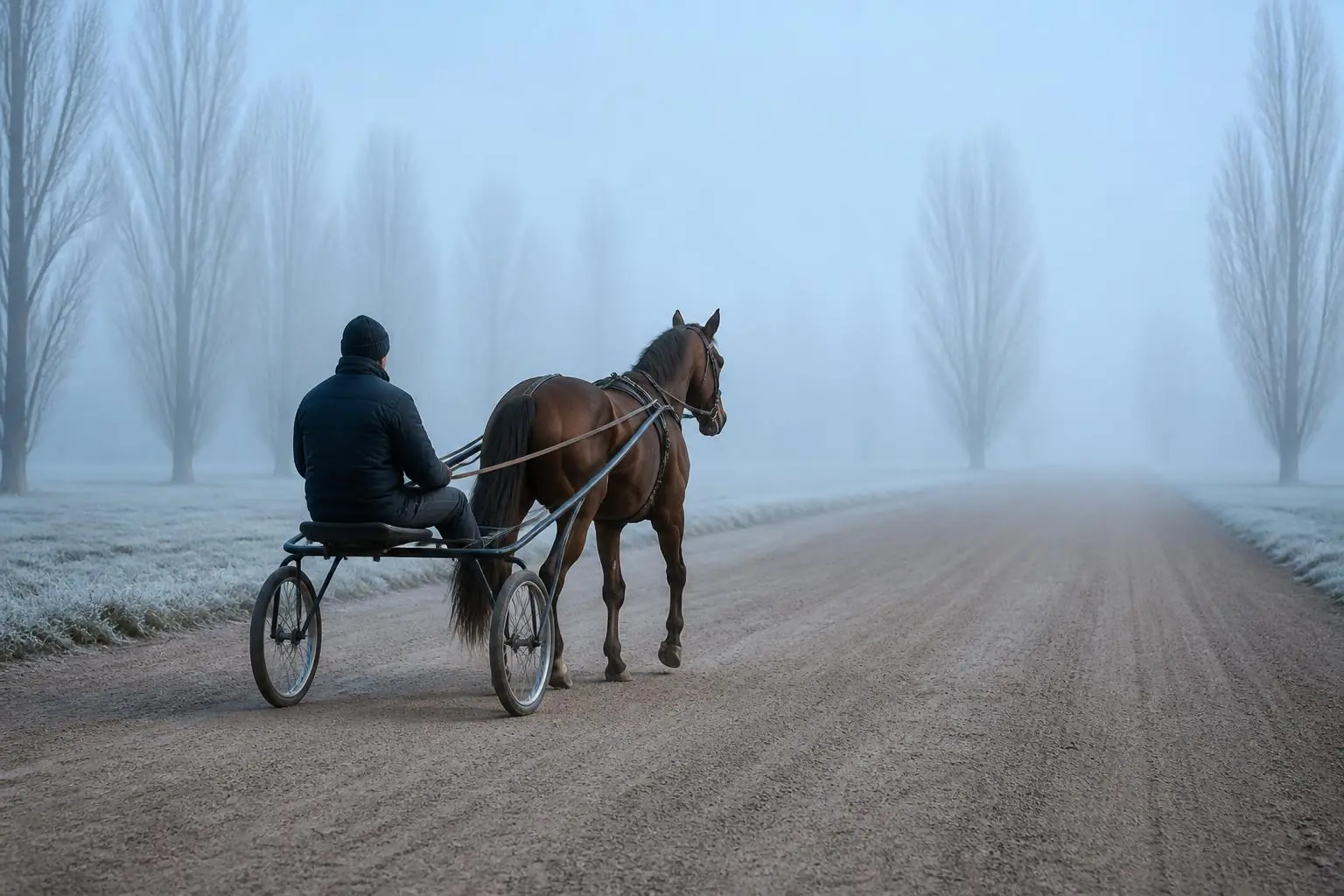
This was not indulgence, it was a reading of the horse. Gougeon had already driven Roquépine, Une de Mai, Toscan and Bellino II: he knew how to recognise a horse with his own economy of effort. A trotter who spares himself at home arrives fresh and whole on race day. A trotter forced to give everything every morning arrives worn out in January. The wager fitted in one sentence: ask for nothing in order to get everything once a month. Today all of this would be measured, heart rate, stride, recovery, with training sensors such as those in Arioneo’s Equimetre at the service of the racehorse. In 1986, the only instrument available was the eye of a man who had been driving for thirty years.
522 days unbeaten: the 1986 Prix René Ballière, the race that sums up the Lazy King
The method produced a run that French trotting had never seen. In 1986, Ourasi stayed unbeaten in fourteen races, and his streak reached 522 days and 22 consecutive wins, from 12 January 1986 to 18 June 1987. In between, he swept up the Prix de France, the Prix de Sélection, the Grand Critérium de Vitesse de la Côte d’Azur and the Prix de l’Atlantique, and won abroad too, taking the Elite-Rennen in Germany.
One race in June 1986 says it all. In the Prix René Ballière, the entire field ganged up on him and boxed him in on the rail for the whole trip. He had no opening, no room, and nobody was going to give him any. He pulled free only a few yards from the post, and outclassed Mon Tourbillon and Noble Atout with a burst of acceleration that witnesses still talk about. The horse who refused to work had reserves for two.
In January 1987 he did it again in the Prix d’Amérique, going off at an improbable 1.10 to 1, meaning a one-franc return for ten francs staked, which made the PMU tremble. That day Gougeon deliberately gave the crowd a spectacular surge down the home straight rather than a manager’s victory. At the end of 1987, Raoul Ostheimer syndicated the horse in forty shares of 600,000 francs: 24 million francs, a world record for a trotter at the time. Ourasi’s record page keeps track of this accumulation, year after year.
Philadelphia, 17 November 1988: Ourasi beats Mack Lobell and still loses the match of the century
1988 was the peak year: fifteen wins from seventeen starts, a third Prix d’Amérique that placed him in the pantheon alongside Uranie, Roquépine and Bellino II, the only triple winners before him. And a challenge from the United States.
Mack Lobell, the American star, was the first trotter to go under 1 min 10 s per kilometre. His camp demanded a duel, but on its own terms: at home, over one mile (1,609 metres), on a flat track, everything that suited the Frenchman least, whose kingdom was the big Vincennes track and its long courses. Gougeon accepted anyway. On 17 November 1988, in Philadelphia, the March of Dimes Trot gathered $600,000 and the best trotters of North America around the two champions.
Badly placed behind the starting gate, Ourasi was nine lengths back after the first turn. On the backstretch he picked off the whole field, reached Mack Lobell at the entrance to the final turn, and beat him in a duel lasting 220 yards (200 metres). Except that, watching each other, the two drivers forgot everyone else: Sugarcane Hanover came out from behind Ourasi and won on the line. The Frenchman had beaten the American and lost the race. It is exactly the kind of detail the record books do not capture, and that trotting has never forgotten.
- The kilometre rate, not the total time. A trotting time is written per kilometre: 1 min 16.6 s in 1986, 1 min 15.2 s in 1990. That is what allows races of different distances to be compared, and it is the only unit that matters when talking about a record.
- Aptitude for the big track. Vincennes demands a climb and long courses. A sprinter on a flat track, however fast, is not at home there. A trotter’s performance is judged first on the ground where it was achieved.
- Consistency over several winters. The Prix d’Amérique is prepared through the January races, the famous 4 B. A horse that wins once may benefit from a lucky set of circumstances. A horse that wins four times in five years has passed the exam.
- Qualification in races, not in training. No morning time is official. That is why the Ourasi case holds up: what he did not show at home never counted against him.
- The number of starts. 86 races for 58 wins is a strike rate of two in three over eight seasons. The statistic is worth more than an isolated feat.
1989: the Prix d’Amérique Ourasi missed, and the heart of his driver that gave out
In early 1989, Ourasi was about to turn nine, had won his three preparatory races on his return from the United States, and nobody imagined he could miss a fourth. President François Mitterrand was in the stands. The horse finished third, behind Queila Gédé and Potin d’Amour. For the first time in years, French trotting had to admit that an appointment with history can be missed.
A few days later, Jean-René Gougeon suffered a heart attack. At 60, the most successful driver in the race, with eight Prix d’Amérique to his name, was forced into retirement. He would die on 4 July 2008 in Argentan, of heart disease. The horse, for his part, would win again: Ourasi took the Prix de Paris in 1989, as if to say that nothing was over.
28 January 1990: Ourasi’s fourth Prix d’Amérique, driven by Gougeon’s brother
So it was Michel-Marcel Gougeon, known as Minou, Jean-René’s brother, who took the reins of the sulky for the final act. On 28 January 1990, at almost ten years old, Ourasi won his fourth Prix d’Amérique in 1 min 15.2 s per kilometre, a new race record. No trotter has done better since, and the Prix d’Amérique results of the last decade confirm it: the greatest names of the 2010s and 2020s top out at two wins.
The full record comes down to a few figures: 86 races, 58 wins, 21,782,895 francs in earnings, or about €3.3 million, and a personal best of 1 min 11.5 s. In 2006, L’Équipe named him the greatest French trotter of all time. You have to bear in mind what the history of the Prix d’Amérique since 1920 represents to gauge what the number four is worth next to that name.
At stud, the horse stayed lazy: 38 foals by Ourasi in ten years
What followed was less glorious, and it is the part of the story that summaries skip. Retired from racing in 1990, Ourasi became a stallion with a stud fee set at 90,000 francs, a French record at the time. Mares flocked in from France, Scandinavia and the United States: 130 were presented in the first year. Eight foals resulted.
Specialists came from around the world, and nothing changed. In ten years at stud, Ourasi sired only 38 foals, and none approached his level; the best earner, Émir des Fresnaux, born in 1992, totalled €337,866. A genetic irony: it was his half-sister Vourasie, by Fakir du Vivier, who would carry the family forward, with three podium finishes in the Prix d’Amérique, a Prix de France and three Prix de Paris.
Set against the scale of the industry, the anomaly is striking: the figures for horse breeding in France run to tens of thousands of births a year, and the best trotter of the century left behind thirty-eight. The Lazy King stayed true to form to the end, and this time nobody found the answer.
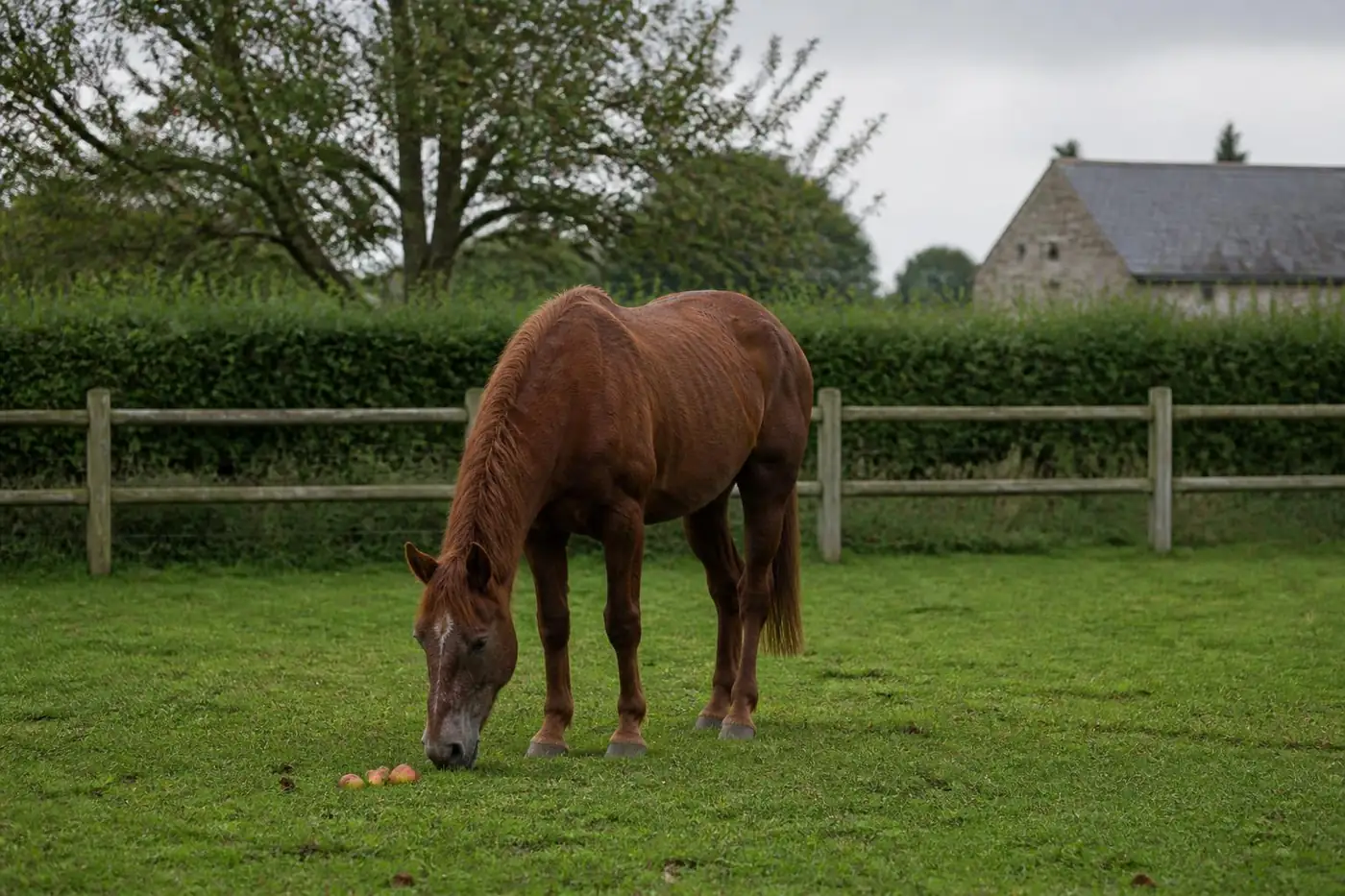
Gruchy, 12 January 2013: the death of Ourasi and his statue at Vincennes racecourse
He spent his last twenty-three years at the Haras de Gruchy, in Calvados, a few miles from Bayeux. Visitors came to see him all year round, often from far away, bringing apples and carrots cut into rounds, which says a great deal about the bond a racehorse can create with a public that does not ride. Normandy on horseback still lives on these pilgrimages.
Ourasi died on Saturday 12 January 2013, aged 32 years and 9 months. On 22 June 2014, his statue, by the sculptor Arnaud Kasper, was unveiled at Vincennes racecourse, where he built his legend. For a trotter, being cast in bronze is rarer than winning: France has more champions than statues.
His story also says something very current to anyone who looks after a horse: longevity is prepared, it cannot be decreed. An animal eased through its work, monitored, and whose habits are understood, lasts. That is the whole logic of a written record, such as the horse health record that logs treatments, vaccinations and workload, and it is what owners are looking for when they compare horse boarding yards able to take in a retiree for twenty years.
What we still do not know about Ourasi’s training
Two cautions are in order. The first: the name Lazy King comes from the public and the press, not from a training protocol. Nobody timed what Ourasi did or did not do in the morning. What the sources establish is that he conserved his effort and that his circle chose not to contradict him, not that he never worked.
The second: stable anecdotes circulate widely around this horse, including stories of pre-race rituals reported by his groom. They cannot be verified and we leave them aside. What stands up are the dates, the times, the earnings and the documented decisions, starting with his driver’s.
That leaves the real lesson, the one you can carry over to the stable next door: a horse is not a machine for running a programme. He has a temperament, and part of the craft lies in reading it rather than correcting it. French trotting provided the most spectacular demonstration, and it holds for Thoroughbred racehorses too, as Secretariat and his 22 lb (10 kg) heart showed in their own way. For the trotting industry in France, whose governing body is the Cheval Français, this story remains the best advertisement ever written: the French Trotter does not need to be docile to be the best.
Ourasi, the Lazy King, in six dates
- 7 April 1980: Ourasi is born at the Haras de Saint-Georges, in Saint-Étienne-l’Allier, in the Eure. By Greyhound out of Fleurasie, bred and owned by Raoul Ostheimer.
- January 1986: first Prix d’Amérique, in 1 min 16.6 s per kilometre, a race record, ahead of Mon Tourbillon. He would stay unbeaten for 522 days.
- 17 November 1988: in Philadelphia, he beats Mack Lobell in the March of Dimes Trot but is caught on the line by Sugarcane Hanover.
- January 1989: third in the Prix d’Amérique in front of François Mitterrand. A few days later, Jean-René Gougeon suffers a heart attack and has to stop.
- 28 January 1990: fourth Prix d’Amérique, driven by Michel-Marcel Gougeon, in 1 min 15.2 s per kilometre, a new record. No trotter has matched that total.
- 12 January 2013: dies at the Haras de Gruchy, in Calvados, aged 32 years and 9 months. Statue unveiled at Vincennes on 22 June 2014.
Sources: French-language Wikipedia entries on Ourasi and Jean-René Gougeon (civil details, record, earnings, syndication, stallion career, the driver’s heart attack, statue); Equidia archives, including the anniversary feature on Ourasi and the account of the 1989 Prix de Paris; Homéric’s reference book, Ourasi le Roi Fainéant, Favre, 2000; official Prix d’Amérique records.