In autumn 2000, Jean Rochefort is 70 and one of the finest riders in French cinema. He has bred horses in the Yvelines for twenty years, he commentates on equestrian sport for television, and Terry Gilliam has chosen him to play Don Quixote, the knight who spends Cervantes’s novel in the saddle. He spent seven months learning English for the part. In the Bardenas Reales desert in Navarre, the shoot lasts about five days. By the fifth, Rochefort can no longer stay on a horse without pain: in Paris he is diagnosed with a double slipped disc. The film falls apart. Jean Rochefort died nine years ago, on 9 October 2017; here is what happened on Don Quixote’s horse.
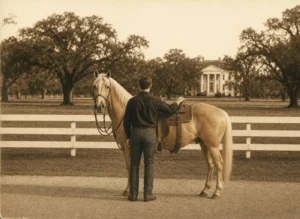
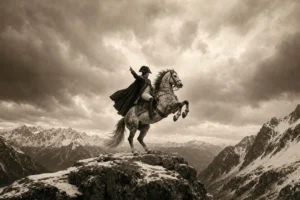
Jean Rochefort, the rider chosen to sit Don Quixote’s horse
The project is called The Man Who Killed Don Quixote. Terry Gilliam, the former Monty Python member, had been working on it since the late 1980s. In his script, a modern advertising executive, played by Johnny Depp, is flung into Cervantes’s Spain and mistaken for Sancho Panza by an old man who believes himself a knight errant. Vanessa Paradis was to play Dulcinea.
For the old man, Gilliam wanted Jean Rochefort. The choice came down to the long, lean silhouette, the humour, and one detail that matters in a role played almost entirely in the saddle: Rochefort was a genuine horseman. He had only one handicap, his English, which was poor. He worked on it for seven months before filming, an effort the documentary about the film shows with some tenderness. The budget, cut from $40 million to $32.1 million before the first day of shooting, was still considerable for a film financed in Europe.
Video · 122 seconds
Jean Rochefort
By the fifth day of shooting, he can no longer stay in the saddle. The film collapses.

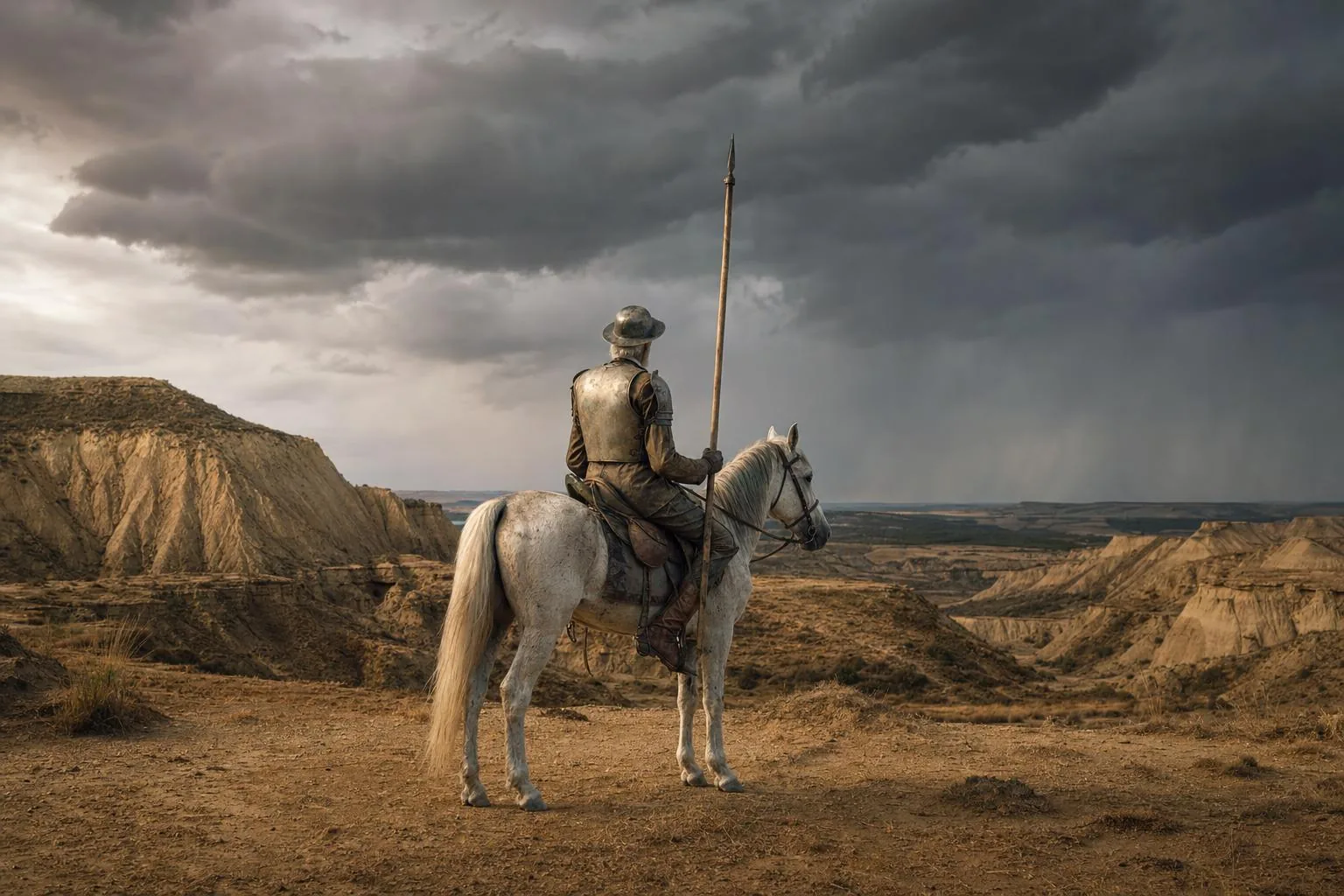
Navarre, autumn 2000: fighter jets and a flash flood around Don Quixote’s horse
Gilliam chose the Bardenas Reales, a plateau of clay and eroded cliffs in southern Navarre, for its Spanish-western horizons. He had not realised that a NATO firing range borders the desert. From the first day, F-16s passed over the takes, ruined the sound and forced the crew to plan for a complete re-dub.
On the second day a hailstorm broke, followed by a sudden flood. Muddy water swept away part of the equipment, flattened tents and changed the colour of the terrain: the shots filmed the day before no longer matched the set. The film’s insurance did not cover flooding. Cinematographer Nicola Pecorini sums up the situation in front of the documentary crew’s camera: in twenty-two years in the trade, he has never seen such an accumulation of bad luck.
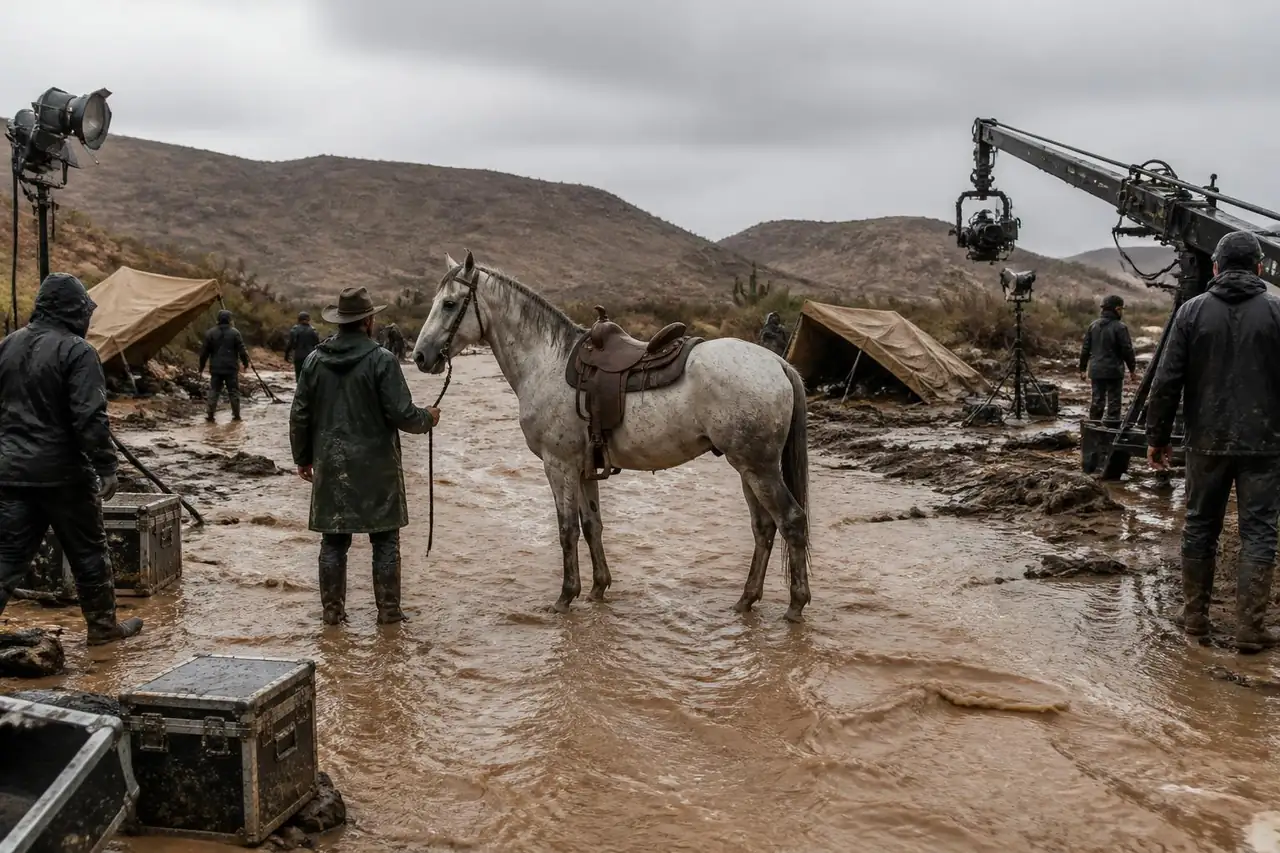
Day five: Jean Rochefort can no longer stay in the saddle
That left the heart of the film: Don Quixote on horseback. Rochefort’s first scenes in the saddle were shot. By the fifth day he could no longer hide the pain: the documentary footage shows a man visibly suffering as he rides and acts. For a rider who had been in the saddle for nearly forty years, the scene says a great deal.
He returned to Paris for tests. Doctors diagnosed a double slipped disc, aggravated by a prostate problem. For a role spent all day on horseback, the verdict was final. Gilliam tried to shoot scenes without him while waiting for his return, but the actor never came back. In November 2000, production was halted. The insurers paid out around $15 million and took over the rights to the script.
Double slipped disc: why a rider can no longer ride
The paradox struck everyone who has seen the unfinished film: the one member of the cast who truly knew how to ride was the one stopped by the horse. There is nothing mysterious in it. On horseback, the back absorbs every stride: at the walk, the pelvis follows the animal’s movement constantly; at the trot and canter, the shocks travel up the spine. A slipped disc pressing on a nerve root makes these movements painful, sometimes impossible, whatever the rider’s experience.
Riders know that the back works on both sides of the saddle. The horse’s back suffers too when tack is badly fitted, and there are signs that a badly fitted saddle is damaging a horse’s back. For the rider, persistent lower back pain calls for medical advice, not stubbornness.
- The five days: the start date of filming varies by source (late September or October 2000), but all place Rochefort’s pain in the saddle within the first week. “Five days” is the most commonly cited count.
- The diagnosis: the double slipped disc is confirmed by every source, the prostate problem by several.
- The F-16s and the flood: filmed by the documentary crew, these are the most solid facts in the story.
- The $15 million figure: this is the claim made to the insurers, not a verified accounting loss.
- “Never on a horse again”: one standard biography states that the injury kept him from riding again. We have not cross-checked it and do not state it as fact.
Cartouche, Noiret and a stud in the Yvelines: Jean Rochefort, late-blooming rider turned horse breeder
Jean Rochefort, born in 1930, did not grow up around horses. He discovered them on the set of Cartouche, Philippe de Broca’s swashbuckling film of 1962, alongside Jean-Paul Belmondo. The passion took hold in adulthood. With his friend Philippe Noiret, he learned to ride in an indoor school, among twelve-year-olds, an image he liked to recount. It is still the path of many riders who start late: a few lessons with a riding instructor near you, then the urge to go further.
He went a good deal further. He competed in equestrian competitions, rode regularly in the forest of Saint-Germain-en-Laye, at the Howlett riding school, then became a breeder in the 1980s. He settled at the Villequoy estate in Auffargis, in the Yvelines. He claimed to have bred around a hundred foals there, the first named Nashville III; other sources speak of about thirty, named after films he loved. His daughter Louise has taken over the breeding and the work with the horses.
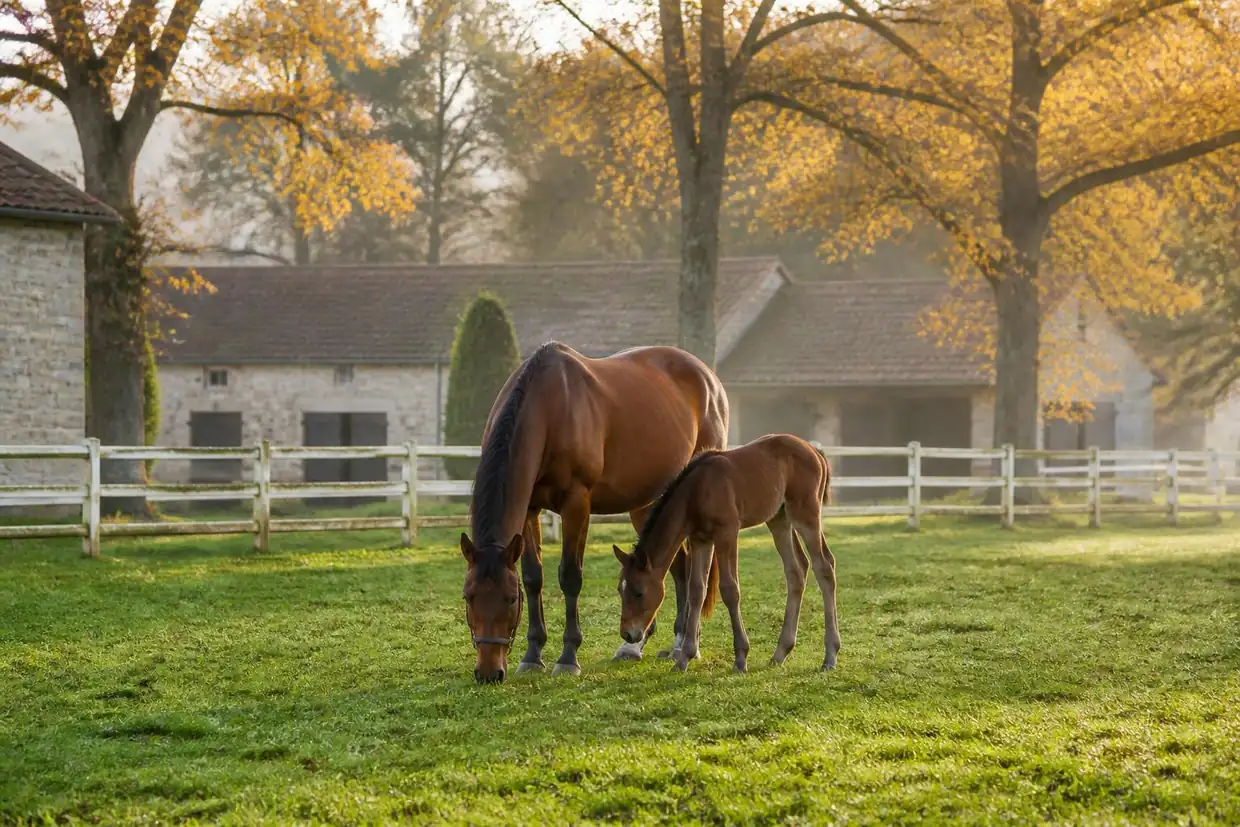
Breeding means following mares through eleven months of pregnancy, the foalings, the vaccinations and the starting of young horses. Today’s breeders keep track of all this with dedicated tools, such as Equirider’s breeding module, where Rochefort kept his notebooks by hand.
Jean Rochefort, the voice of riding at the Olympic Games
Viewers who never set foot in a yard first came to know the horseman on television. France Télévisions made him its consultant for the equestrian events at the Olympic Games in Athens in 2004. His commentary, full of images and turns of phrase about the bond between horse and rider, stood apart from the usual technical tone. He said, in essence, that riding is a way of saying aloud what the horse is thinking.
In 2014, at the World Equestrian Games in Caen, he commentated again, this time alongside Guillaume Canet, another actor and rider, whose fall from a horse at 17 and return to competition we have told elsewhere.
2018: Gilliam’s Don Quixote finally reaches the screen, without Jean Rochefort in the saddle
The failure of 2000 became a film in its own right. Documentary makers Keith Fulton and Louis Pepe, who had come to film the making-of, cut what they had shot: Lost in La Mancha was released in 2002. In it we see Rochefort rehearsing his English, riding, then vanishing from the set.
Gilliam would not give up. After several aborted restarts, one of them with John Hurt in the role, he finally wrapped filming in June 2017, with Jonathan Pryce as Don Quixote and Adam Driver opposite him. The Man Who Killed Don Quixote was shown as the closing film of the Cannes Film Festival on 19 May 2018. The film is dedicated to two actors who did not live to see its release: John Hurt and Jean Rochefort, who died in Paris on 9 October 2017, aged 87.
What we still do not know about Jean Rochefort and Don Quixote’s horse
Several points remain unclear. The name and breed of the horse that carried Don Quixote in 2000 appear in none of the sources we consulted; in Cervantes’s novel the mount is called Rocinante, a skinny nag the knight believes unequalled. Nor do we know precisely how many mounted scenes Rochefort managed to shoot before the halt, or whether that footage exists anywhere beyond the documentary.
What is established can be said briefly: a lifelong horseman, cast in a horseman’s role, stopped after five days by his own back, on the most famous horse in Spanish literature. Great stories of cinema and horses are not hard to find, from Robert Redford and his horses to Jappeloup, but this one has a peculiar twist: the best rider in the cast was the only one who could not see it through.
Documentary Lost in La Mancha, Keith Fulton and Louis Pepe, 2002 (F-16s, flood, Rochefort’s pain on horseback, Nicola Pecorini’s remark); Wikipedia entries “The Man Who Killed Don Quixote” and “Lost in La Mancha” (Bardenas Reales, NATO firing range, $32.1 million budget, fifth day, halt in November 2000, $15 million insurance claim, Cannes 2018, dedication); Wikipedia entry “Jean Rochefort” (Cartouche 1962, Philippe Noiret, Villequoy stud at Auffargis, Nashville III, France Télévisions consultant in 2004, death on 9 October 2017); Allociné, filming trivia for The Man Who Killed Don Quixote (double slipped disc, second-day flood); Paris Match Belgique, “Jean Rochefort, Don Quichotte forever” and “Jean Rochefort, portrait en amoureux des chevaux”, October 2017; Politis, “Lost in La Mancha : l’impossible Don Quichotte de Terry Gilliam”, 2018 (budget, return to Paris); Tendance Ouest, “Deauville : Jean Rochefort et ses nombreuses attaches normandes”, October 2017, and biographical notices published after his death (foals named after films, World Equestrian Games in Caen 2014).