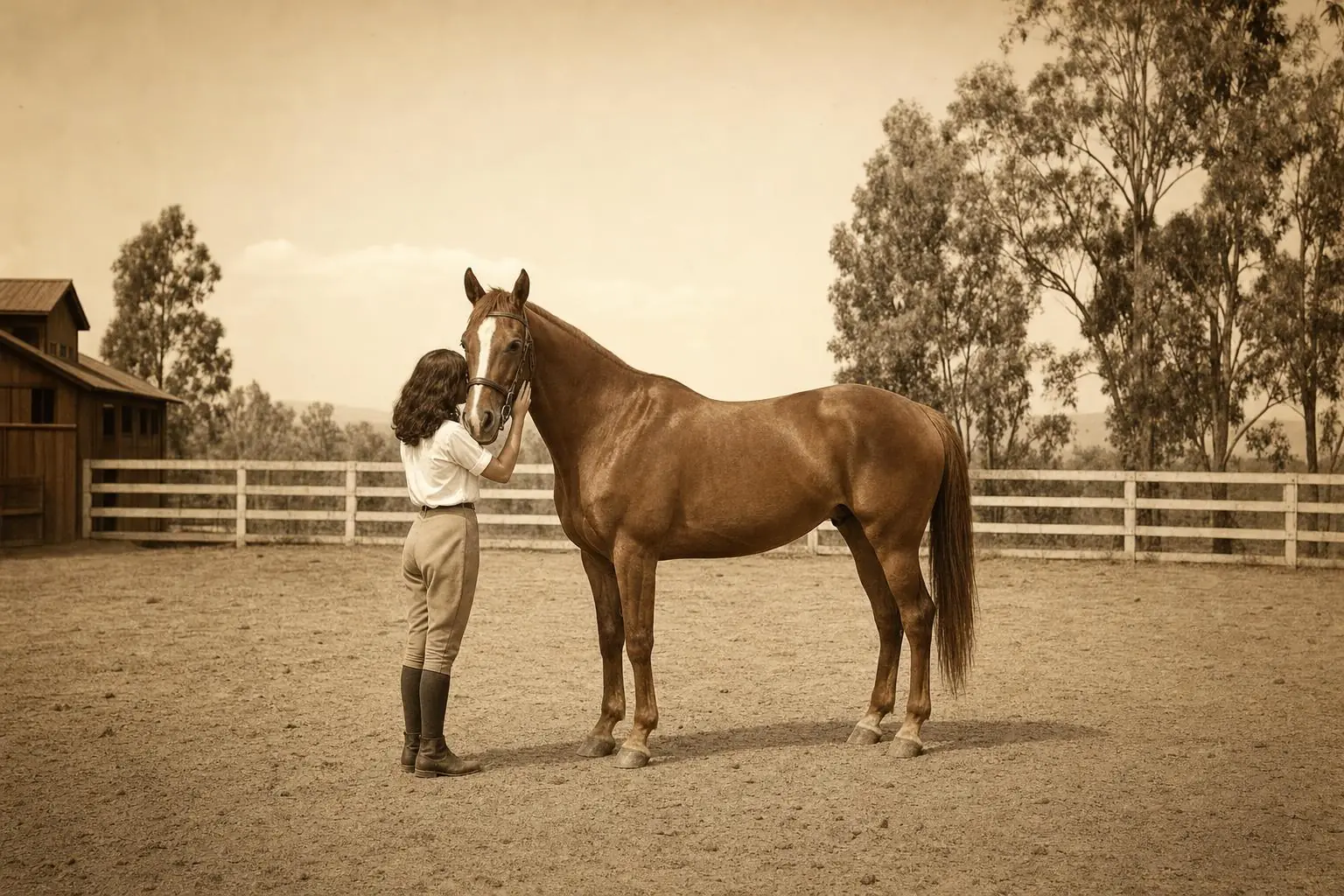

In 1944, Elizabeth Taylor is twelve years old and filming National Velvet (released in France as Le Grand National), the story of an English girl who enters her horse in the toughest steeplechase in the world. During a racing scene, she falls. Her back would never quite recover: the Associated Press obituary published at her death in 2011 dates her health troubles from that moment. And yet, a few months later, on her 13th birthday, she is given the horse from the film, a chestnut called King Charles, and keeps him until the animal dies. The reason lies in a story that began before the cameras rolled, and that Hollywood did not invent.
Elizabeth Taylor on horseback before Hollywood: a pony in Kent
Elizabeth Taylor is born in London on 27 February 1932 to American parents living in England. Before she is a child star, she is a little rider. On the official website dedicated to her memory, one line of hers can be read: the happiest moments of her childhood were spent riding her Newfoundland pony, Betty, through the woods of her godfather’s estate, 3,000 acres (about 1,200 hectares) near the village of Cranbrook, in Kent.
War comes, and the family leaves for Los Angeles in 1939. The girl signs with MGM and films Lassie Come Home in 1943. But the part she wants is Velvet Brown, the heroine of Enid Bagnold’s novel of 1935. MGM has owned the rights since 1937 and has been looking for its actress for years: according to the American Film Institute catalogue, the project had first been imagined for Katharine Hepburn.
Video · 104 seconds
Elizabeth Taylor and King Charles, the National Velvet horse: why she kept him
On her 13th birthday, she is given the horse from the film, King Charles, and keeps him until the animal dies.

National Velvet: too small for the part, she grows three inches in three months
Producer Pandro Berman finds her too small and too frail to be a credible Velvet. According to the AFI, Elizabeth Taylor then sets about eating an enormous breakfast every morning for three months, and she grows three inches (about 7.5 cm) before the first turn of the camera crank. She also spends her days with horses: the production wants an actress who can genuinely stay in the saddle.
The horse in the story, The Pie, is piebald in the novel (hence his name). On screen, he will be a chestnut. Elizabeth Taylor already knows him.
King Charles, the National Velvet horse who bit everyone except Elizabeth Taylor
King Charles is a seven-year-old chestnut Thoroughbred, trained for showjumping, who lives at the Riviera Country Club in Los Angeles, owned by a woman of good society. Elizabeth Taylor rode him there before filming and, according to her estate’s website, it was she who recommended him for the role. MGM buys him for $800. He has a champion’s pedigree: his grandsire is Man o’ War, the American great of the 1920s, which makes him a cousin of Seabiscuit, the horse who made more noise than Roosevelt in 1938.
His temperament, though, does not match the pedigree. Accounts of the shoot describe a difficult horse, who bites the crew and ignores commands; one tells how he tore a piece out of a trainer’s shoulder when the man tried to teach him to play dead. These anecdotes come from studio lore, not from a dated report. On one point, every source agrees: the only person King Charles would accept was the twelve-year-old girl. She rode him every day, fed him and groomed him herself.
Elizabeth Taylor’s fall on the set of National Velvet, and what it cost her back
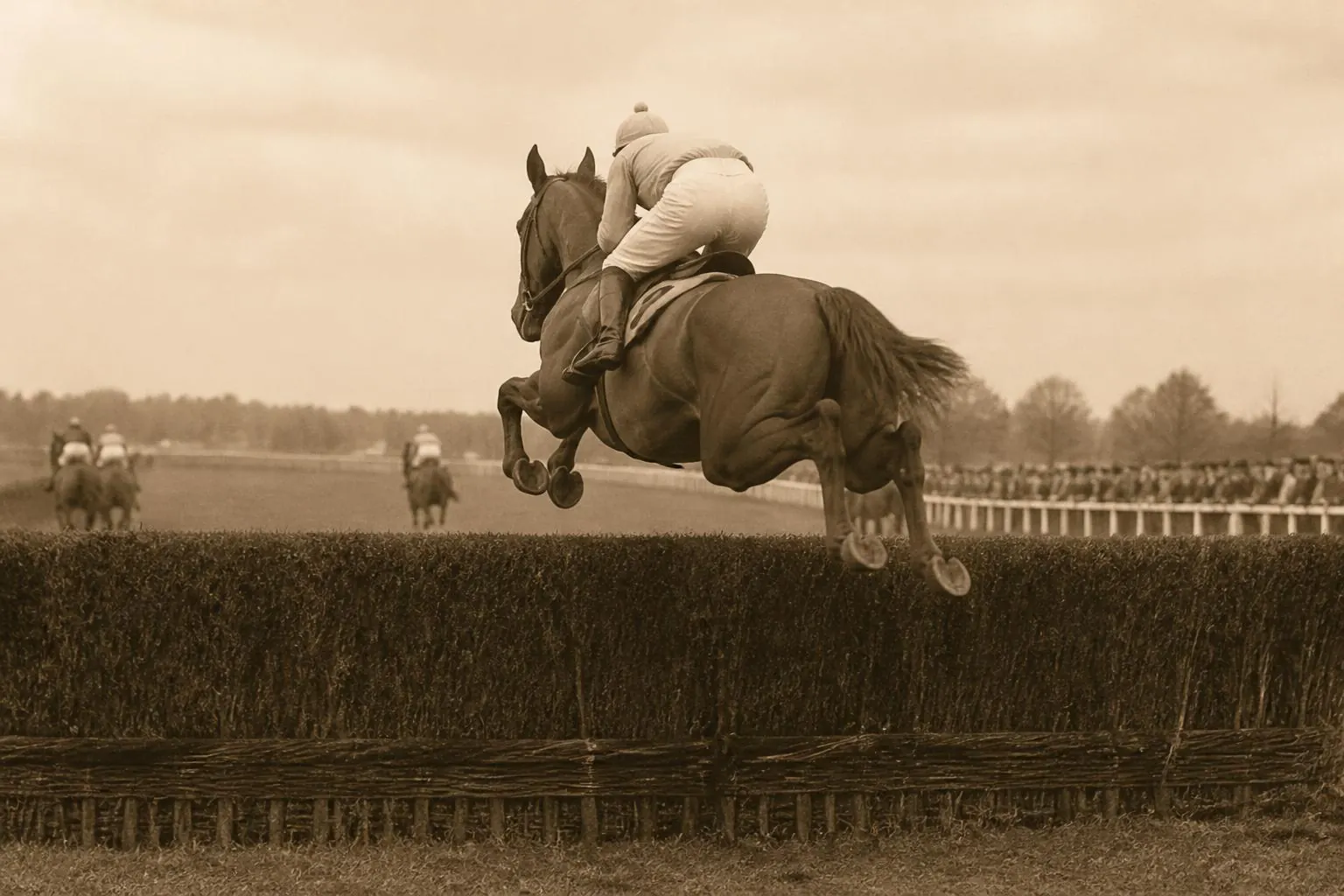
During a racing scene, Elizabeth Taylor falls from her horse. The AFI catalogue notes it with caution: according to modern sources, she was unseated during filming and kept a back injury for life. The AP obituary is more direct: her health problems began at twelve, when she fell from a horse while making National Velvet and hurt her back.
What followed is documented. Her back remains her weak point for decades. In 1957, after a fall on board a boat, surgeons remove three discs and replace them with bone taken from her hip, her pelvis and a bone bank, again according to the AP. Several biographers link this pain to her long dependence on painkillers. Some sources speak of fractured vertebrae as early as 1944; we have found no medical record from the time to confirm it, which is why we stick to the word “injury”. Falling is part of every rider’s risk, and the most dangerous discipline is not the one you think.
Why Elizabeth Taylor kept King Charles, the horse who had thrown her
Filming over, the movie opens in New York on 14 December 1944. On 27 February 1945, Elizabeth Taylor turns thirteen, and that day she learns that King Charles is hers. According to her estate’s website, it was Louis B. Mayer, the head of MGM, who gave him to her; other sources simply say the producers did. Several biographers report that she had asked to keep him. Later, she would sum up the moment in a line repeated in many books: “And at the end, getting the horse for my thirteenth birthday was one of the moments of my life.”
Why keep the horse that caused the fall? No statement by Elizabeth Taylor answers the question word for word, so what follows is our reading of the facts. First, he was not a studio horse to her: he was the one she had chosen before the film, at the Riviera Country Club. Second, the bond ran both ways, which is rare: a horse who bites everyone and yields only to a child forms a tie that a fall does not undo. Any rider knows it: falling is part of the job, and you get back on. Finally, her estate’s website quotes a line of hers that says a great deal: it is untrue that she prefers animals to people, but they come right behind, because with them there is no pretence.
King Charles spends the rest of his life with her and dies, according to biographies, when she is 24, eleven years after the gift. She will go on riding all her life, far from the cameras, in quiet places: her estate’s website presents the horses as the private part of her life, the opposite of her jewels, which were very public.
National Velvet and the Grand National: the raffle-prize horse and the girl disguised as a jockey
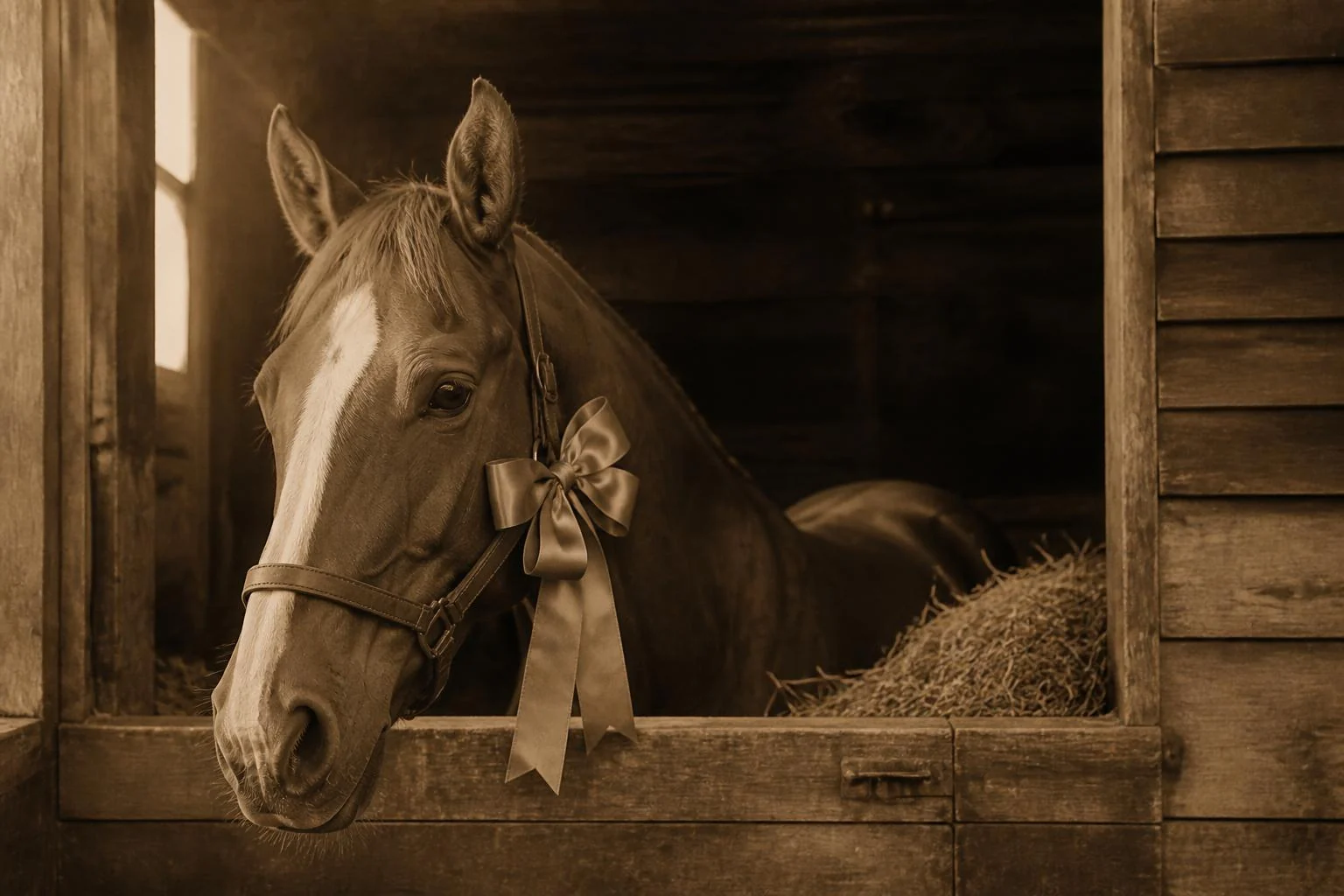
In the film, Velvet wins a horse in the village raffle and decides to enter him in the Aintree Grand National. Women are not allowed to ride in it, so she cuts her hair and passes herself off as a jockey. She crosses the line first, faints, it is discovered that she is a girl, and her victory is annulled. Fiction was ahead of reality: it would take until 1977 for a woman, Charlotte Brew, to start the race, and 2021 for Rachael Blackmore to win it. Another horse entered legend there, Red Rum, the lame horse healed in the sea.
The film earns $3.68 million in the United States and Canada, and wins Anne Revere, who plays Velvet’s mother, the Oscar for Best Supporting Actress. Mickey Rooney, who plays the former jockey Mi Taylor, shoots his scenes first, in the month the army allows him before his induction in June 1944. The film has its own entry in our wiki: National Velvet (1944).
King Charles himself remains a pure product of racing breeding: a Thoroughbred with Man o’ War blood, agile enough for showjumping, hot enough to bite. To understand where this blend of speed, courage and sensitivity comes from, our guide to the English Thoroughbred, its temperament and abilities covers the breed, from the racecourse to a second career in sport.
Established: Elizabeth Taylor’s birth in London on 27 February 1932, her age (twelve) during filming, the horse King Charles, a seven-year-old chestnut Thoroughbred and grandson of Man o’ War, bought for $800 by MGM, the gift of the horse for her thirteenth birthday, the film’s opening on 14 December 1944 in New York, Anne Revere’s Oscar, the 1957 back operation reported by the AP.
According to the sources, with variations: who gave the horse (Louis B. Mayer according to her estate, “the producers” elsewhere), the exact seriousness of the 1944 injury (a back injury for the AFI and the AP, fractured vertebrae for others), the age at which King Charles died (when Elizabeth Taylor was 24, according to biographies), the quotation about the gift, taken from secondary sources.
Uncertain or interpreted: the biting anecdotes, which belong to studio lore, and the reasons she kept the horse, which are our reading of the facts and not a statement by Elizabeth Taylor.
Sources for the account of Elizabeth Taylor and the horse King Charles
Official website of the Elizabeth Taylor estate, page “Elizabeth the Equestrian”; American Film Institute, AFI Catalog, entry for National Velvet (1944); Associated Press obituary “Taylor suffered health ailments through life” (March 2011); entry for the film National Velvet (English Wikipedia); Spokane Spokesman-Review, “Easy as Pie: a movie to propel a career”; Enid Bagnold, National Velvet (1935).