
The black Arabian stallion is one of the most sought-after horses in the breed, and one of the rarest. Black is an uncommon color among Arabians, and many foals born dark turn gray within a few years. This guide covers the history of the black Arabian, how to recognize a true black, how to care for a stallion and what to check before you buy one.
The history of the black Arabian horse
The Arabian comes from the deserts of the Arabian Peninsula. Bedouin tribes bred it for centuries, kept it close to their tents and selected it for endurance, soundness and a gentle temper with people. Over the centuries Arabian horses traveled across the world through trade, wars and royal gifts, and they shaped many modern breeds, including the Thoroughbred. Black horses stood out in that history, and a black Arabian still carries an image of prestige today.
Origins and development
The black Arabian shares the origins of the whole breed. Its main stages:
- Development by the Bedouin on the Arabian Peninsula
- Spread through trade and cultural exchange around the Mediterranean
- Influence on European bloodlines, from the Thoroughbred to the Lipizzaner
- Strict pedigree keeping, which preserved the breed’s type
- Adaptation to widely different climates, from desert heat to northern winters
Role in horse cultures
Arabians play a central part in many horse cultures. Their endurance and their looks drew riders long before modern sport. A black stallion adds a strong visual presence, which explains its place in:
- Symbols of rank and prestige
- Ceremonies and parades
- Competition, above all endurance riding
- Painting and sculpture
- Literature and film
Their stamina is still unmatched in long-distance riding: read why Arabians dominate endurance.
Physical traits of the black Arabian stallion
- Height of 14.1 to 15.1 hh (1.45 to 1.55 m).
- Compact, well-muscled body.
- Concave “dished” face profile.
- Elegant, arched neck.
- High tail carriage.
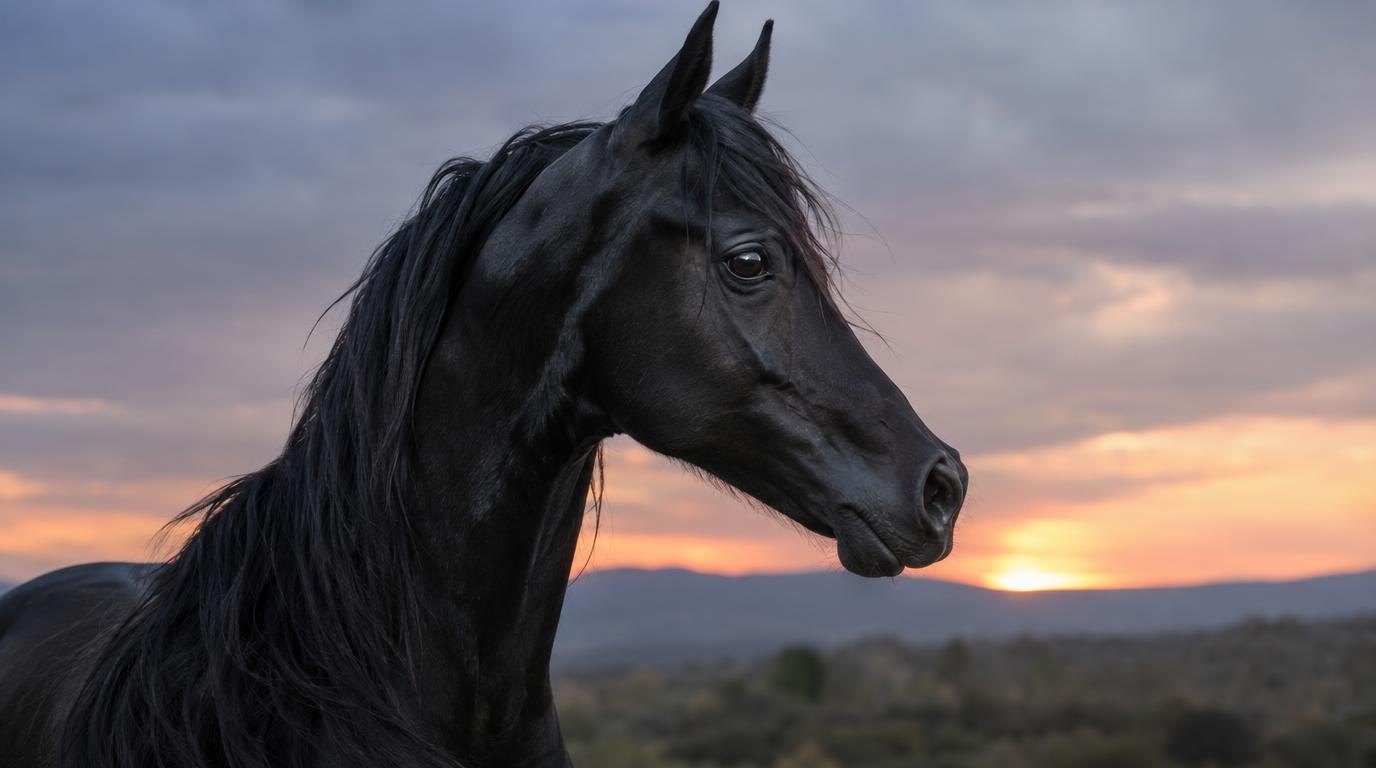
- Glossy, even black coat.
The black Arabian stallion combines the classic Arabian shape with a color that makes it stand out in any show ring.
Conformation and movement
The black Arabian has a fine, expressive head, large eyes and small, curved ears. Many Arabians have one fewer lumbar vertebra than other breeds, which gives the short back the breed is known for. Its movement is light and floating. Main features:
- Short, straight back
- High-set tail
- Deep chest
- Strong, clean legs
- Fine, silky mane
Coat color and how to recognize a true black
A true black Arabian has a deep, shiny coat with black points and no brown hair on the muzzle or flanks. White markings on the face and legs are allowed and common. Two points to check:
- Gray or black? Many Arabian foals are born dark and carry the gray gene. They lighten with each coat change and end up white. Look for white hairs around the eyes and muzzle, and ask for a color test.
- Black or dark bay? A dark bay has brown hair around the muzzle, eyes and flanks. A DNA test for the Extension and Agouti genes settles it.
- A sun-faded black coat turns rusty in summer. A rug and shade keep the color deep.
- A homozygous black stallion (EE aa) gives black or bay foals to most mares, which raises his stud value.
- Some black coats show a blue sheen in the sun.
Breeding and caring for black Arabian stallions
- Give him a large, well-ventilated stall.
- Keep stable conditions stable, without drafts.
- Feed a balanced, high-fiber diet.
- Turn him out or exercise him every day.
- Book regular vet checks.
- Give him safe contact with other horses, over a fence if needed.
Keeping a black Arabian stallion takes experience. A stallion needs safe fencing, consistent handling and a routine he can rely on.
Living conditions
Arabians need space, fresh air and daily movement. Good pasture and regular care keep them sound. They cope well with heat, and with a rug and shelter they cope with cold winters too.
Feeding and care
Feed a forage-based diet of good hay or grass, with a balancer for vitamins and minerals. Arabians are often easy keepers, so watch the energy in the ration. Brush him every day to keep the coat glossy, and protect a black coat from strong sun to stop it fading. Clean water at all times and a clean stall complete the routine.
Buying a black Arabian stallion
- Check the pedigree and the registration papers.
- Assess his health and condition, with a pre-purchase vet exam.
- Buy from a known, registered breeder.
A black Arabian stallion is a serious investment. Take your time, and use the checks below.
Selection criteria
Look at the pedigree first, then the conformation: a balanced body and correct legs matter more than color. Check the feet and the coat. Watch how the stallion behaves when handled and around mares. Ask for a color DNA test to confirm he is black and not a young gray. If he is meant for breeding, check his fertility records and his foals.
Buying tips
Before you sign:
- Check the pedigree and the health history
- Assess temperament and behavior
- Book a pre-purchase exam with an equine vet
- Visit the place where he lives today
- Read the registration documents in detail
- See him handled, ridden and, if possible, in the breeding shed
Plan the running costs as well as the price: our breakdown of the true cost of owning a horse helps you set a budget.
Black Arabian stallions in competition
Arabians compete in many disciplines, and black stallions draw attention wherever they go. They do well in:
- Endurance riding
- Show jumping at amateur level
- Dressage
- Halter and breed shows
- Trail and pleasure riding
- Western and working classes
Their presence in the ring and their stamina on the trail built their reputation worldwide.
Performance and disciplines
Endurance is the Arabian’s home ground: the breed wins most international endurance races over 100 miles (160 km). Arabians are also agile and quick in dressage, jumping and western classes. In halter and breed shows, a black stallion with correct conformation stands out from the first look.
Fame on screen
The black Arabian owes part of its fame to fiction. In Walter Farley’s novel The Black Stallion (1941), the hero is a wild black Arabian. In the 1979 film, the role went to Cass Ole, a black Arabian stallion who also won in the show ring. For many riders, that film is where the dream of a black Arabian began.