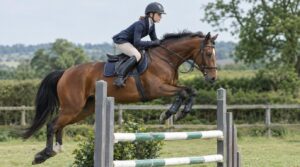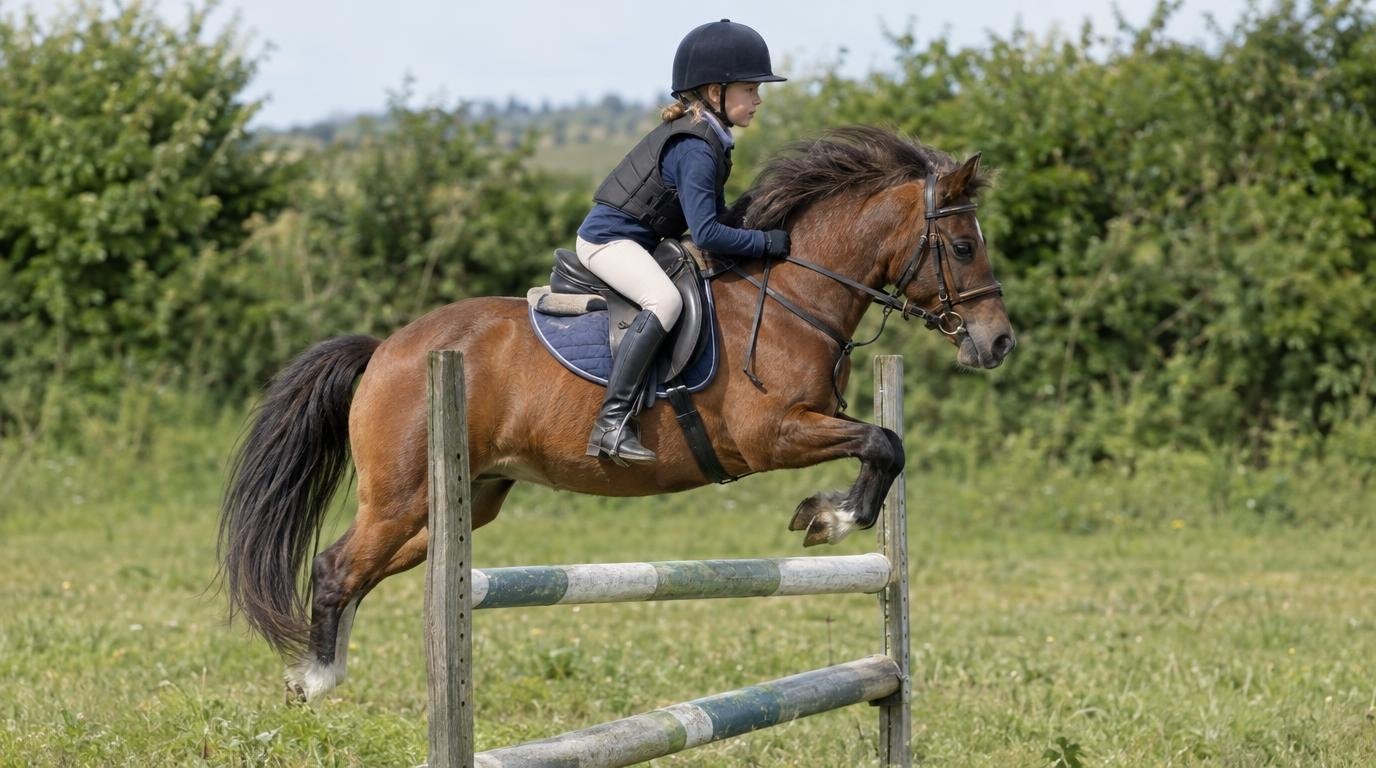

Stepping into the world of equestrian competition can feel daunting. In AS Poney 1, however, you discover a thrilling arena where every fence becomes an exhilarating challenge. Do you know the ideal height at which to perform? Delve into the finer points of the rules and learn how to carry your pony towards victory by mastering every detail. Ready to jump?
Understanding the AS Poney 1 category
AS Poney 1 is a show jumping category designed for young riders, and ponies must meet specific criteria to take part. Here are the key features:
- Fence height: 3 ft 3 in (1 m).
- Age requirement: under 16.
- Discipline: show jumping.
- FFE (French Equestrian Federation) licence compulsory.
- Regular training essential.
What is the AS Poney 1 category?
AS Poney 1 covers show jumping competitions for young riders. It is defined by classes built specifically with ponies in mind. These are the main elements of the category:
- Fence height: 3 ft 3 in to 3 ft 7 in (1 m to 1.10 m)
- Open to riders aged 12 to 18
- Classes held over technical courses
- Riders assessed on control and agility
Eligible ponies and their qualities
Ponies competing in AS Poney 1 must meet specific criteria, and both their agility and their size play a crucial role in the ring.
- Maximum height of 14.2 hands (1.48 m) unshod
- Excellent physical condition
- A calm yet responsive temperament
- Show jumping experience
A well schooled, well balanced pony is the surest route to better results. These qualities allow young riders to rise to the challenge with confidence.
Fence heights in AS Poney 1
In AS Poney 1, the pony fence height ranges from 3 ft 3 in to 3 ft 9 in (1 m to 1.15 m), according to the official rules. Such dimensions call for thorough preparation and reward accuracy and technique. Focused training will sharpen both performance and the rider’s confidence.
Standards and rules
The standards for AS Poney 1 set out the height of the fences, and adhering to them ensures fairness in competition.
| Category | Maximum height |
|---|---|
| AS Poney 1 | 3 ft 9 in (1.15 m) |
| AS Poney 2 | 4 ft 1 in (1.25 m) |
By comparison, the height standards for AS Poney 2 are slightly higher, which calls for a different approach to preparation.
How it compares with other categories
Fences in AS Poney 1 reach a maximum of 3 ft 7 in (1.10 m), while other categories vary. Comparing these heights gives you a clearer picture of what each level demands.
| Category | Max height |
|---|---|
| AS Poney 1 | 3 ft 7 in (1.10 m) |
| AS Poney Élite | 3 ft 11 in (1.20 m) |
| Poney 2 | 2 ft 9 in (0.85 m) |
The key features of AS Poney classes include technical courses tailored to young riders.
Preparing for AS Poney 1 competitions
To prepare effectively for AS Poney 1, it is vital to follow a disciplined training programme suited to your level. Here are some essential steps:
- Assess your pony’s fitness
- Schedule regular jumping sessions
- Build stamina and suppleness
- Incorporate flatwork exercises
- Review your previous rounds
- Work alongside an experienced coach
The secret lies in methodical, consistent preparation that strengthens the bond between you and your pony.
Training tailored to young riders
Training for young riders in AS Poney 1 should focus on core skills. Mastering pony fence heights demands careful preparation. Here are three key steps:
- Establish a regular programme with varied sessions.
- Focus exercises on accuracy and balance.
- Include mock competitions so your pony grows used to the atmosphere.
These habits encourage steady progress and build confidence in both rider and pony.
Improving your show jumping performance
To raise your game in show jumping with an AS Poney 1 pony, you need to concentrate on several essential areas. Here are a few practical tips:
- Work regularly on your balance and position.
- Master the fundamentals of jumping.
- Practise walking and learning courses in advance.
- Develop clear communication with your pony.
- Vary your exercises to keep things fresh.
These steps will guide you towards your best possible performance in the ring.
Tips for success in competition
To excel in competition, you need to master several key areas:
- Know the rules on pony fence heights
- Refine your position in the saddle
- Develop a warm up routine
- Polish your jumping technique
- Manage nerves with breathing exercises
- Review every round to identify where you can improve
Jumping technique for riders
Master your position by keeping your back straight and your heels down. Prepare for each fence by looking beyond it. Maintain a soft, elastic contact through the reins. Use your legs to create the impulsion you need. Stay focused and adjust your rhythm to the height of the fences.
Mental strategies for managing nerves
Nerves can affect how you perform in competition, so adopt mental strategies to keep them in check. Here are three techniques to put into practice:
- Visualisation: picture every stage of the course, from the warm up to the final fence.
- Breathing: practise breathing exercises to calm your mind.
- Stay in the moment: keep your attention on each fence as it comes.
These methods will help build your confidence and allow you to approach competitions with a calm mind.
Resources and support for riders
Finding the right club can transform your passion. Choose a coach who has a thorough understanding of pony fence heights: they will help you perfect your jumping. Make sure you have the right equipment, too, as well fitted saddles and quality protective gear make a real difference. Browse online forums and groups to swap advice. These resources enrich your riding and steer you towards success in competition.
Recommended clubs and coaches
To excel in AS Poney 1, join a well regarded club such as the Club Hippique de France. Look for experienced coaches who specialise in show jumping. They will offer you tailored techniques and personal support to improve your results.
Essential tack and equipment
The essentials include a well fitted saddle, an approved riding hat and sturdy boots. Invest in protection for your pony, such as tendon boots. A quality whip can also make a difference. Choose durable equipment to get the best from your performance and to stay safe in competition.