Friesian Horse: Breed Guide, Price, History and Health

The Friesian horse, the black pearl of the Netherlands
The Friesian horse, nicknamed “the black pearl”, comes from Friesland, a province in the north of the Netherlands. You notice three things first: the deep black coat, the long, thick mane and tail and the high, arched neck. The breed sits between a riding horse and a light draft horse. Owners describe it as calm, willing and easy to handle. It shines in driving, in dressage and in exhibitions and shows, and it is a steady partner for everyday riding.
In 1913 the studbook had only three registered stallions left. Every purebred Friesian alive today descends from that narrow base, which explains both the breed’s striking uniformity and its health weak points, covered further down.
Friesian horse characteristics

Origin
Friesland, the Netherlands
Type
Light draft and riding horse
Height
15.1 to 16.3 hh (1.55 to 1.70 m)
Color
Black only (a small star is tolerated on mares and geldings)
Weight
1,320 to 1,760 lb (600 to 800 kg)
Legs and feet
Heavy feathering, large hooves
Head
Expressive, with small, alert ears
Temperament
Calm and gentle
Uses
Driving, dressage, pleasure riding, shows, vaulting
Friesian horse price
Before you buy, plan the yearly budget as well as the purchase price: board, shoeing, vet and feed. Our guide to the true cost of owning a horse breaks it down line by line.
In the Netherlands the Friesian is a national symbol, and Dutch breeders hold the largest share of the world population. They built an export market early, with the United States as a major buyer. Approved breeding stallions are the top of the market and change hands at prices in the high six figures or more.
On the Dutch market, prices are quoted in euros. A well-bred six-month-old foal starts at around €10,000. A registered three-year-old with no particular show ambitions usually starts at about €15,000. Prices then climb with pedigree and with the KFPS predicates (Ster, Kroon, Model, Preferent). Breeding fillies cost more than colts. A Ster mare starts at around €18,000, and the best bloodlines pass €50,000. In North America and the UK, add transport, quarantine and import costs to the Dutch price.
Friesian horse history and origin
From Roman times to the Middle Ages
The Friesian descends from the native horses of Friesland, on the North Sea coast. Roman writers already mention sturdy horses from the region. In the Middle Ages the Friesian carried armored knights, and its reputation as a war horse spread across Europe.
The golden age: 16th and 17th centuries
In the 16th and 17th centuries the breed reached its peak. Crossings with Andalusian horses during the Spanish rule of the Low Countries gave it a higher knee action and a more elegant front. European courts used it in the haute école, and it kept the strength of a light draft horse at the same time.
Decline and revival in the late 19th century
Farm mechanization and the fashion for heavier draft breeds pushed the Friesian toward extinction. In 1879 breeders founded the studbook, Het Friesch Paarden-Stamboek, known today as the KFPS. The low point came in 1913 with three stallions left. Breeders rebuilt the population, and the Friesian found a new place in driving and dressage.
The Friesian today
The black coat, long mane and calm temper made the Friesian a favorite for pleasure riding, film and equestrian shows. In France, the equestrian theater Zingaro takes its name from the Friesian stallion that its founder, Bartabas, rode in his first shows.
Breeding Friesian horses
Reproduction
Breeding is tightly controlled by the Dutch studbook, the KFPS. Stallions go through a long approval process that checks conformation, movement, character and health, and only approved stallions enter the main studbook. Mares are inspected and graded with predicates. The studbook checks pedigrees to limit inbreeding and tests breeding stock for the known genetic disorders.

Foaling
Foaling needs close watching. Retained placenta is more frequent in Friesian mares than in many breeds, so a vet check after birth is a good habit. Handle and socialize the foal from the first days, and give it balanced feed and regular care as it grows.
To buy a Friesian, start with breeders registered with the KFPS or its national affiliates, and ask for the papers, the predicate and the results of the genetic tests. Price depends on age, training and pedigree.
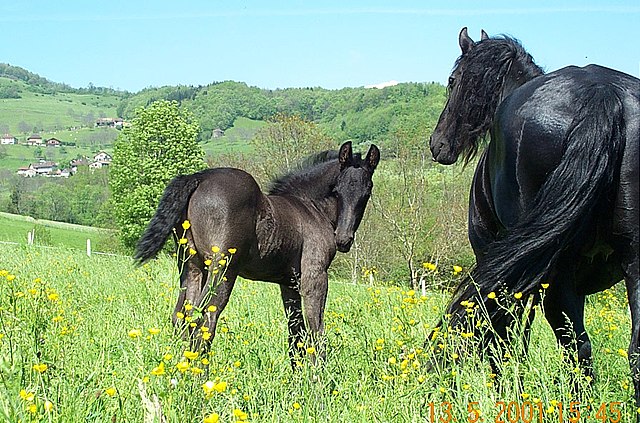
Friesian associations in North America and the UK
In North America, the Friesian Horse Association of North America (FHANA) works with the KFPS on registration and inspections. In Britain and Ireland, the Friesian Horse Association of Great Britain and Ireland plays the same role. Both organize keurings, the annual inspections where KFPS judges assess foals, mares and young stallions.
The Friesian community
Friesian owners form an active network of breeders, trainers and riders. Inspections, breed shows and demonstrations bring them together each year, and they are the best place to see many Friesians side by side before you buy.
Breeding Friesians takes patience and knowledge. Young horses learn early to accept handling and to respect people, which makes the adult horse easier to live with.
Friesians are bred well beyond the Netherlands today, with active breeders across the United States, Canada, the UK and France.
Friesian horse health
Friesian lifespan
The breed’s narrow genetic base shows in its life expectancy. Breed studies often quote an average lifespan of around 16 years, lower than the general horse population. A well-kept Friesian with good vet follow-up still lives into its twenties.
Feeding
Base the diet on good forage, hay or grass, and add a vitamin and mineral balancer if the forage lacks them. A Friesian drinks about 10 US gallons (40 liters) of water a day, more in hot weather. Our guide to summer water needs gives the details.
Genetic health problems
Inbreeding brought several known disorders to the breed:
- Dwarfism and hydrocephalus, two inherited disorders. DNA tests exist for both, and the KFPS uses them in its breeding policy.
- Aortic rupture, a rare but often fatal condition that is more frequent in Friesians than in other breeds.
- Megaesophagus, an enlarged esophagus that causes choke and weight loss.
- Retained placenta after foaling.
- Skin trouble: sweet itch (insect bite hypersensitivity), and pastern dermatitis under the heavy feathering.
Our page on summer itch explains how to protect a horse prone to insect bites.
Temperament and character
Despite these weak points, the Friesian stays gentle, reliable and cooperative. This even temper makes daily care easy. Careful management and respect for its limits keep it sound and relaxed.
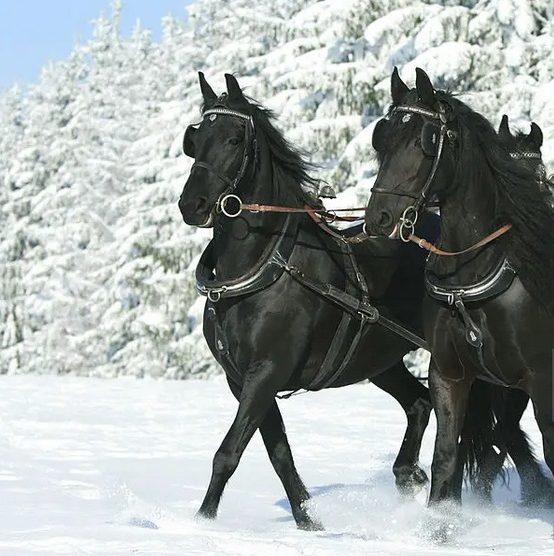
Friesian horse care
How to care for a Friesian’s mane
Friesians are known for long, heavy manes and tails. Left loose, a mane can reach below the shoulder and tangle or break. Many owners keep it in loose braids for daily work and turnout, and brush it out for shows. Use a detangling spray and work through the hair by hand before you brush.
Shoeing a Friesian costs more
Friesian hooves are large and often soft. Shoes in larger sizes and more frequent farrier visits put shoeing costs above the average for a riding horse. Ask your farrier about the trimming interval that suits your horse’s feet.
Caring for the feathering
The long feathering traps mud and moisture, which favors pastern dermatitis (mud fever, scratches) and mites. Brush and check the lower legs often, dry them after wet turnout, and keep stalls and paddocks clean. Not every Friesian develops skin trouble, but most are prone to it.
A tendency to patella problems
During growth, young Friesians can show upward fixation of the patella (a locking stifle). Fitness work, hill work and, in some cases, veterinary treatment help. Many cases improve as the horse matures. Ask your vet in every case.
Vets also report that Friesians need close monitoring under general anesthesia. Tell the clinic the breed of your horse before any surgery.
FAQ
What is the most beautiful Friesian in the world?
Beauty is subjective. Some Friesians became famous through film, shows or social media. Judges look at balanced conformation, neck carriage, movement and temperament. As a rider, I would say the most beautiful Friesian is the one that moves with pride, relaxation and harmony with its rider.
How tall is a Friesian horse?
A Friesian usually stands between 15.1 and 16.3 hh (1.55 to 1.70 m) at the withers. Some stallions are taller. With solid bone and a strong neck, the Friesian looks imposing without being heavy, and most adult riders fit it well.
How long do Friesian horses live?
The average often quoted is around 16 years, below the general horse population. Good breeding, feeding, vet care and sensible work give a Friesian the best chance to live well into its twenties.
How much does a Friesian horse cost?
In the Netherlands, a well-bred foal starts at around €10,000 and a registered three-year-old at about €15,000. Pedigree, KFPS predicates and breeding value push prices up. Mares from top lines pass €40,000 to €50,000. Imported horses in the US or the UK cost more once transport and import fees are added.
Is a Friesian a good horse for beginners?
The Friesian’s calm, willing temperament suits a beginner who has good supervision. Its size, sensitivity and specific needs still call for serious management. With a trainer’s help, it is a safe and rewarding horse to learn on.
Which disciplines suit the Friesian best?
The Friesian does best in driving, lower-level dressage, shows and vaulting. Its high action and presence shine in artistic disciplines. It is not built for show jumping or long-distance endurance. It thrives on regular, steady work.
Do Friesians have specific health problems?
Yes. The narrow genetic base brought dwarfism, hydrocephalus, aortic rupture, megaesophagus and skin conditions such as sweet itch and pastern dermatitis. None of this should scare you off, but it calls for regular vet follow-up, good feeding and a buyer who checks the genetic test results.