In the fast-moving world of equine transport, sea travel has earned a prominent place in international journeys, whether a horse is heading to a competition, a new training yard or a distant stud. It appeals because it can carry several horses at once in controlled conditions, offering a safe alternative to air freight, particularly when commercial routes or environmental concerns come into play. Yet shipping a horse involves far more than walking it up a ramp: every stage, from preparation to arrival, demands rigour, professionalism and a thorough understanding of equine welfare. Here is a look behind the scenes of a voyage in which every detail matters for the safety and health of the horses, at a time when equine logistics are being reinvented.
Planning ahead: anticipating the logistics of shipping horses
Shipping horses by sea calls for meticulous organisation, often weeks or even months before departure day. Seasoned professionals make a point of anticipating every constraint, so as to avoid surprises and give both the horses and those travelling with them the best possible experience.
Paperwork and regulations
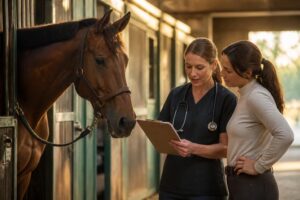
To cross European and international borders, horses must travel with a set of mandatory documents. These include the equine passport, a health certificate issued no more than 48 hours before departure and, depending on the destination, specific export certificates. Owners and shipping agents therefore need to be familiar with the current regulations, drawing on reliable sources such as this article on the rules governing horse transport or guidance published by DEFRA or the IFCE.
- Check that all documents are valid: most health certificates remain valid for only 10 days
- Make sure licences and declarations are in order for every horse on board
- Allow time for additional formalities for non-EU countries or journeys involving several transits
Choosing the right shipper and vessel
Specialist companies operate vessels fitted with miniature stables, or fit out container stalls suited to the size and temperament of the animals, whether racehorses, ponies or foals. Choosing a shipper is a question of safety and comfort, but also of their ability to keep stress to a minimum during the crossing.
- Ask for a detailed quote covering logistics, loading and veterinary supervision
- Favour shippers who provide an experienced travelling groom
- Check whether bespoke arrangements are available for large consignments or high-value horses
| Mandatory documents | Validity | Issued by |
|---|---|---|
| Equine passport | Permanent | Breeder, national federation |
| Health certificate | 10 days | Approved veterinary surgeon |
| Export licence (EU and non-EU) | Variable | Veterinary authorities |
One point newcomers often overlook is booking early. Space on board is limited, especially at busy times of year (major competitions, sales and so on), so it pays to act well in advance. To gauge the overall cost, readers can consult this comparison of prices for shipping a horse by sea, which sets out the differences according to the services chosen.
A well-orchestrated sea voyage is therefore built on detailed planning, which paves the way for the next stage: managing the equipment and preparing the horses themselves.
Equipment and preparing horses for a sea voyage
Getting the equipment right is the second pillar of a successful sea crossing. It rests on three requirements: securing the kit, preparing horses for a confined environment, and planning for every eventuality over the length of the journey.
Equipment and fittings needed on board
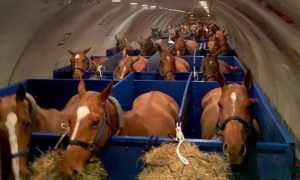
Every horse has different needs depending on its age, size and temperament. In 2025, shipping companies offer padded container stalls that can accommodate sensitive or nervous horses while allowing a groom to step in quickly. Specific equipment is also provided as standard:
- Carefully positioned water buckets and haynets
- Non-slip flooring and adjustable partitions to prevent injuries caused by the ship’s pitching
- Secure doors that give the groom easy access while protecting against knocks
- Veterinary first aid kit within immediate reach
Mental and physical preparation
A successful voyage begins long before loading. Vets and equine behaviourists recommend gradually accustoming horses to the maritime environment. Some training centres even run familiarisation sessions with recorded engine noise and controlled confinement. This preparation greatly reduces anxiety on a horse’s first crossing, particularly for those that have never left their home yard.
- Plenty of trips in the horsebox to get used to vibration and movement
- Gradual introduction to new companions for horses travelling in a group
- Appropriate feeding to avoid digestive upsets: find out more about feeding horses in transit
- Routine veterinary check 48 hours before departure
| Essential equipment | Purpose |
|---|---|
| Travel protection (travel boots, poll guards, rugs) | Preventing injury and protecting against the weather |
| Veterinary first aid kit | Rapid response to injury or shock |
| Haynets and portable water buckets | Maintaining feeding routine and hydration |
By tailoring preparation to each horse and combining technology with hands-on expertise, professionals dramatically reduce the risk of injury or acute stress: invaluable on crossings that can last several days.
Loading, settling and monitoring horses on board
Loading is a critical moment that involves a whole team: shipping agents, vets, drivers and specialist grooms. The aim is to keep the process running smoothly while safeguarding the safety and welfare of every horse.
Loading, step by step
On departure day, each horse is first identified and checked by the veterinary team. Its health, behaviour and any medication are systematically recorded. The horses are then led one by one to their allocated stalls:
- Grouping according to compatibility, so dominant horses do not unsettle the others
- Settling horses in gradually to avoid panic and agitation
- Closing and securing stalls before access to the vessel is shut
- Checking ventilation, water supply and hay stocks
| Stage | Staff involved | Purpose |
|---|---|---|
| Veterinary inspection | Approved veterinary surgeon | Confirming fitness to travel |
| Loading and stabling | Groom & driver | Settling horses calmly into suitable stalls |
| Securing equipment | Logistics technician | Fastening equipment and haynets |
Managing movement and safety at sea
Beyond simply carrying the horses, the crew must regularly inspect the stalls and monitor temperature, ventilation and the condition of every animal. Vessels fitted with motion sensors automatically adjust certain settings to reduce the effects of rolling and pitching, helping to prevent the accidents that are common in rough seas.
- Frequent rounds, especially when the ship changes course
- Regular updates sent to owners via tracking apps
- Swift response to behavioural or health problems
- Team available around the clock to deal with emergencies
Far from being a formality, loading is an operation that demands rigour and constant vigilance: the foundations of a successful voyage.
Equine welfare: monitoring, care and managing stress during the crossing
Safeguarding the welfare of horses at sea tops the list of priorities for modern shippers. This commitment translates into a strict protocol of medical and behavioural monitoring, updated in line with the latest scientific and technological advances in 2025.
Monitoring and routines in transit
Crossings run by professional companies follow precise routines:
- Little-and-often feeding and water on demand to maintain hydration and digestive balance
- Regular mucking out to limit the risk of infection
- A groom experienced in managing equine stress on hand at all times
- Monitoring of temperature and humidity in the horse areas
Real-time monitoring equipment now makes it possible to spot signs of fatigue or dehydration quickly. Owners can sometimes even follow this data live through secure platforms.
| Monitored parameter | Frequency | Method |
|---|---|---|
| Ambient temperature | Every 3 hours | On-board thermostats |
| Hydration level | Continuous | Automatic sensors |
| Behaviour | Before each feed | Direct observation |
Managing stress and minor health issues
Even when well prepared and closely supervised, horses can show signs of anxiety or typical digestive problems: mild colic, excessive sweating or even a refusal to drink. The key lies in anticipation and prompt care. Trained grooms know how to respond, adjust the diet or offer simple relaxation exercises to ease tension.
- Salt or electrolytes to replace what is lost through sweating
- Targeted massage to relax the most tense horses
- Temporarily separating an unsettled horse to calm the atmosphere
- Quick access to an on-board veterinary pharmacy
Several companies also offer additional guarantees based on their quality commitments, highlighting their ability to deal with minor bouts of fatigue as well as veterinary emergencies.
Arrival, unloading and settling in at the destination
Reaching port safely brings relief, but it is also a key stage in helping the horse adjust to its new surroundings. Unloading well requires as much care as the original loading: a carefully orchestrated process in which no detail is overlooked.
How unloading works
As soon as the ship has docked, each horse is led off with great care to a holding area where a further veterinary examination can take place. This routine aims to pick up any signs of injury, fever or dehydration that may have gone unnoticed during the voyage.
- Health samples taken for certain destination countries
- General health check
- Gradual reintroduction to daylight and fresh air
- A supervised rest period before any onward travel
| Steps to follow | Estimated time | Purpose |
|---|---|---|
| Post-transport veterinary examination | 30 min per horse | Detecting any after-effects |
| Gradual unloading | Variable | Keeping stress to a minimum |
| Transition period | 12 to 24 hours | Recovery and adjustment |
Settling in at the destination
The team’s work does not end at the port. Next comes the transition phase, during which the horse needs to find familiar reference points again: suitable feed, a calm routine and social contact with other horses restored step by step. Recommendations vary according to the horse’s condition and final destination, as many leading vets and breeders point out.
- Gently reintroducing hard feed to avoid digestive upsets
- Behavioural assessment to spot the slightest abnormal sign
- Close observation for 48 hours after travel
- Support options available via this dedicated horse transport portal
It is in this pivotal phase that the voyage truly succeeds, turning an unfamiliar journey into a positive experience for every horse.
Choosing road vehicles: getting the land legs right before and after the sea
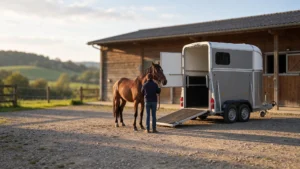
Time at sea is often only one part of the journey. Before loading and after unloading, horses usually travel by lorry or a specially fitted trailer. The choice of vehicle has a direct bearing on safety, comfort and how well the horse copes with the trip.
Lorries, trailers and equipment: the best options in 2025
Each option has advantages and drawbacks to weigh up according to the number of horses, the distance and the particular needs of the animals. New-generation horseboxes, such as those featured in this selection of HGV horseboxes or the STX Quantum horsebox, offer impressive flexibility, with adjustable stalls, assisted ventilation and a permanent communication link with the driver.
- Ultra-modern, secure two-horse trailers for small numbers
- Large modular lorries for groups of sport or breeding horses
- Capable towing vehicles such as the Range Rover Sport
| Vehicle type | Capacity | Use |
|---|---|---|
| Two-horse trailer | 2 horses | Short to medium journeys |
| HGV horsebox | 6 horses or more | Long journeys, large consignments |
| Suitable towing vehicle | Depends on trailer | Flexibility, greater safety |
Making the most of the road journey
- Plan the route with digital tools, such as route planning for trailers and lorries
- Take the mandatory breaks regularly to limit fatigue
- Fit anti-shock equipment and monitoring cameras
- Check all transfer equipment when switching between sea and road
High-performing road vehicles are the natural complement to a well-managed sea crossing, ensuring the horse’s welfare and safety remain consistent at every stage of its journey.
Handling the unexpected: responding to the challenges of shipping horses
However thorough the preparation, shipping horses by sea carries risks that call for quick thinking and professionalism. In 2025, shippers rely on refined emergency protocols that combine technology with human experience to overcome problems along the way.
Common unforeseen events
Several types of incident can occur during a crossing:
- Bad weather requiring the voyage to be temporarily suspended
- Sudden illness (colic, injury in transit, an acute stress reaction)
- Logistical problems: an unscheduled stop or delays in onward transport
- Difficulties during unloading or customs clearance
| Type of incident | Emergency protocol |
|---|---|
| Extreme weather | Voyage halted, horses sheltered immediately |
| Illness | On-board veterinary treatment, isolation if necessary |
| Logistical delay | Feeding adjusted, rest periods rearranged |
The key role of people and technology
- Instant communication protocols with the designated vets
- Automatic alerts via GPS beacons and owner platforms in the event of a serious problem
- Regular first aid training for crews
Every incident handled calmly and methodically helps protect the horse’s safety in the long term. For those wishing to explore these issues further, this comprehensive guide to horse transport prices and terms looks at the options available when particular situations arise.
International comparisons and recent innovations in equine shipping
Globalisation has energised the equine shipping sector, driven in particular by technological innovation and evolving international standards. With competitions and trade growing rapidly, differences between continents and local regulations are becoming more marked.
International standards and how practices adapt
European standards, shaped by Council Regulation (EC) No 1/2005, are among the strictest: limits on the number of horses, traceability, mandatory attendants and required veterinary equipment. Australia, the United States and Japan, for their part, have developed their own protocols, sometimes more flexible on certain points but tougher on others, such as post-quarantine checks.
- ISO animal welfare certification for some operators
- Partnerships with multilingual veterinary teams for end-to-end monitoring
- Connected “smart” containers for monitoring the journey
| Country/Region | Main characteristics | Technological level |
|---|---|---|
| Europe | High standards, mandatory certification | Highly advanced |
| United States | Considerable autonomy for shippers | Innovative, diverse |
| Japan | Stricter health procedures | Extensive use of digital platforms |
Recent innovations and the outlook
Among the developments of 2025, three trends stand out:
- Climate-controlled stalls with smart ventilation and lighting
- Connected sensors for real-time monitoring of stress and health
- Smart planning tools, such as those covered in horse transport prices
Innovation has become the market’s new driving force, with a direct impact on reducing health risks and protecting welfare throughout the journey.
Special cases and stories of successful sea voyages
To grasp what shipping horses by sea really involves, there is nothing like a few concrete examples: from elite horses travelling to the Olympic Games to rare ponies transferred to remote islands.
Travelling to major sporting events
At Olympic time, it is not unusual to see entire fleets chartered and managed by renowned vets and logistics experts. In 2024, for example, horses successfully crossed the Channel between England and France aboard specialist vessels for the Paris Games, a feat recounted in this lively account of transporting horses to the Olympics. Rigorous preparation, a minimum of stopovers and a highly drilled veterinary team meant that no major incident occurred, despite changeable weather.
- Stalls adapted to each horse’s breeding and temperament
- Dedicated rest areas set up on arrival
- Constant communication with the receiving teams
Pony voyages and unusual exports
The horse world also has its share of unusual tales: miniature horses shipped to educational farms on islands, horses carried on long crossings for genetic conservation programmes, or simply young foals on their first long voyage. These cases show how adaptable specialist shippers can be, ready to customise equipment or even load made-to-measure crates, as illustrated by an account gathered in a scientific investigation into the history of the horse.
- Tailored, highly digestible rations
- Care protocols adapted to age and specific needs
- Close supervision by a groom and vet working in tandem to anticipate any unexpected reaction
People, technology and experience thus come together to ensure that every four-legged passenger arrives safe and settled, whatever its route or destination.
Frequently asked questions about shipping horses by sea
Which documents are essential for shipping a horse by sea within Europe?
You must present an equine passport, a health certificate issued less than 48 hours before loading and, depending on the destination, export documents issued by the relevant veterinary authorities. Most countries only accept a health certificate valid for 10 days.
How many horses can travel together on a sea crossing?
The limit is generally set at around 6 horses per vehicle, unless a specific request is made to an approved agent or a recognised company. Rules may vary between shipping lines and according to health requirements.
How is the horse’s welfare protected during the crossing?
The crew provides constant care: little-and-often feeding, water on demand, frequent mucking out and close veterinary supervision. Modern equipment includes temperature and humidity sensors so conditions can be adjusted in real time.
What happens if bad weather or a health problem occurs during the crossing?
Vessels are equipped to shelter horses in a storm, and an on-board vet steps in immediately if there is a problem. Emergency protocols and direct lines to veterinary specialists are in place for any alert.
Are there platforms or providers offering a complete, turnkey sea transport service for horses?
Yes, several specialist platforms in France and abroad offer bespoke solutions, handling all the paperwork from preparation through to post-arrival follow-up. For the road leg, simply ask for a quote for the journey to the port.